10 Best Things to Do in Lofoten: Villages, Beaches and Routes
The best things to do in Lofoten are spread across an island chain, so the quality of your trip depends on route planning as much as choosing attractions. Reine and Hamnøy, the beaches near Leknes and the harbour streets of Henningsvær belong to different parts of the journey. Trying to photograph every village before lunch leaves little time to understand any of them. This Lofoten travel guide groups ten experiences into workable days, distinguishes simple viewpoints from demanding hikes and explains when a car helps.
Ten Lofoten priorities with practical route pairings, weather alternatives and realistic short-stay itineraries.
Lofoten: quick answers
- Worth visiting?
- Yes, for coastal scenery, fishing history and slower road trips.
- Time needed
- Four to seven days is preferable; three days requires a limited route.
- Best time
- Summer for long daylight; autumn and winter require weather flexibility.
- Cost level
- High, especially accommodation, car hire and restaurant meals.
- Getting around
- Car for flexibility; buses work with careful timetable planning.
- Top priorities
- Reine and Hamnøy, Haukland coast, Henningsvær and fishing heritage.
How this list was selected: This first-visit selection balances coastal landscapes, living communities, cultural interpretation and practical access. It does not rank beaches by social-media popularity. Reinebringen is included with strict seasonal caution; accessible shoreline visits are higher priorities for a broad range of travellers.
In this guide
- Reine and Hamnøy from the shoreline
- Henningsvær and its harbour streets
- Haukland Beach and the Uttakleiv coast
- Nusfjord and its fishing-village heritage
- Å and the Norwegian Fishing Village Museum
- Lofotr Viking Museum at Borg
- Svolvær harbour and a suitable boat excursion
- Kabelvåg and the Storvågan museum area
- Ramberg Beach and the Flakstad shoreline
- Reinebringen only in suitable hiking conditions
Best things to do in Lofoten: the Top 10
Bookings through Viator may earn us a commission.
1. Reine and Hamnøy from the shoreline
Book here with Viator → Reine, Hamnøy, Sakrisøy Photo Tour from Svolvær
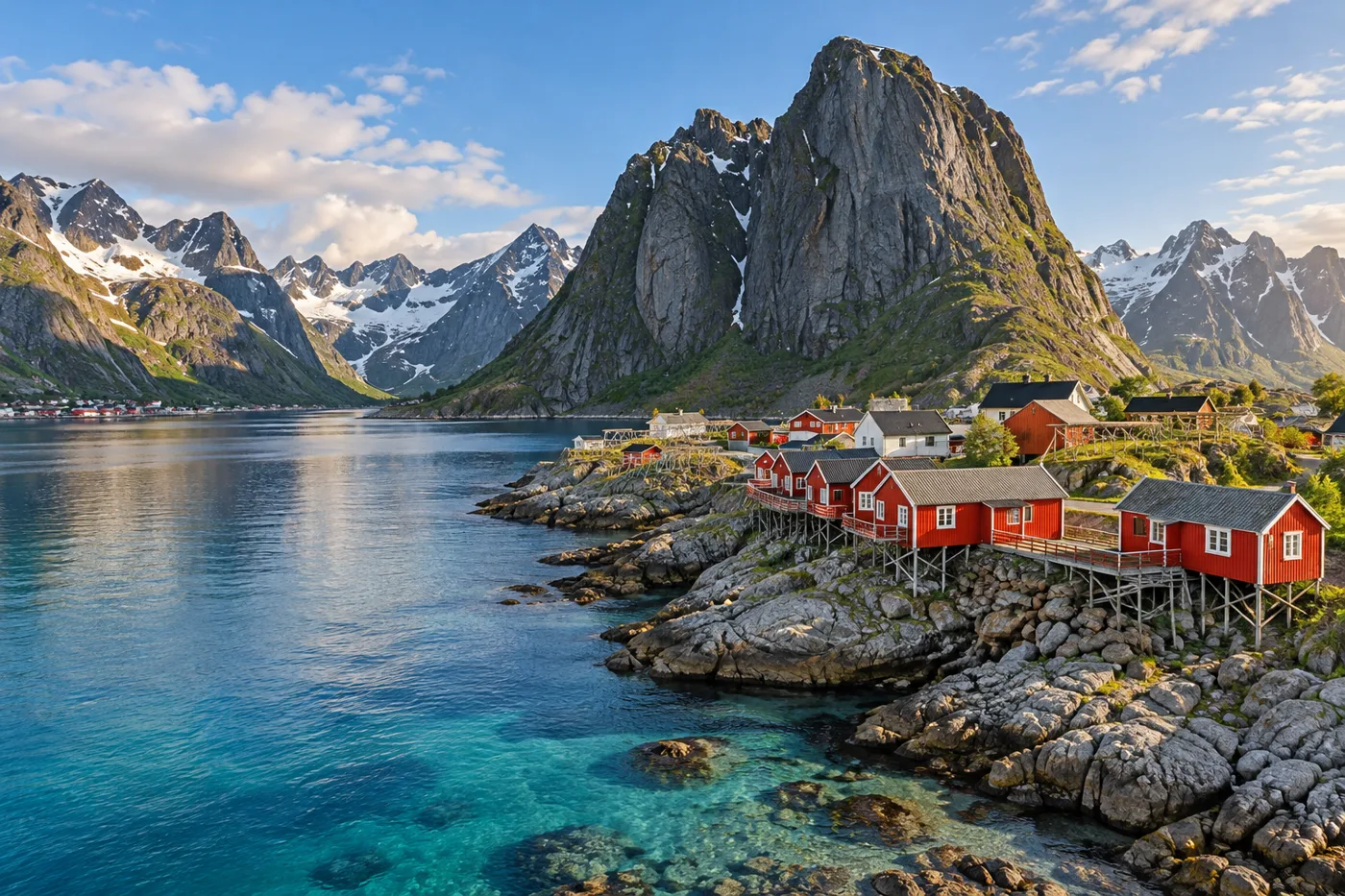
Reine and nearby Hamnøy sit among the steep mountains and narrow waterways of western Lofoten. Their red cabins are part of a working coastal setting rather than an outdoor film set. You do not need to climb a mountain to understand the attraction: the relationship between settlement, water and rock is the main experience.
Walk public village streets and use designated viewpoints. Hamnøy bridge is a transport link with limited space, so keep clear of traffic and avoid standing in the road for a photograph. In Reine, notice fishing infrastructure as well as accommodation cabins. Low cloud changes the scene without necessarily spoiling a visit.
Allow two to three hours for both settlements, longer for a meal or guided water activity. Outdoor village walks have no general admission charge, but parking and private facilities may charge. Pair them with Å on the same western day. Check buses before arrival, especially if your accommodation is outside Reine.
Best for an accessible introduction to western Lofoten.
2. Henningsvær and its harbour streets
Book here with Viator → Seasonal panoramic island tour
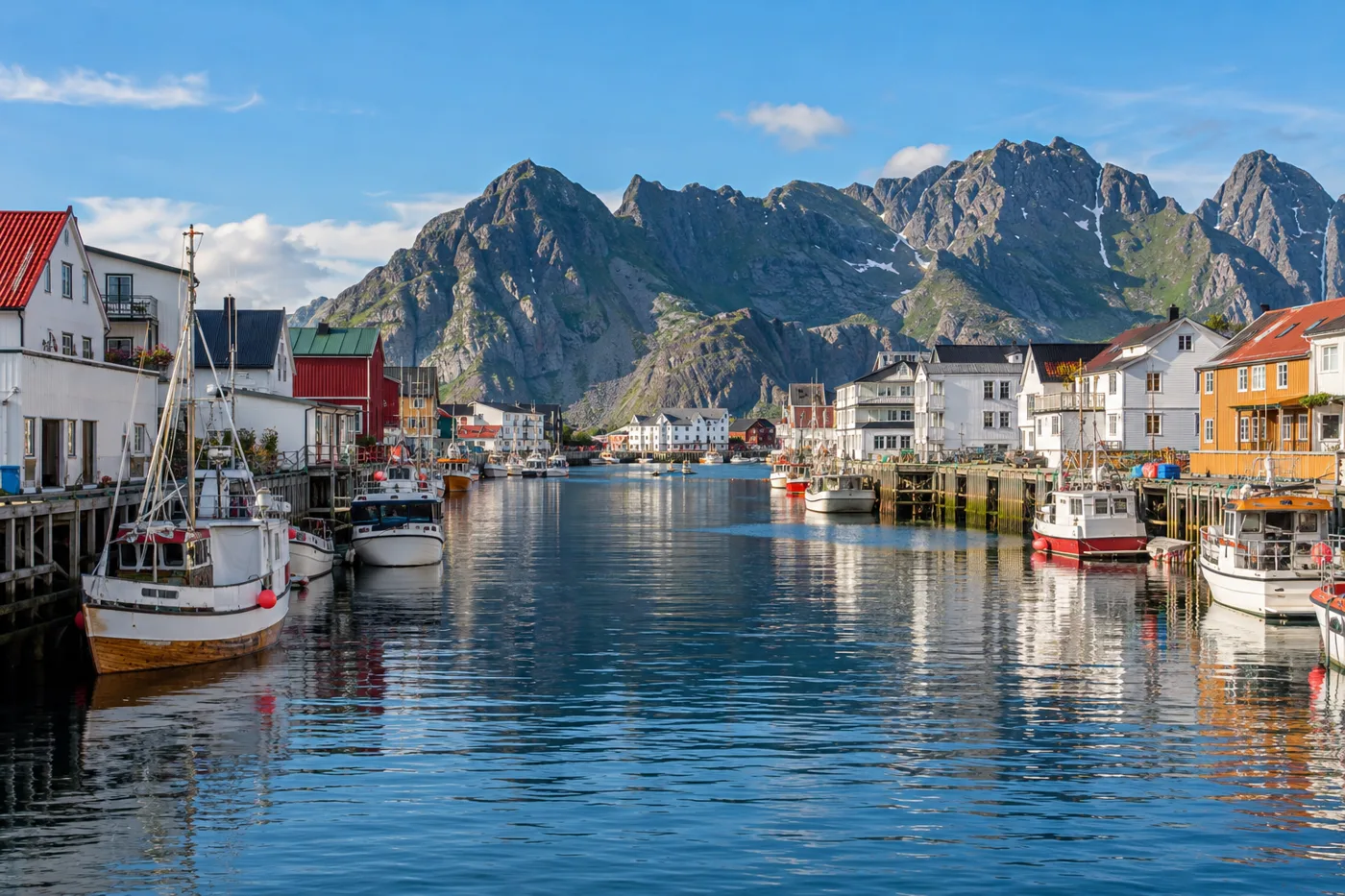
Henningsvær spreads across small islands reached by bridges from the main road. It rewards time on foot: working harbour edges, galleries and compact streets explain how fishing and newer cultural businesses share the village. Its setting is distinctive without requiring the aerial perspective used in many promotional photographs.
Park where directed and explore slowly. The famous football ground is an active local facility; do not interrupt play or assume access because it appears online. Choose a gallery or café according to current opening. Private jetties and residential doorways are not visitor platforms, and photographing people should involve consideration rather than entitlement.
Allow at least two hours, or half a day with galleries and lunch. Village walking is free; parking, museums and gallery admission vary. The side road is a deliberate detour, best paired with Svolvær or Kabelvåg rather than a rushed western loop. Summer arrivals can make parking slower than map estimates suggest.
Best for harbour atmosphere, art and a walking break.
3. Haukland Beach and the Uttakleiv coast
Book here with Viator → Seasonal panoramic island tour
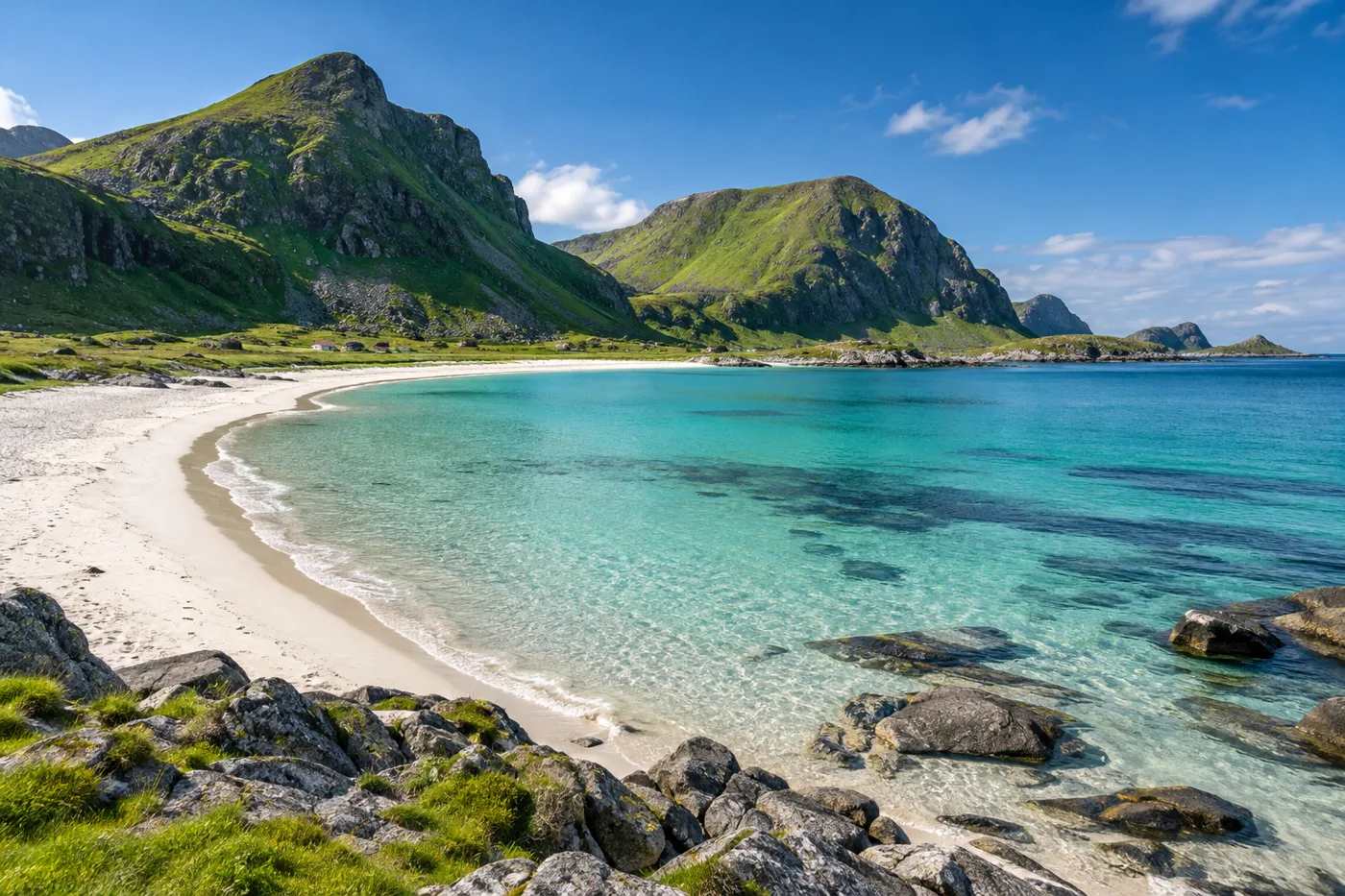
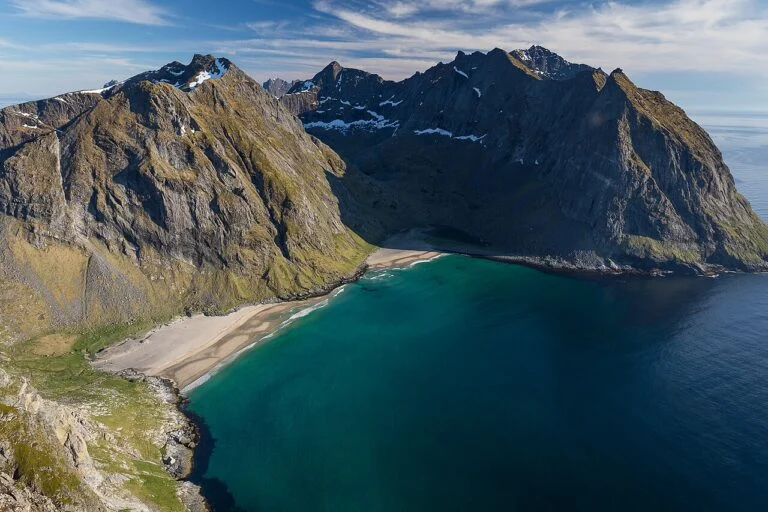
White sand and open coastal water make Haukland a different landscape from enclosed village harbours. It lies near Leknes and can be enjoyed without a mountain ascent. The accessible shoreline is a sensible priority for families or anyone preferring a short walk to a steep summit trail.
Walk the sand, then consider the old coastal route towards Uttakleiv if conditions and time suit it. This differs from climbing Mannen above the beach. Ocean water stays cold, waves can be powerful and wet rocks are slippery. A bright photograph is not evidence that swimming conditions are safe or that wind will be mild.
Allow 90 minutes for the beach, or several hours for a longer coastal walk. Parking and facilities may charge; check posted information. Official destination information reports visitor facilities at Haukland, but their opening varies. Pair the coast with Borg or Leknes and leave a bad-weather alternative instead of committing to an exposed walk.
Best for a flexible shore visit near central Lofoten.
4. Nusfjord and its fishing-village heritage
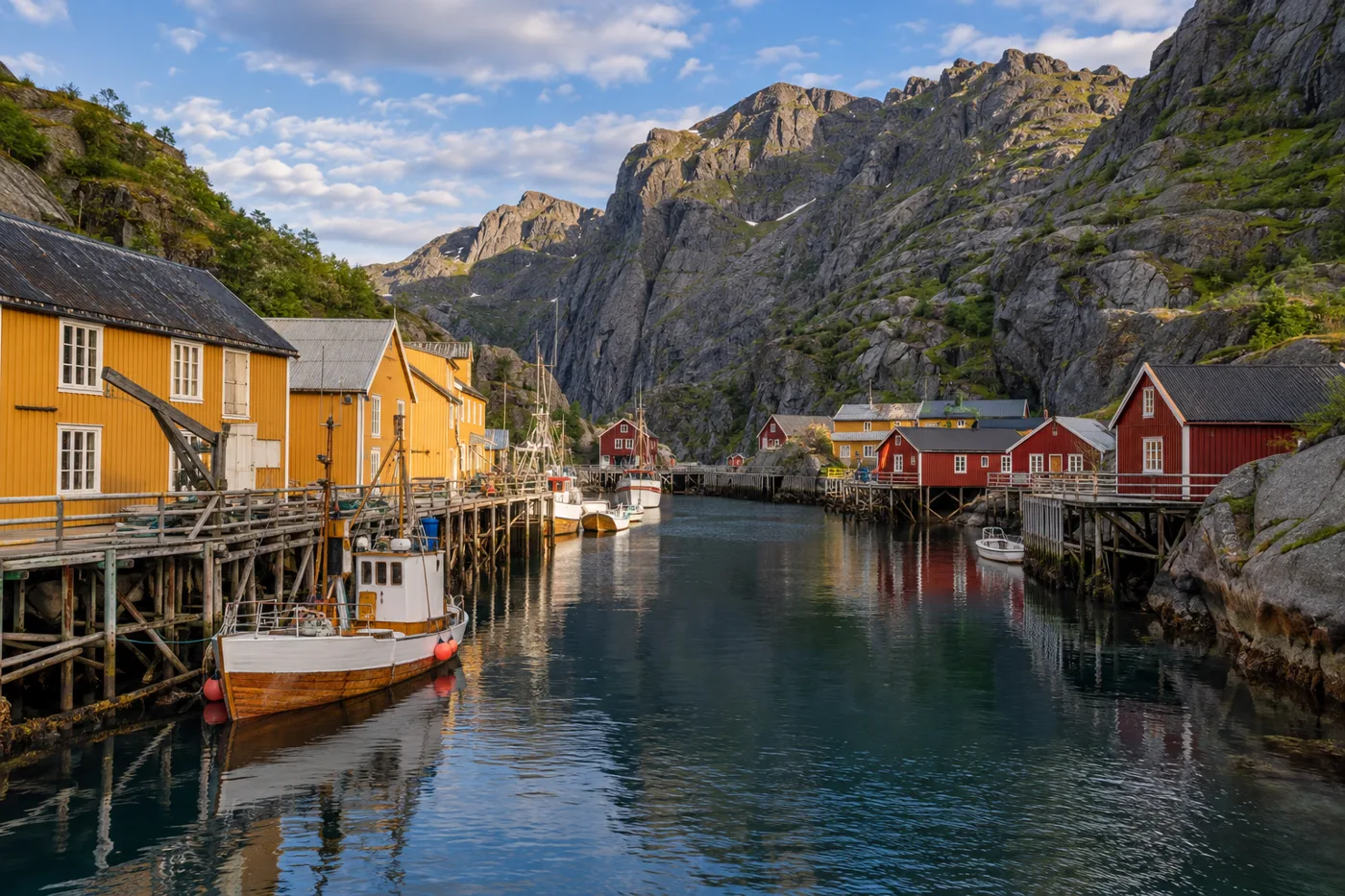
Nusfjord occupies a sheltered harbour reached by a side road from the E10. Historic work buildings and fishermen’s cabins make the fishing economy visible at a smaller scale than the larger towns. The village includes accommodation and active businesses, so distinguish public heritage areas from private guest spaces.
Examine the relationship between landing places, storehouses and steep surrounding terrain. Guided explanation or a heritage display adds more than a photograph from the road. If you eat here, check whether the restaurant needs a reservation: arriving with several hungry people during a short lunch window can limit your choices and lengthen the day unexpectedly.
Plan around two hours, longer with a meal. Entry arrangements and charges vary by season and access area; confirm directly with Nusfjord. Include the detour in driving time. Pair it with Ramberg and Flakstad, avoiding Nusfjord, several western villages and a major hike in the same short winter day.
Best for fishing heritage in a compact harbour setting.
5. Å and the Norwegian Fishing Village Museum
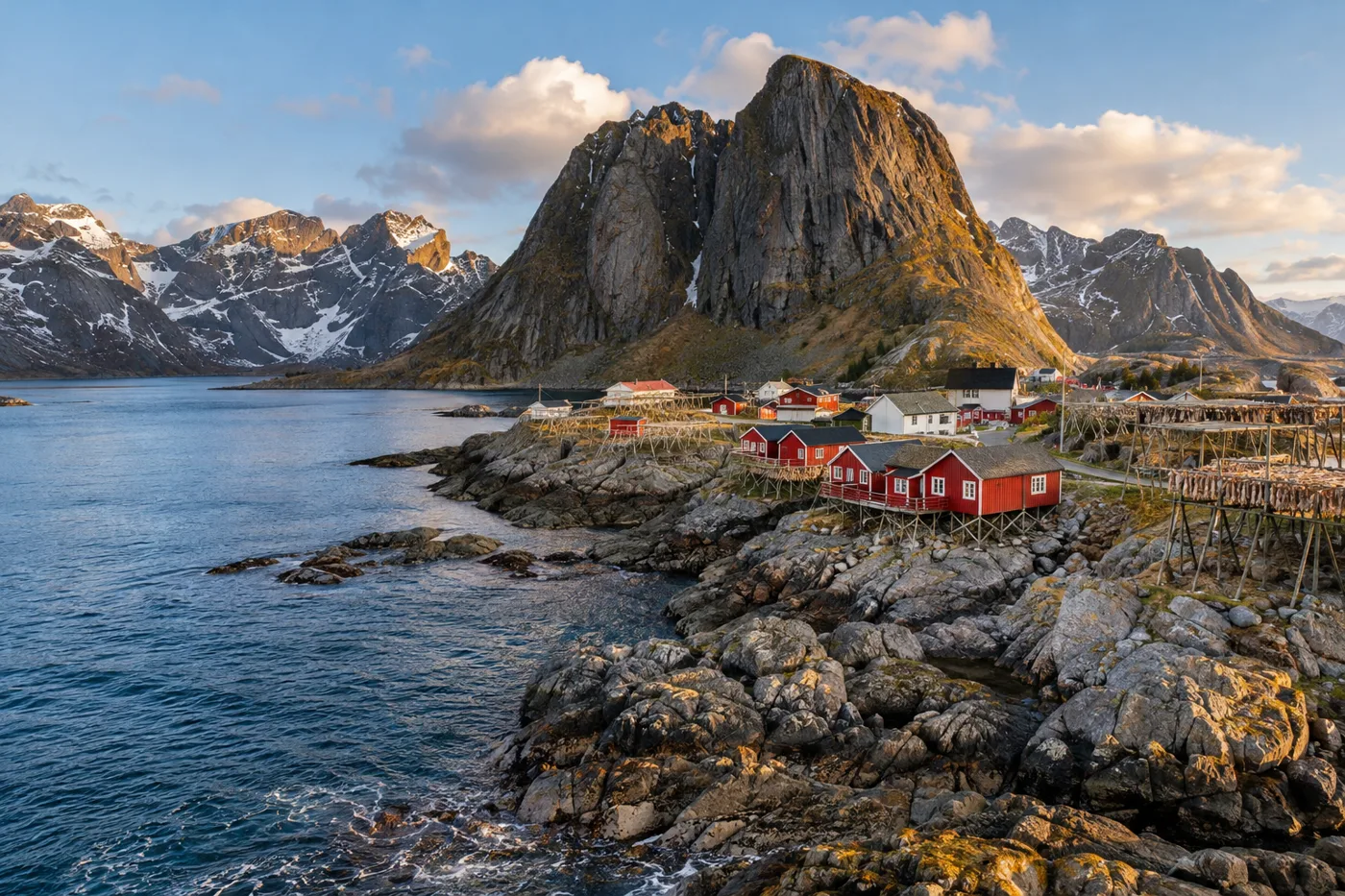
Å, near the western end of the road journey, provides a reason to continue beyond Reine. Historic buildings connected with fishing and village life are interpreted through the Norwegian Fishing Village Museum. This gives the red-cabin landscape a social and economic explanation, including the work behind the region’s familiar images.
Choose the museum rather than treating the village solely as an endpoint sign. Buildings and services operate differently through the year, so begin by checking what is open. Weather can be forceful even when another island feels sheltered. Keep to public routes and remember that accommodation and residences share the settlement.
Allow two to three hours for museum and village. Museum tickets are paid; current opening and seasonal tours should be checked with Museum Nord. Winter services can continue beyond summer, but old schedules should not be reused as guarantees. Pair Å with Reine and Hamnøy on a western base day.
Best for understanding everyday fishing-village life.
6. Lofotr Viking Museum at Borg
Book here with Viator → Guided Sightseeing Trip from Svolvaer including Lofotr Viking Museum
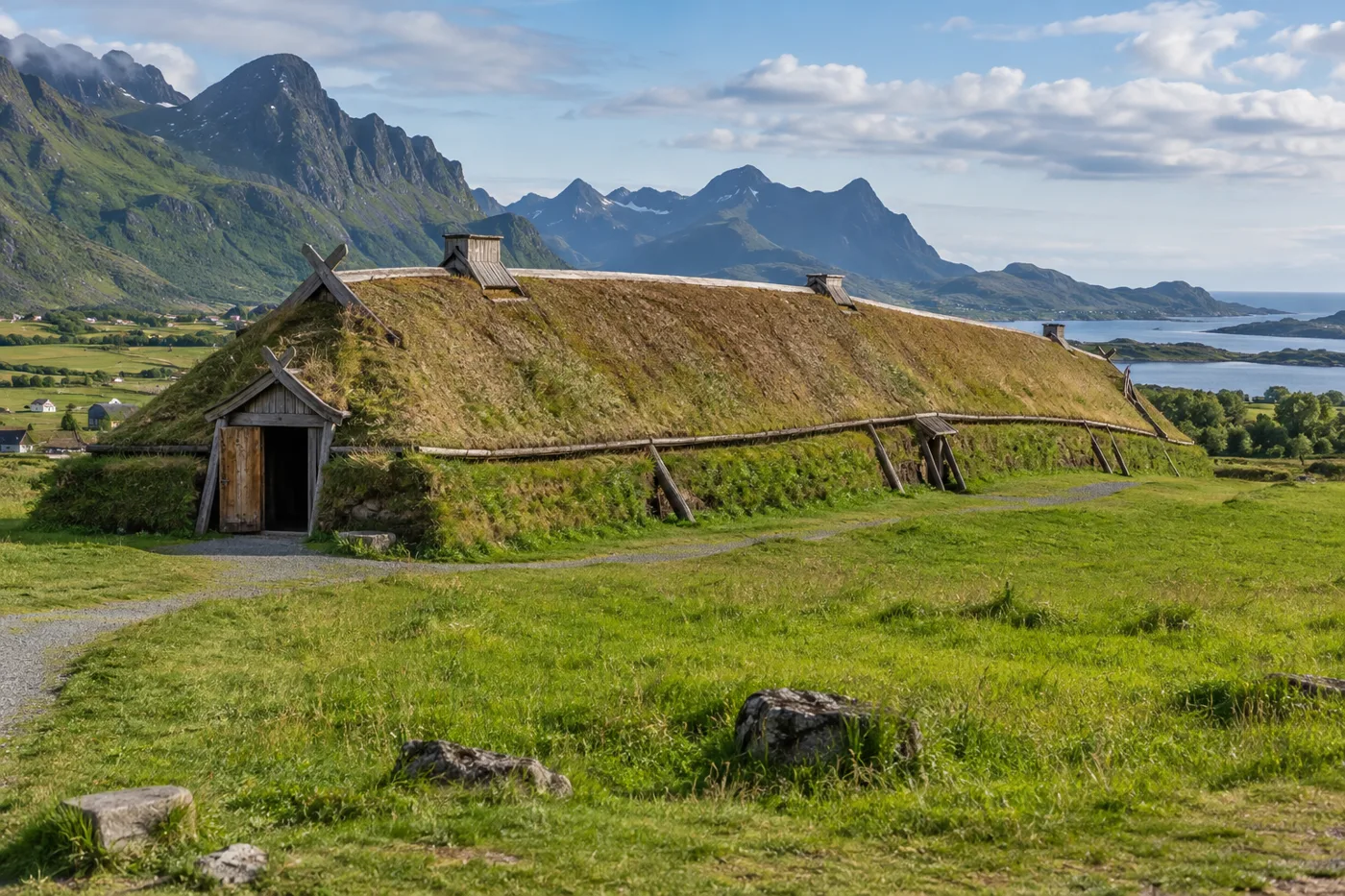
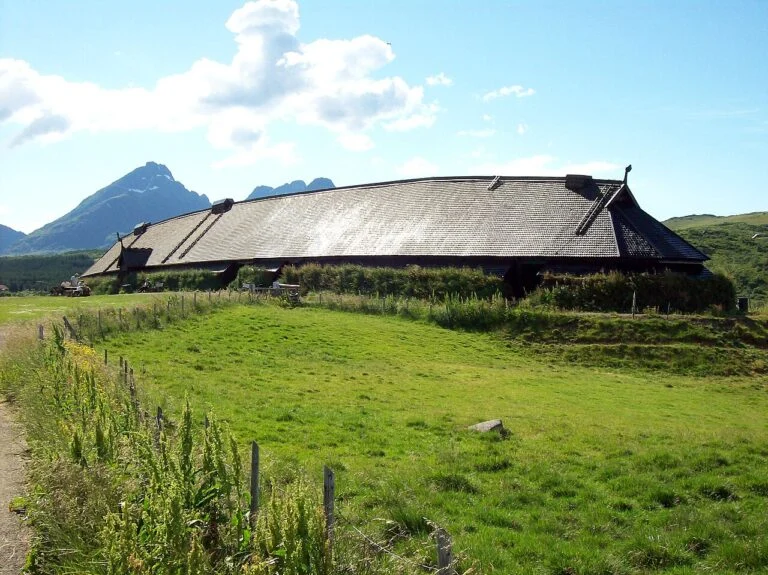
Borg offers a historical counterweight to the fishing villages. Lofotr Viking Museum interprets the archaeological site and a reconstructed chieftain’s longhouse. It broadens a visit beyond scenery, and its central-island location makes it practical when mountain cloud discourages a planned hike or rain makes a long beach walk less appealing.
Start with archaeological interpretation to distinguish evidence from reconstruction. Seasonal demonstrations and outdoor activities may deepen the experience, but a summer programme should not be assumed in winter. A separately booked Viking dinner is not interchangeable with ordinary daytime museum admission, so read the product carefully before purchasing and check whether an extra visit is needed.
Allow two to three hours, longer with an advertised seasonal activity. Admission is paid and schedules vary. Confirm which activities run on your date on Lofotr’s own website. Pair Borg with Haukland or a central-island overnight rather than adding a large detour from a tight Reine itinerary.
Best for archaeology and a purposeful poor-weather plan.
7. Svolvær harbour and a suitable boat excursion
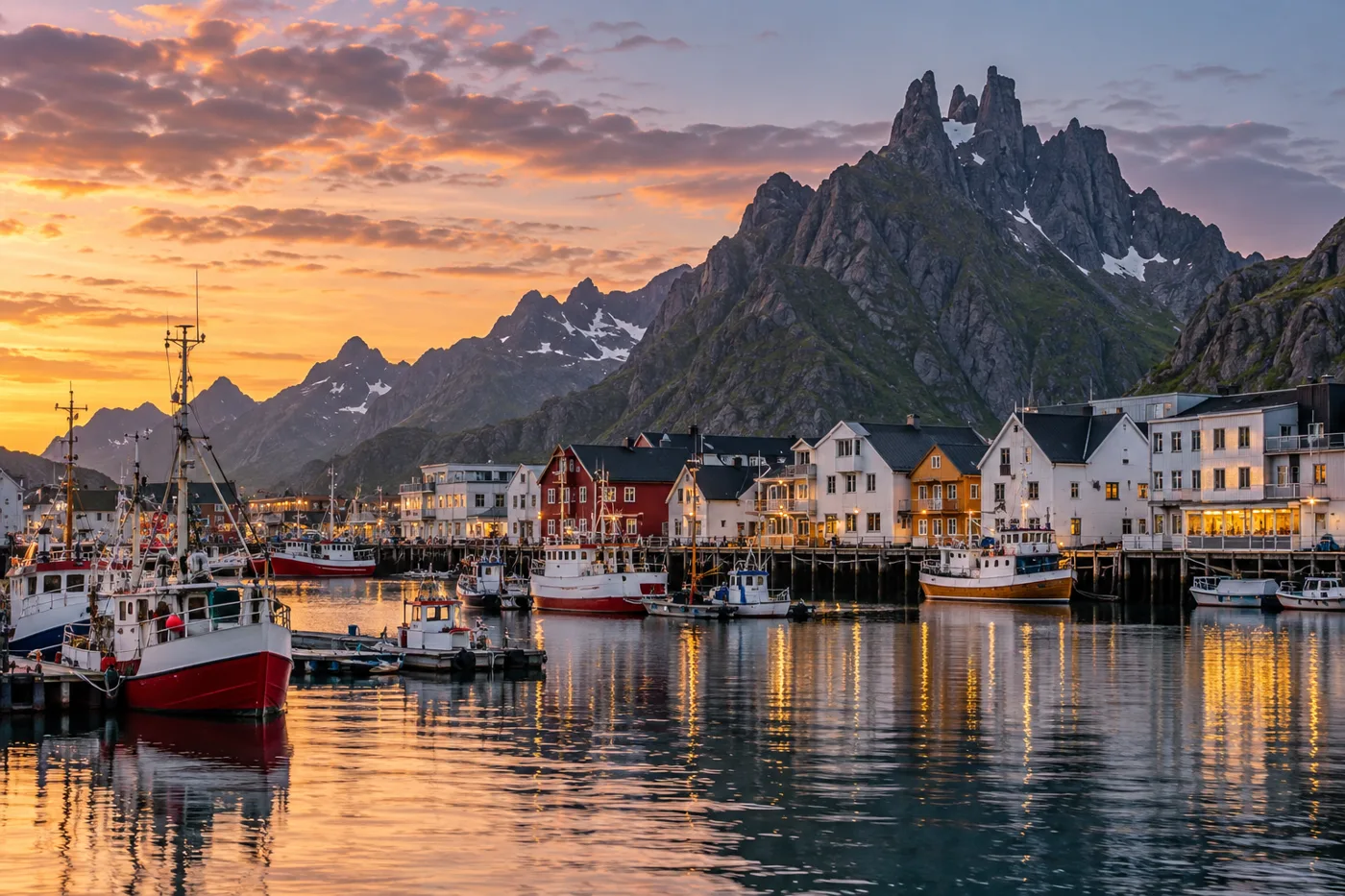
Book here with Viator → Sea Eagle Safari from Svolvær to Trollfjorden
Svolvær is a useful gateway and service centre with accommodation, transport connections and a working waterfront. A harbour walk helps new arrivals settle into the islands before heading west. It also provides a practical base for boat excursions, including trips marketed towards Trollfjord when route and conditions permit.
Do not choose a boat solely by its destination name. An enclosed vessel, an open RIB and a wildlife-focused excursion create different days. Compare actual time on water, clothing, capacity and cancellation rules. Sea-eagle sightings are possible on some routes, but wildlife should remain an uncertain bonus rather than a contractual expectation or reason to disturb animals.
Allow an hour or two for the harbour, or the operator’s full half-day block for a trip. Tours are paid and should be booked ahead at busy times. Routes depend on conditions; confirm the meeting point and return margin before an onward bus or flight. Pair town time with Kabelvåg rather than driving to Å afterwards.
Best for an eastern base and a planned marine outing.
8. Kabelvåg and the Storvågan museum area
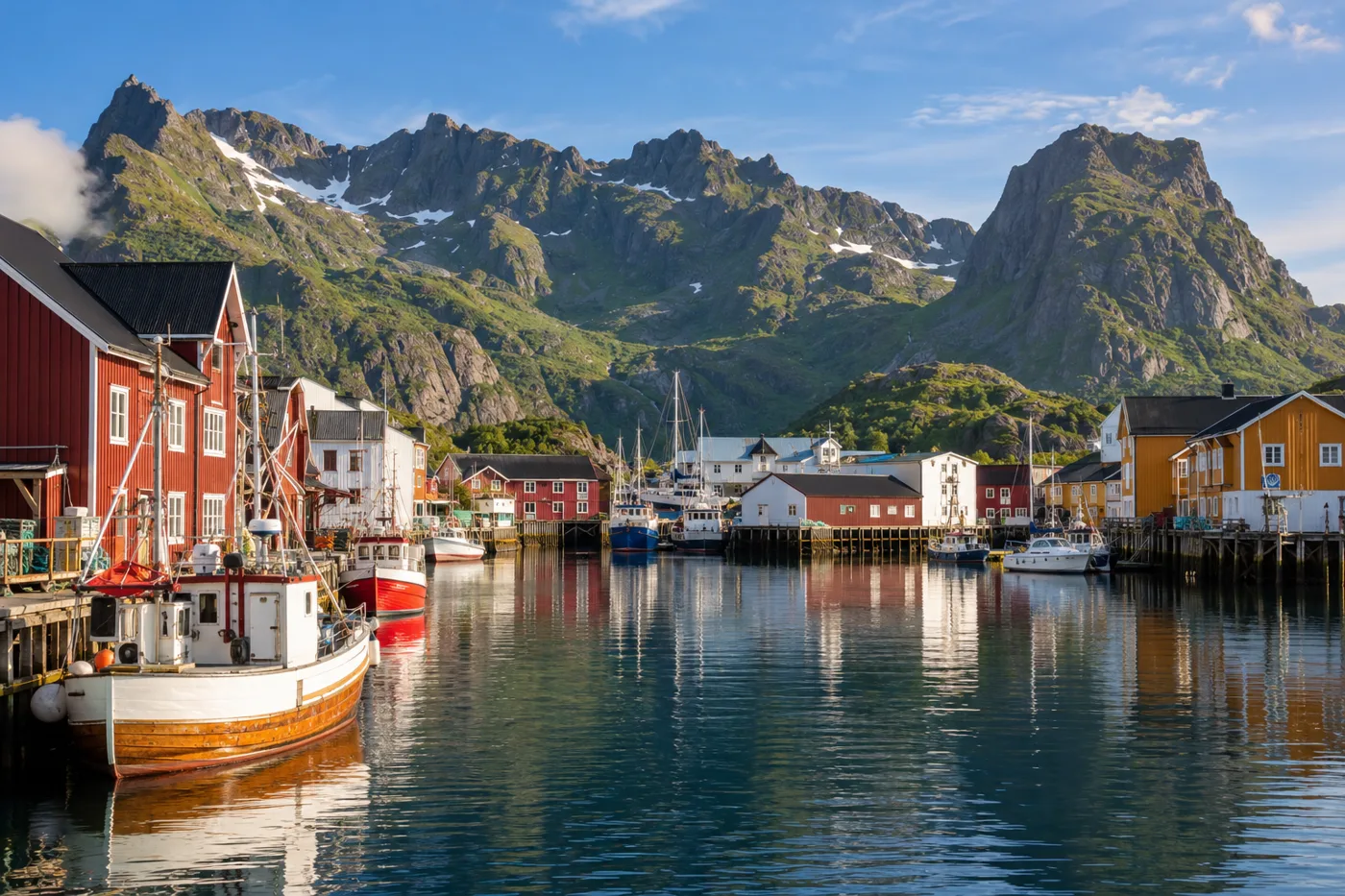
Kabelvåg provides a less hurried way to explore eastern Lofoten’s history. At nearby Storvågan, SKREI brings together fishing history, marine life and art. Its new main building, Otolitten, opened to the public on 30 June 2026, alongside the existing Lofoten Museum, aquarium and Espolin Gallery. Older guides may therefore describe only part of the offer now available.
Choose the components that interest you rather than buying every admission automatically. Historic boats and the former fishing-village owner’s environment explain how trade and power shaped the coast. The aquarium and Espolin Gallery add other perspectives. This is useful when rain prevents a long outdoor day but you still want specifically local experiences.
Allow half a day for a substantial combination, or 90 minutes for one venue. Admission and combination prices should be checked with Museum Nord. Opening differs between components and seasons. Use a car, confirmed bus connection or planned taxi; do not assume the complex is a short walk from every hotel carrying a Kabelvåg address.
Best for an indoor cultural day close to Svolvær.
9. Ramberg Beach and the Flakstad shoreline
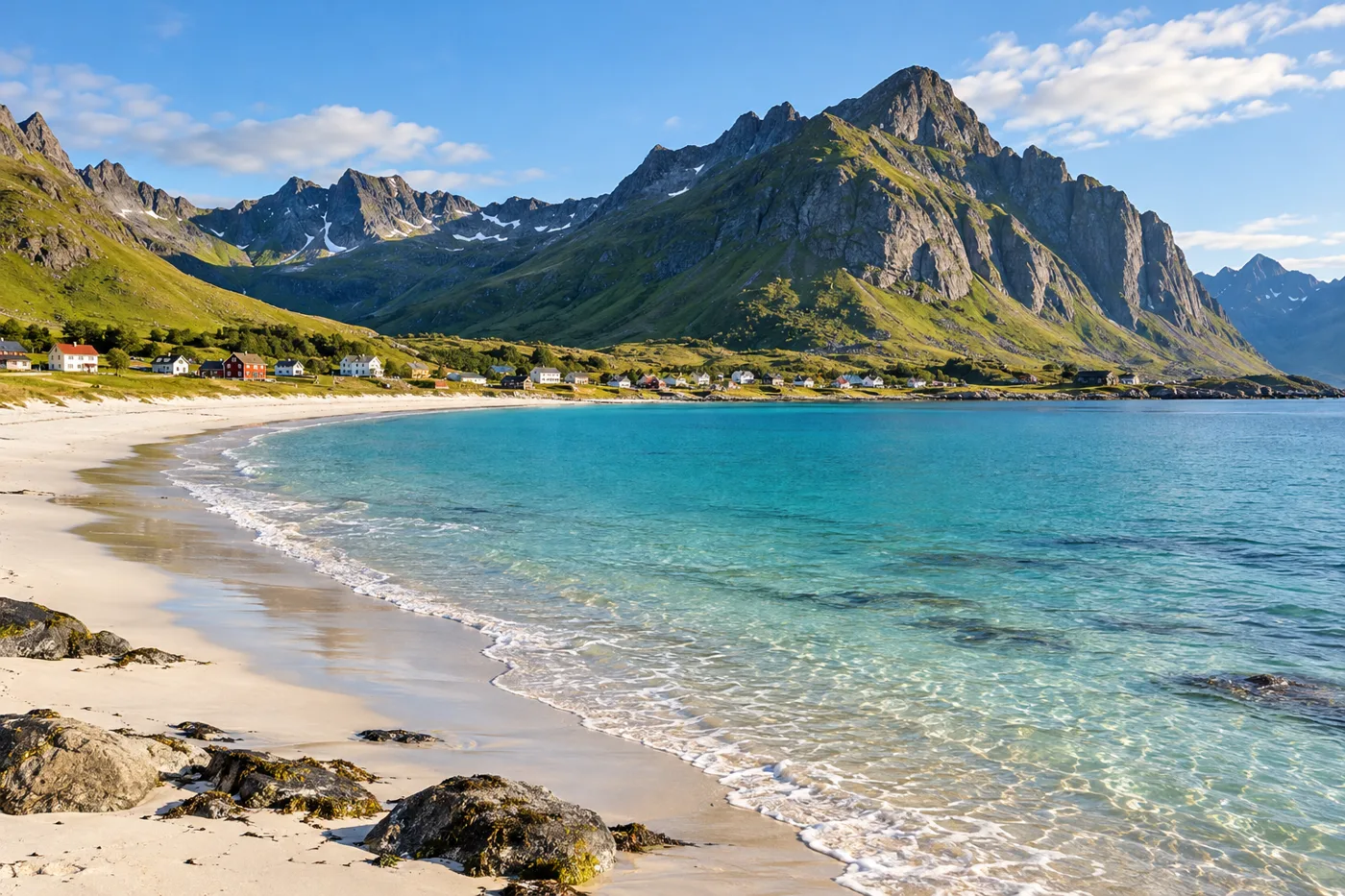
Book here with Viator → Shore excursion from Leknes
Ramberg’s broad sandy beach creates an easy coastal pause on the western road journey. Nearby Flakstad and Skagsanden offer shoreline scenery without a remote hike. These stops fit naturally between central Lofoten and Reine instead of requiring a separate expedition, making them useful when a road day needs time outside the car.
Use established access points and keep the visit proportional to conditions. A calm morning can support a long stroll; driving rain may make a brief stop sufficient. At surf beaches, powerful water and cold are serious constraints. Stay clear of surf-school operations and avoid trampling vegetation for a supposedly better camera position.
Allow one to two hours for shore stops, with extra time for a café or organised lesson. Beach access is generally free while parking and activities can cost extra. Check signs and facilities. Pair the coast with Nusfjord on a westbound day and reserve daylight for driving during autumn or winter.
Best for low-effort scenery along the main route.
10. Reinebringen only in suitable hiking conditions
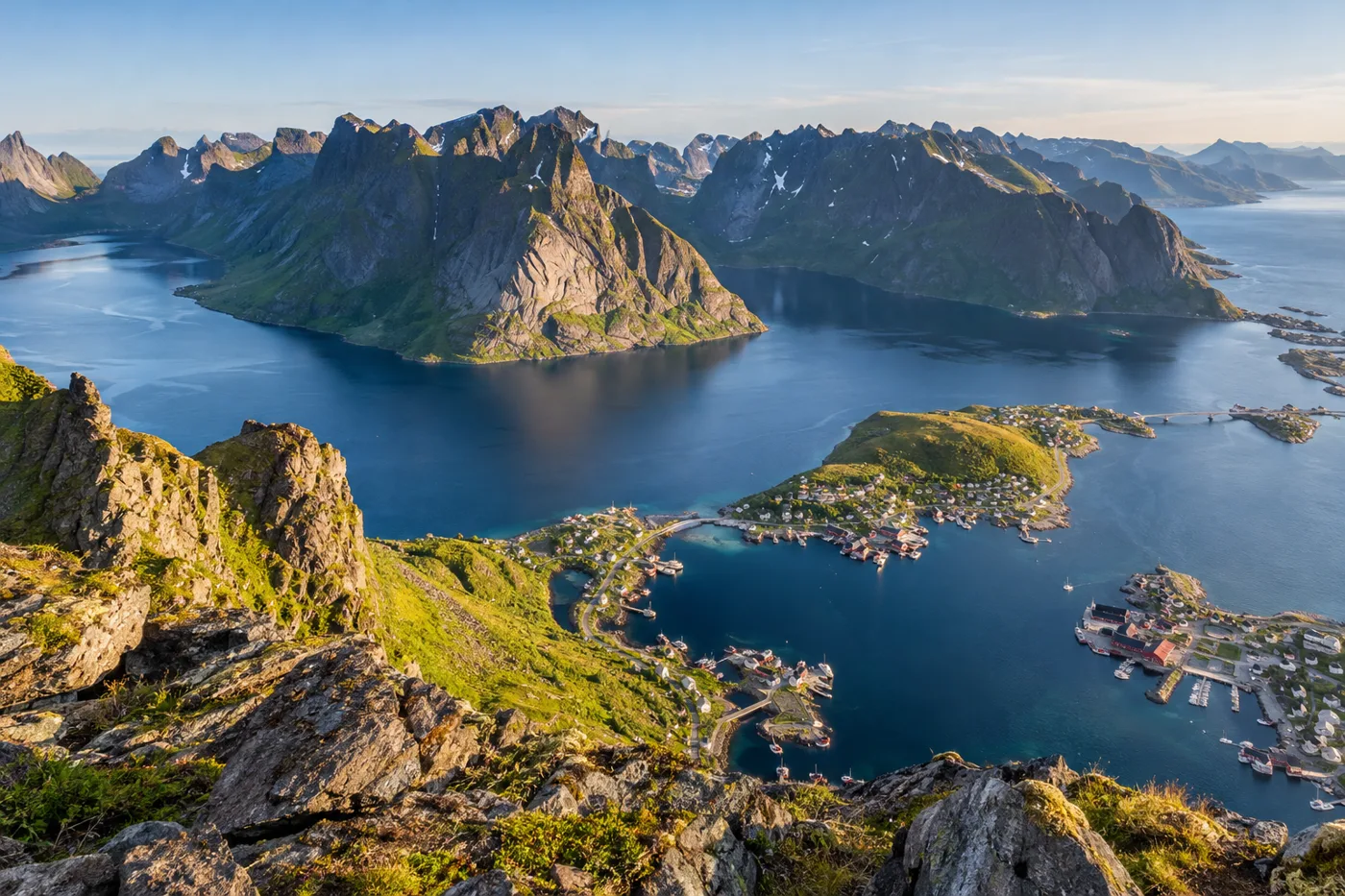
Reinebringen’s view is famous, but the route deserves more caution than its popularity suggests. Stone steps assist much of the ascent; they do not remove steepness, exposure or the consequences of wet and icy surfaces. This is an optional mountain experience, not a requirement for enjoying Reine or proving that you visited Lofoten.
Choose a dry, settled-weather day within your ability and turn around if footing or visibility deteriorates. Carry layers, water and proper footwear. Avoid edging beyond safe ground for photographs. Official destination guidance strongly advises against a winter ascent. Snow and ice can persist outside a traveller’s assumed winter calendar, so actual conditions matter more than the month.
Reserve a half-day including access and an unhurried descent; time depends on fitness and conditions. Check route advice, parking and closures locally. Do not schedule an ascent before a tight ferry departure. If unsuitable, use Reine’s shoreline viewpoints and a museum or café: choosing a safe alternative is a successful travel decision.
Best for fit hikers in dry, snow-free conditions; skip in winter.
Lofoten itinerary: one, two or three days
One day in Lofoten: choose one region
With a western base, use 09:00–12:00 for Reine and Hamnøy, lunch locally, then 13:00–16:00 for Å and its museum if open. Return before a relaxed evening. This is a full sightseeing day without a summit hike.
With an eastern base, choose Svolvær, Kabelvåg and Henningsvær instead. Do not spend most of your only day driving the length of the islands. Wind or rain favours the Storvågan museums; dark winter evenings favour an early return to your accommodation.
Two days in Lofoten: a limited road trip
Day one: start around Svolvær, explore Henningsvær during 09:00–12:00 and travel west after lunch, stopping at Borg or Haukland. Stay near Leknes or farther west according to your next destination. Allow traffic and stop time beyond a map’s driving estimate.
Day two: visit Nusfjord in the morning, then Ramberg and Reine in the afternoon; add Å only if opening and daylight permit. End near your departure point. If storms affect roads, reduce stops and remain within one area rather than driving simply to satisfy every reservation.
Three days in Lofoten: east, centre and west
Day one uses Svolvær, Kabelvåg and Henningsvær with an eastern overnight. Day two combines Borg and Haukland, then continues to a western base after an early meal. Day three gives Reine, Hamnøy and Å their own time, with Ramberg if it fits.
Choose one substantial summer hike by replacing other stops, not adding it to a complete driving day. Winter travellers should move between bases only if roads and daylight justify it. Weather can disrupt ferries, so keep the final connection day light and confirm departure status.
Planning the best things to do in Lofoten
Book accommodation and arrival transport together. The Bodø–Moskenes ferry, flights to local airports and access via Evenes create different starting points. Check current timetables and reservations; another traveller’s summer plan may rely on a service that does not run on your date.
A car offers flexibility but demands patience on narrow roads and at small car parks. Pull off only where permitted. Never block passing places, farm entrances or local access. Check road reports and leave time for conditions rather than relying on distance alone.
Without a car, build the itinerary from confirmed buses and stay in connected settlements. Public transport supports a slower Lofoten journey, but not spontaneous stops at every beach. Avoid accommodation whose last bus arrives before your planned excursion ends.
Reserve popular rorbu accommodation early and check inclusions. A cabin may be a renovated holiday unit rather than a preserved interior. Self-catering can help, but shop before smaller villages where opening and choices are limited. Consider cooking facilities when comparing room rates.
Respect the Lofoten Code of Conduct: use toilets, remove rubbish and protect fields and fragile ground. Freedom to roam has responsibilities and does not make private gardens public. Mountain routes need a weather decision on the day; traction aids do not make a steep icy route easy.
Lofoten travel guide: frequently asked questions
How many days are enough for Lofoten?
Four to seven days is preferable for a relaxed island journey. Three days can cover selected eastern, central and western stops by car, but weather and arrival points may require a smaller plan.
Can I visit without a car?
Yes, by planning around current buses and choosing connected bases. Expect fewer stops and more timetable discipline than on a car-based trip.
When is the best time to visit?
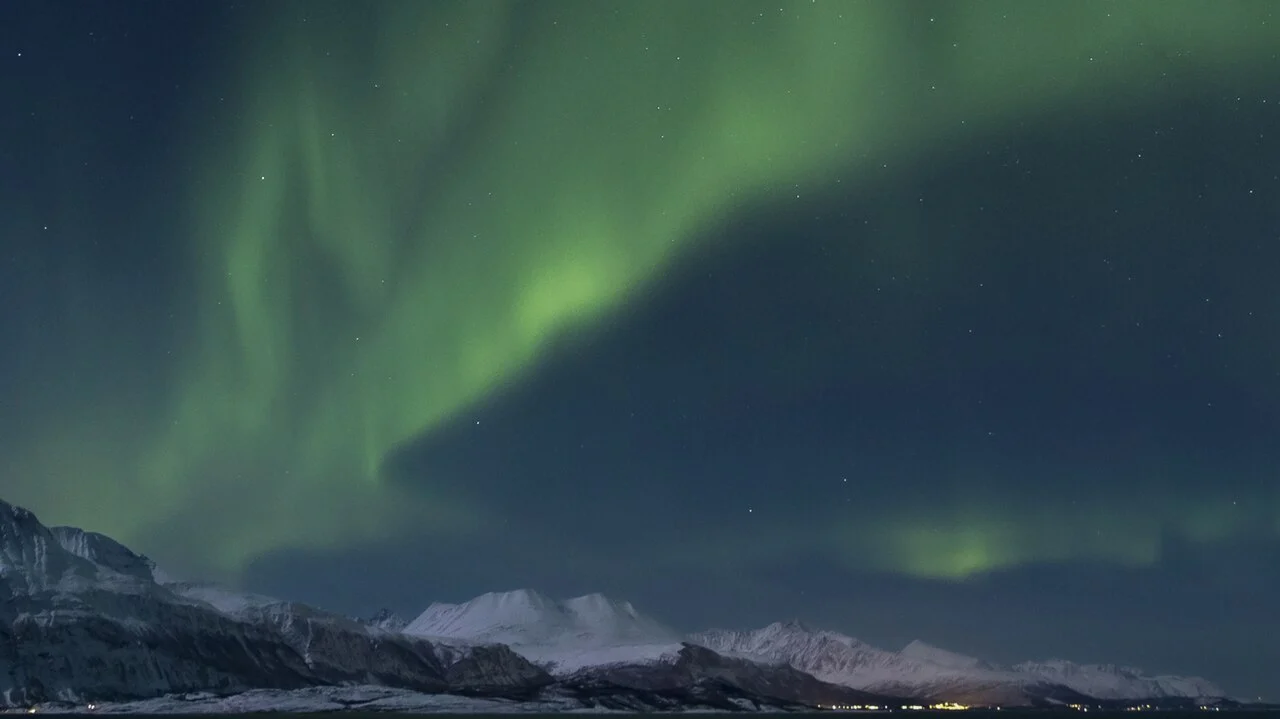
Summer gives long daylight and the broadest activity choice. Autumn and winter suit some photography and aurora interests but bring darkness, challenging roads and cancellations.
Is Reinebringen suitable in winter?
Official destination advice strongly discourages it. Steep steps can be icy and exposed. Choose shore viewpoints around Reine instead.
Do I need ferry reservations?
Check the specific route and operator, especially with a car at busy times. A foot-passenger arrangement does not automatically guarantee vehicle space.
How can I reduce costs?
Stay longer in fewer bases, self-cater where useful and mix free shoreline stops with selected museums or tours. Book transport early and investigate one-way car-hire charges.
Where to go next in Norway
Choose a connected next stop and allow separate travel time between regions. These guides explain what each destination needs.
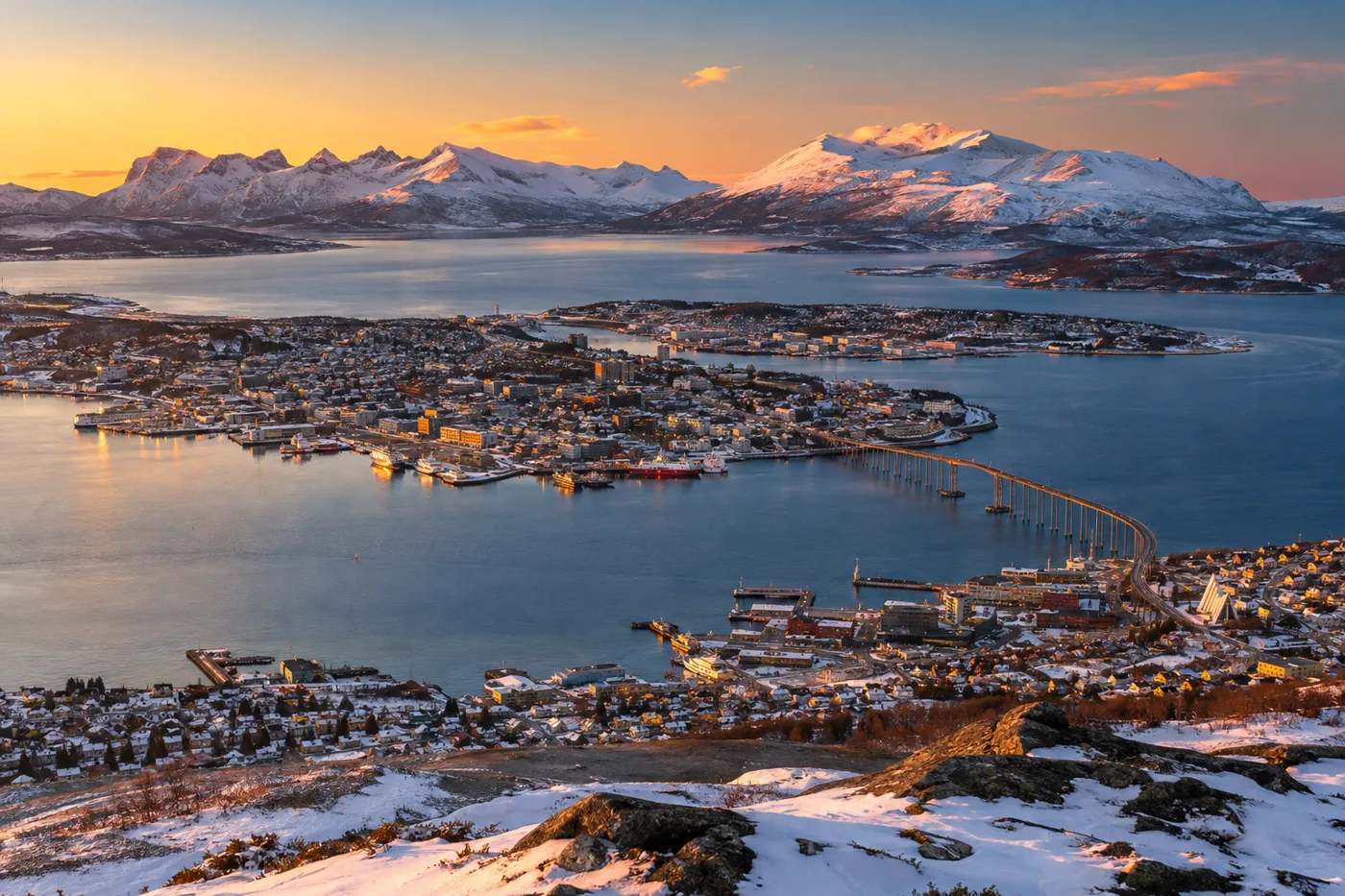 10 Best Things to Do in Tromsø: An Arctic Travel Guide
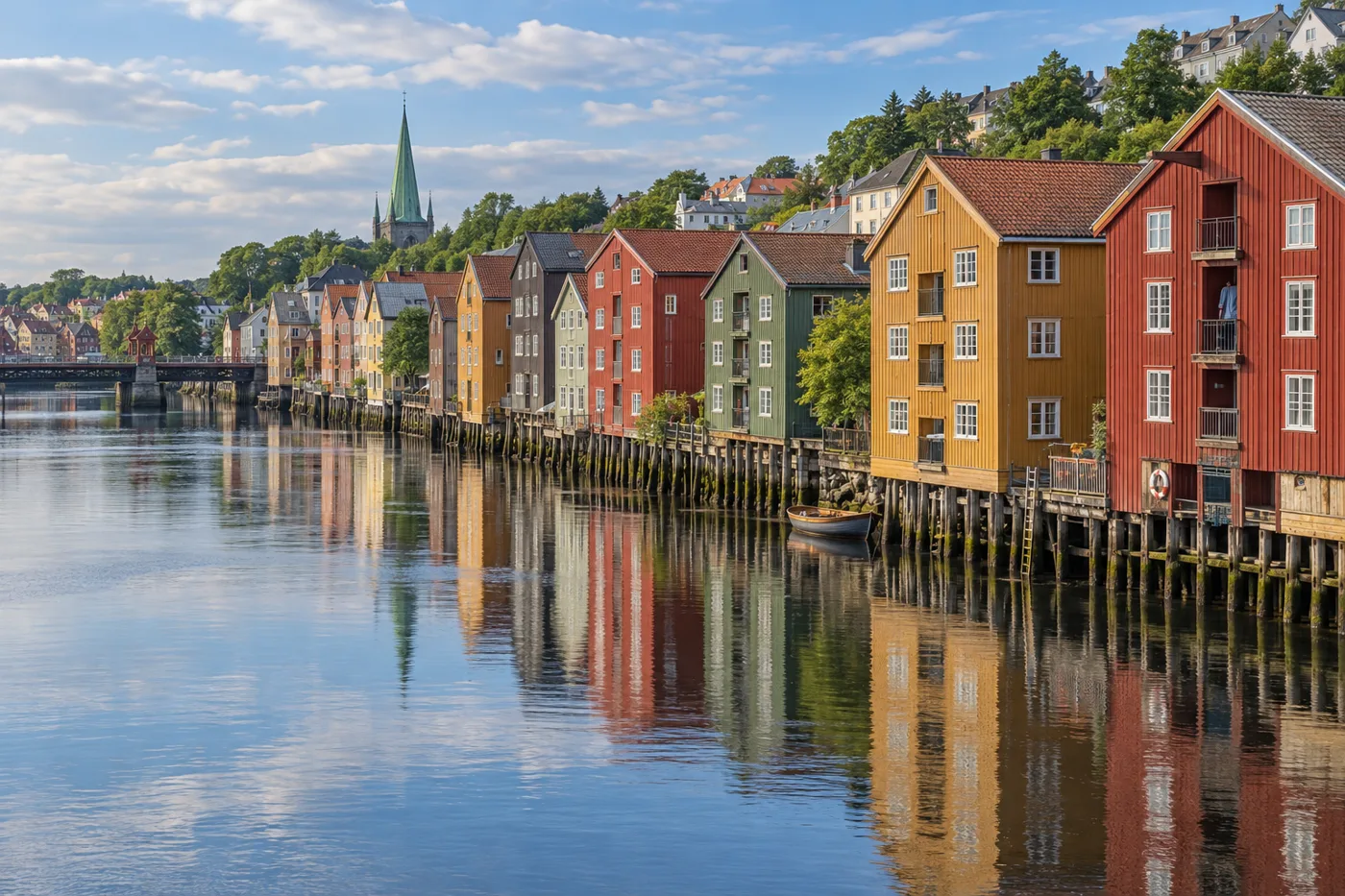 10 Best Things to Do in Trondheim: A Practical Travel Guide
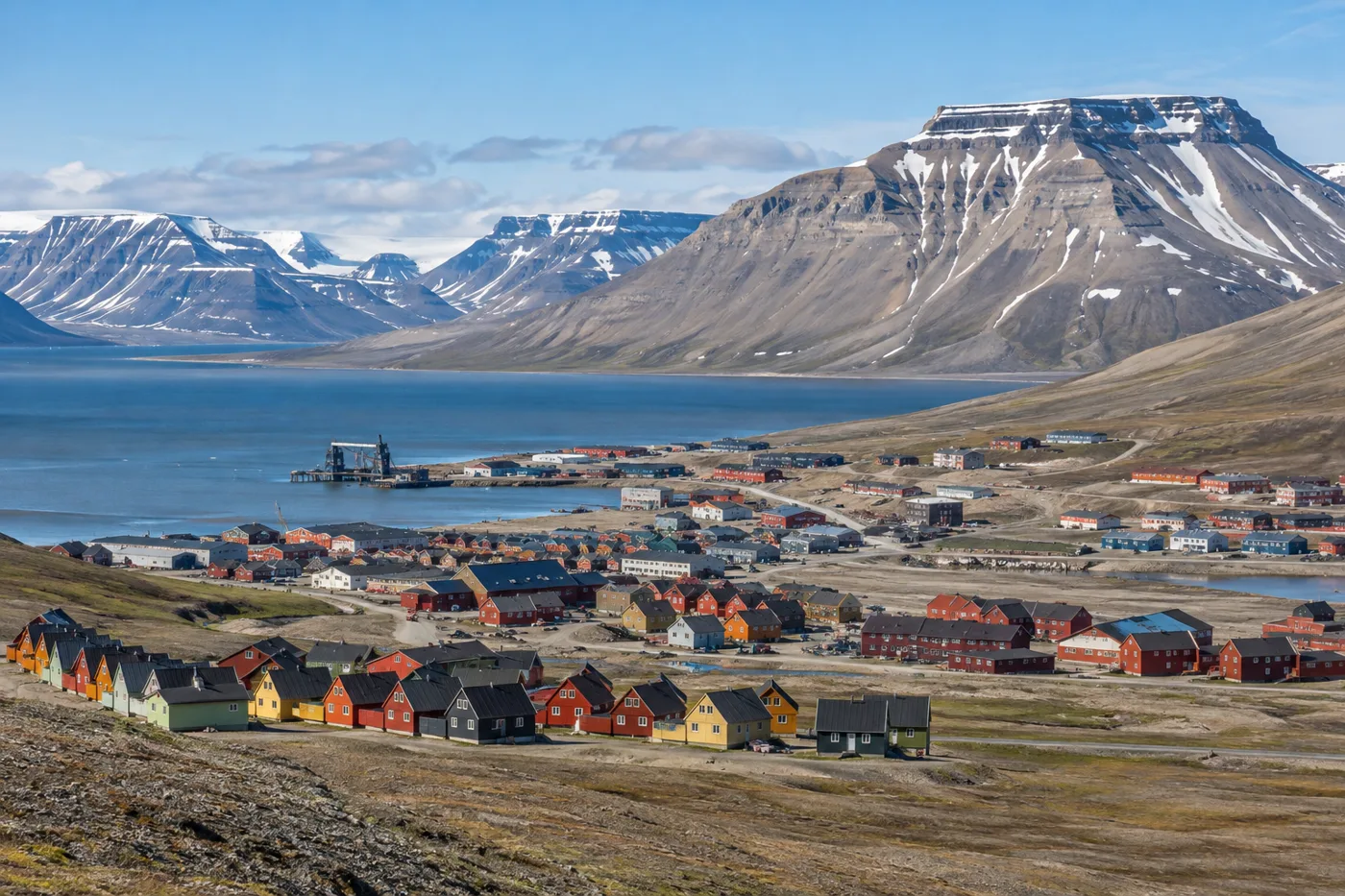 10 Best Things to Do in Svalbard: A Longyearbyen Guide
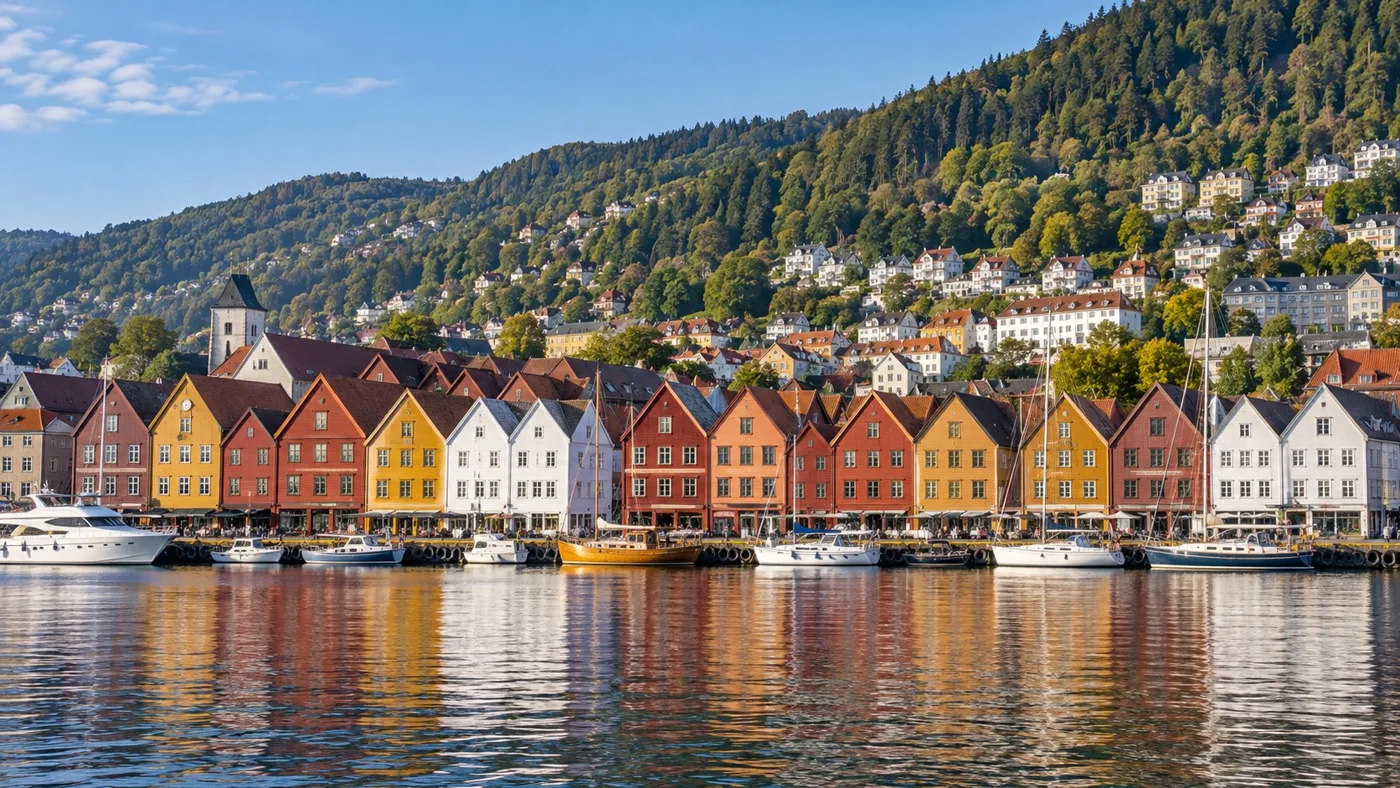 10 Best Things to Do in Bergen: A Practical City Guide
Planning your visit to Lofoten
The useful Lofoten itinerary fits your arrival point, weather and pace. Combine a few villages with a coastal walk and enough fishing history to understand the landscape. Leave mountain routes optional, protect your departure connection and give the islands more time than their short road distances first suggest.
If walking is the main reason for your island visit, use our Lofoten hiking guide to compare routes by effort, season and trail conditions before committing to a summit. Keep a lower coastal alternative for wind, snow or poor visibility.
Official sources and practical checks
Official information was reviewed during preparation. Fares, hours, road access and departures can change. Check the operator for your dates before booking. Suggested visit durations are editorial planning allowances.
- Visit Lofoten: destination planning
- Visit Lofoten: Reine and winter hiking advice
- Visit Lofoten: Haukland Beach
- Museum Nord: SKREI
- Museum Nord: Lofoten Museum
- Lofotr: museum tickets and experiences
- Visit Lofoten: National Scenic Route
- Museum Nord: SKREI main building public opening, 30 June 2026
Links labelled as affiliate links may earn NorwayTop10 a commission on eligible bookings. Read our editorial policy and commercial disclosure.
Choose accommodation and plan Lofoten
Compare accommodation options alongside the places you want to visit. Check the journey to the property before reserving.
Plan experiences around your stay
These guides compare regional options and practical considerations. Check the actual departure point; a related guide is not a promise that every activity is available in this town.
Hiking in Lofoten
Compare guided activities before booking
Use these tour comparisons to match your available time, meeting point and travel season with the right experience in this region:
Choose the right walking outing in Lofoten
The Lofoten hiking guide distinguishes valley and mountain routes from short village stops. If your group prefers a guide, compare the guided walking tour guide and check whether the activity is a town walk or a mountain hike. Choose the length and terrain for the least experienced member, and find out what happens if conditions change.
Scenic Road Trips in Norway
Viking Sites and Museums in Norway