Stave Churches in Norway: 10 to Visit and How to Get There
Stave churches in Norway are medieval timber buildings whose surviving examples range from an urban open-air museum to a hillside above a fjord. The right choice depends on whether you want to inspect carvings, understand the structure or build a scenic route. Check interior access before you make a long detour, especially outside summer.
Quick answers
- Worth it? Yes for medieval timber construction, carving and local history.
- Time: Allow 45–90 minutes at one church and more for ferries or museums.
- Best time: Summer is usually easiest for interior visits.
- Cost: Check individual admissions, ferry tickets and parking.
- Transport: Walk or take transit in Oslo, and check timetables or drive in rural areas.
- Priorities: Borgund for construction, Urnes for carving and Gol for easy Oslo access.
1. Borgund in Lærdal
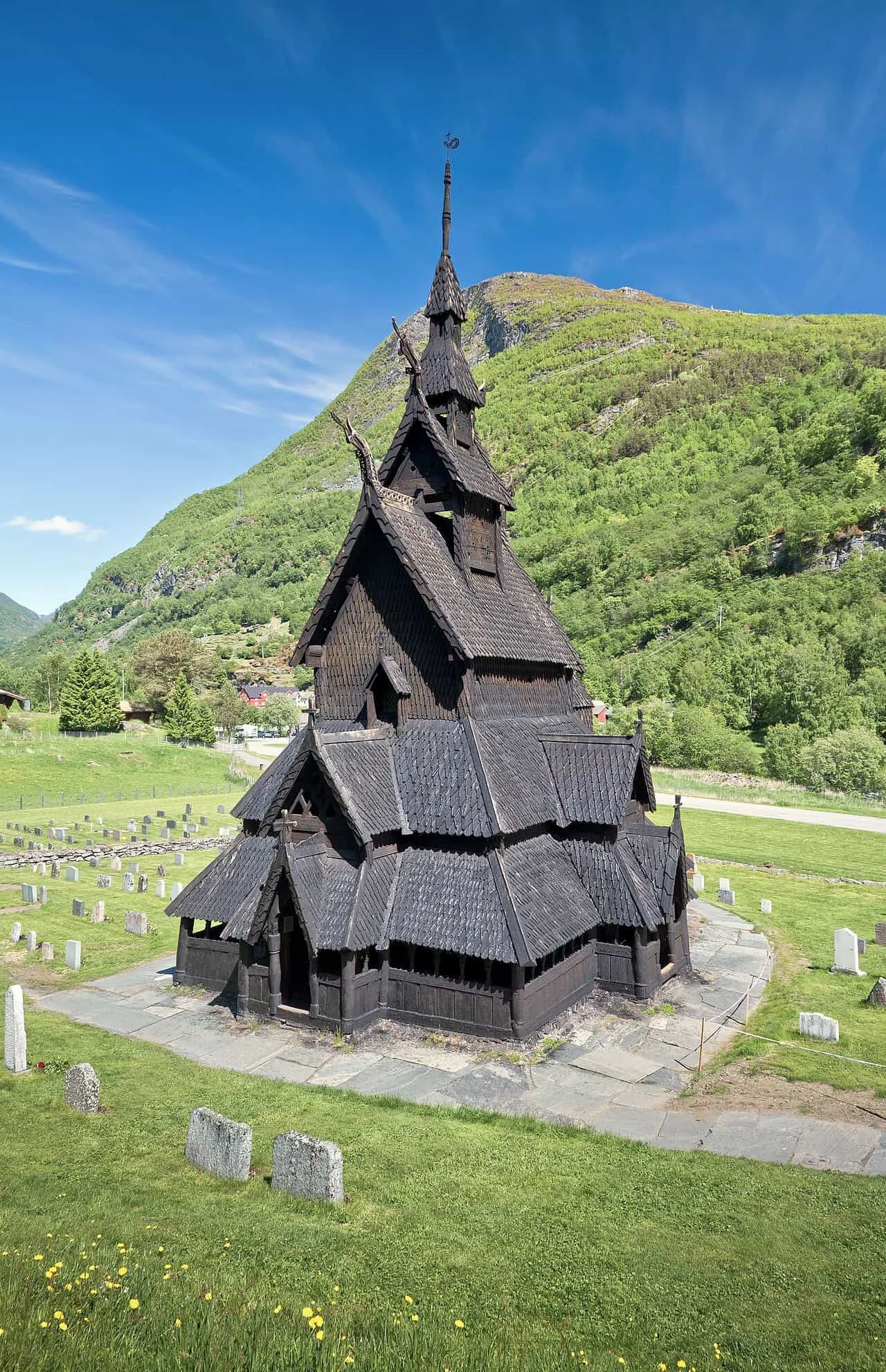
Borgund is a particularly useful introduction to the stave church form. Its stacked roofs, covered perimeter and carved details give visitors plenty to notice before entering. The visitor centre lets you connect the silhouette outside to the construction and conservation story.
Walk around the building before joining an interior visit. Look at how the roof volumes change as you move between sides and where the entrance fits into the surrounding gallery. Inside, allow time for your eyes to adjust and follow staff instructions on photography and contact with the wood.
Check the National Trust of Norway’s dates, current ticket and any group arrangements. Allow an hour or longer if you visit the exhibition. Borgund works well on a Lærdal route, but an onward drive and a museum visit both take more time than a brief roadside photo stop.
2. Urnes above the Lustrafjord
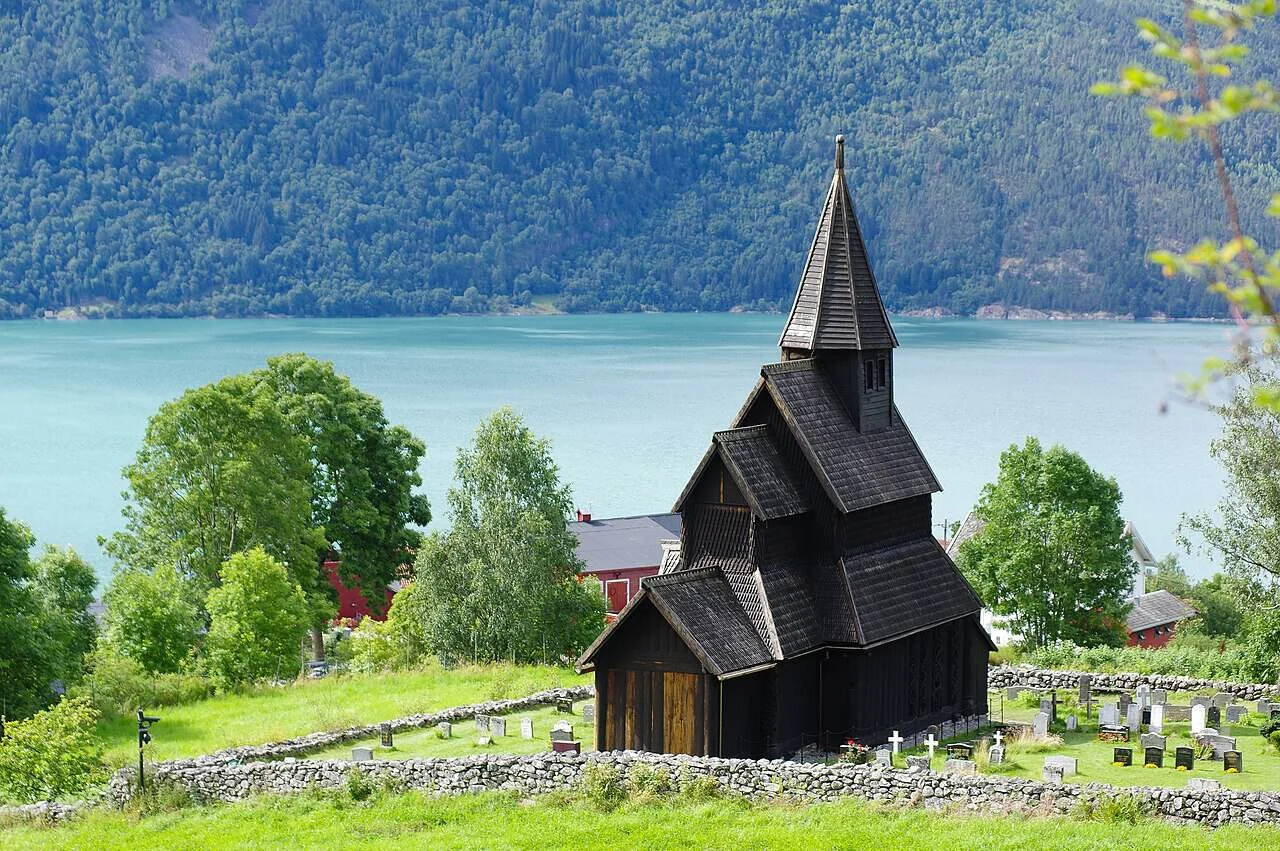
Urnes is a UNESCO World Heritage Site above the Lustrafjord. The carved portal is a reason to visit in its own right. UNESCO highlights the meeting of influences in the building, and the carving makes the relationship between the wooden building and earlier artistic traditions easier to see.
The journey contributes to the visit. If approaching by the ferry from Solvorn to Ornes, consider the uphill walk from the landing and the time needed for the return. Weather and mobility can change how practical that combination is, even if the sailing itself looks convenient.
Check the ferry schedule, passenger or car arrangements and site admission separately. Leave enough time between your booked or intended visit and the return. A quiet weekday gives more room to adjust if you miss a sailing. Pair the church with a slow Lustrafjord day instead of three distant attractions.
3. Kaupanger near Sogndal
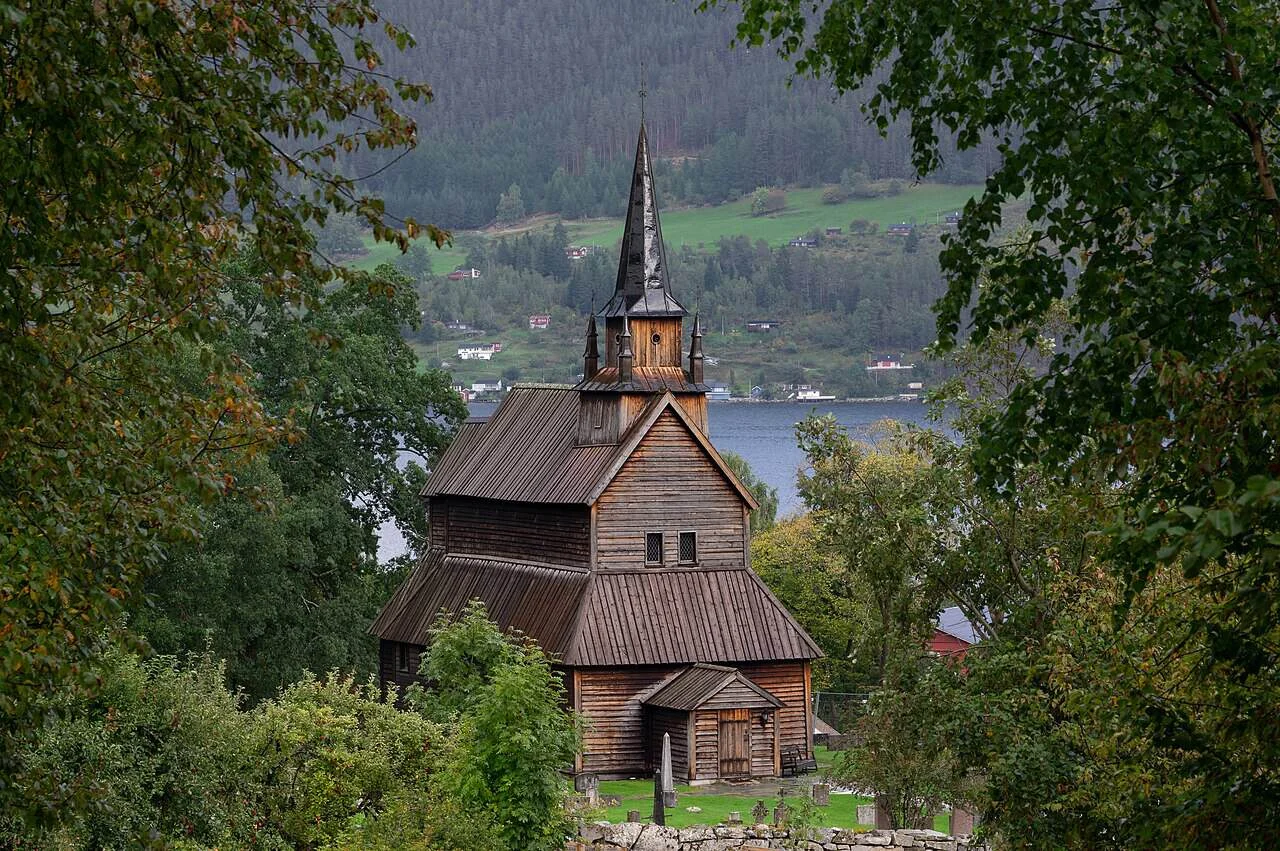
Kaupanger is a useful stop for understanding how a church sits within an active settlement. The timber structure and churchyard reward a short exterior circuit. The form differs from Borgund, which gives visitors a chance to see how much variety exists within the category.
Look at the proportions before concentrating on the decoration. An interior visit, when available, helps connect the nave and supports to the volume you saw outside. When visiting a churchyard, stay on paths and give any local visitors privacy.
Check whether interior access is offered on your dates and whether it follows a seasonal schedule. Allow 45–60 minutes for a visit, with more time if you are connecting onward. It makes geographic sense with Sogndal or an inner Sognefjord itinerary. Check a ferry separately if it forms part of your route.
4. Hopperstad in Vik
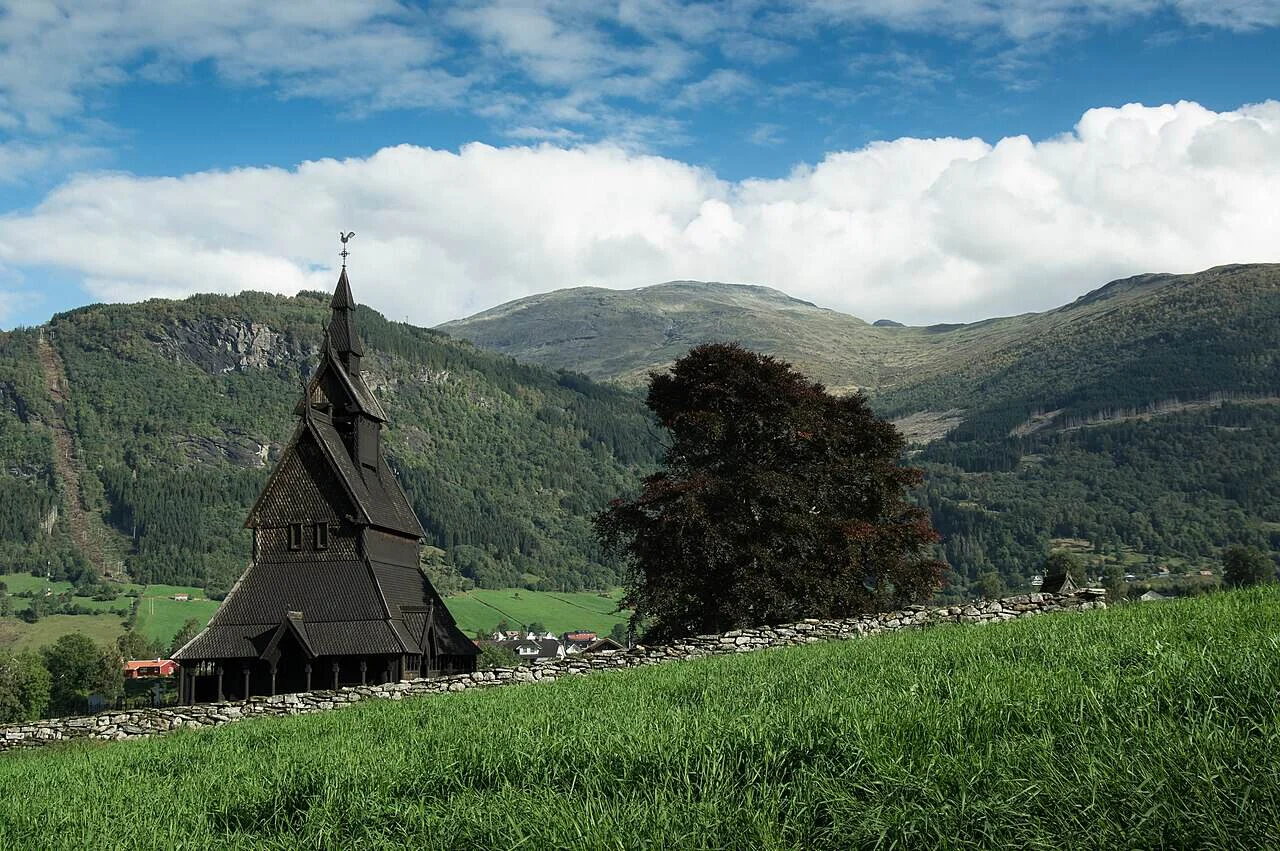
Hopperstad stands at Vik on the south side of the Sognefjord. Its exterior has the layered profile many visitors associate with stave churches. The building’s restoration history matters to how you read that profile, and a guide can explain which features reflect different phases.
Begin with the view of the full building before looking for smaller details. Ask about restoration and how present-day visitors can distinguish medieval material from later work. Comparing Hopperstad with Kaupanger is more rewarding if you look at the structure and setting as well as the ornament.
Check the operator’s published season and latest admission. Plan about an hour and account for road conditions and any ferry you need to reach Vik. Our scenic road trips guide can help place the stop into a wider drive.
5. Heddal in Telemark
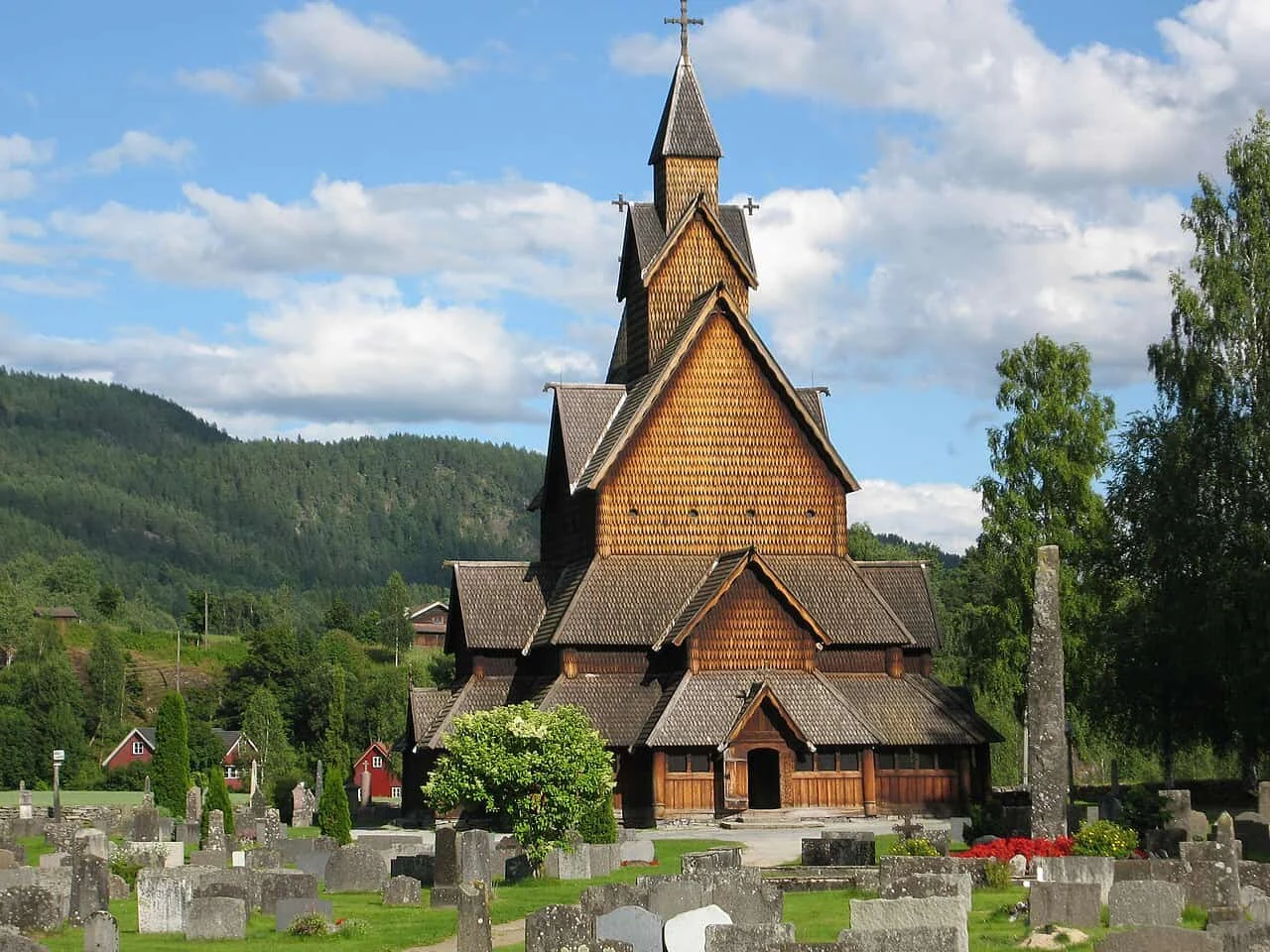
Heddal near Notodden is Norway’s largest stave church. Its scale is striking because the repeating roof levels frame a timber building much larger than many travellers expect. It offers a useful contrast with a smaller example where individual elements are easier to isolate.
Look at the overall silhouette first, then pick a point where you can see several roof levels together. If the interior is open, spend time tracing where the main supports meet the space above. Ask staff which details date from different periods of use or restoration.
Confirm visitor hours and admission for your specific date and allow roughly an hour. Check whether services or events affect access. When driving between Telemark and another region, plan Heddal as a distinct visit with time to park and walk, instead of assuming it fits into any gap.
6. Lom in Gudbrandsdalen
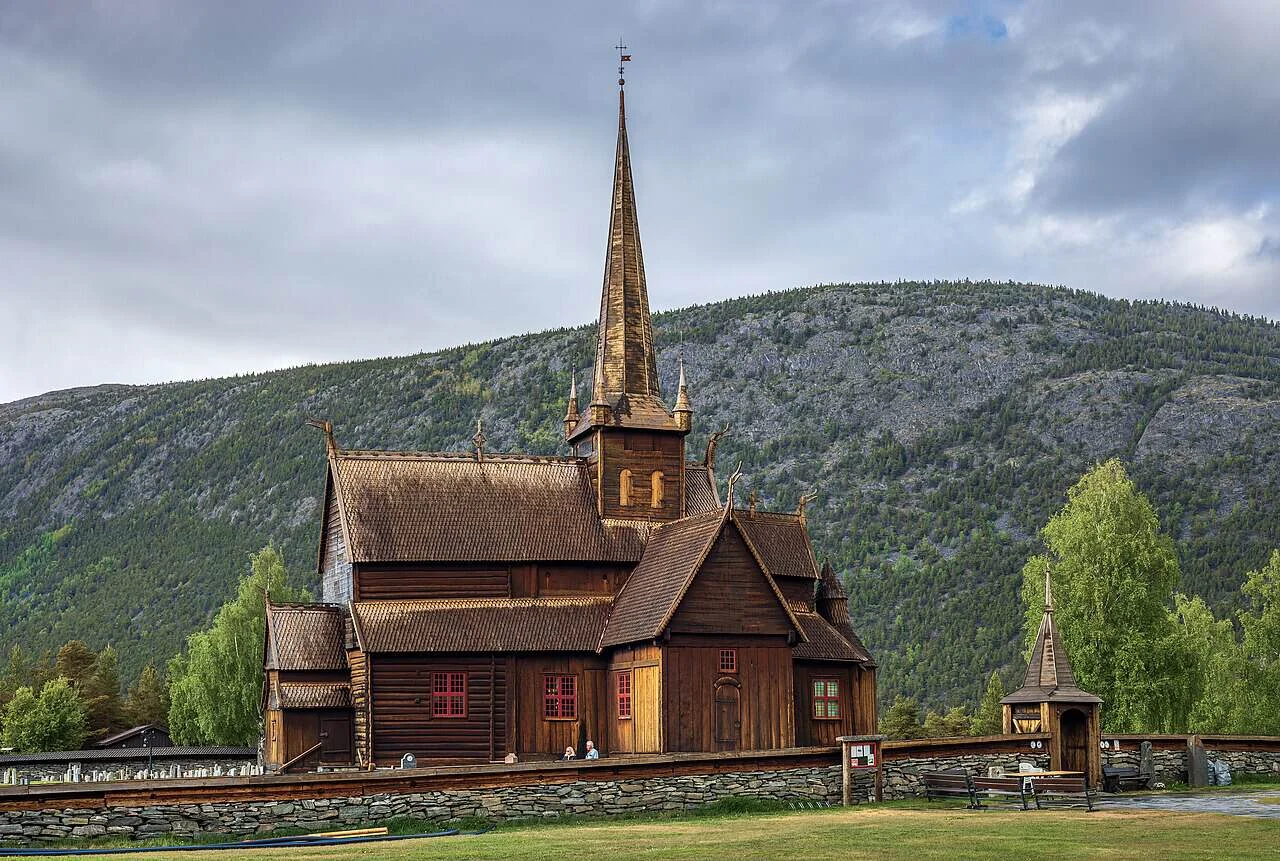
Lom’s stave church stands in a village where a visit can fit naturally into a longer inland journey. The surrounding valley and mountain routes make the church an appealing stop even when the trip is primarily about scenery or hiking.
Look closely at the relationship between the core timber building and later additions. A visit helps explain how a medieval church could continue to serve a community as its needs changed. Spend part of your stop in the village to see how close the church is to everyday activity.
Check opening arrangements and any service times. Budget 45–75 minutes, plus time for a bakery or lunch stop. Confirm road status before pairing Lom with an onward mountain drive, since the availability of a particular route can change with season and weather.
7. Ringebu in the Gudbrandsdal valley
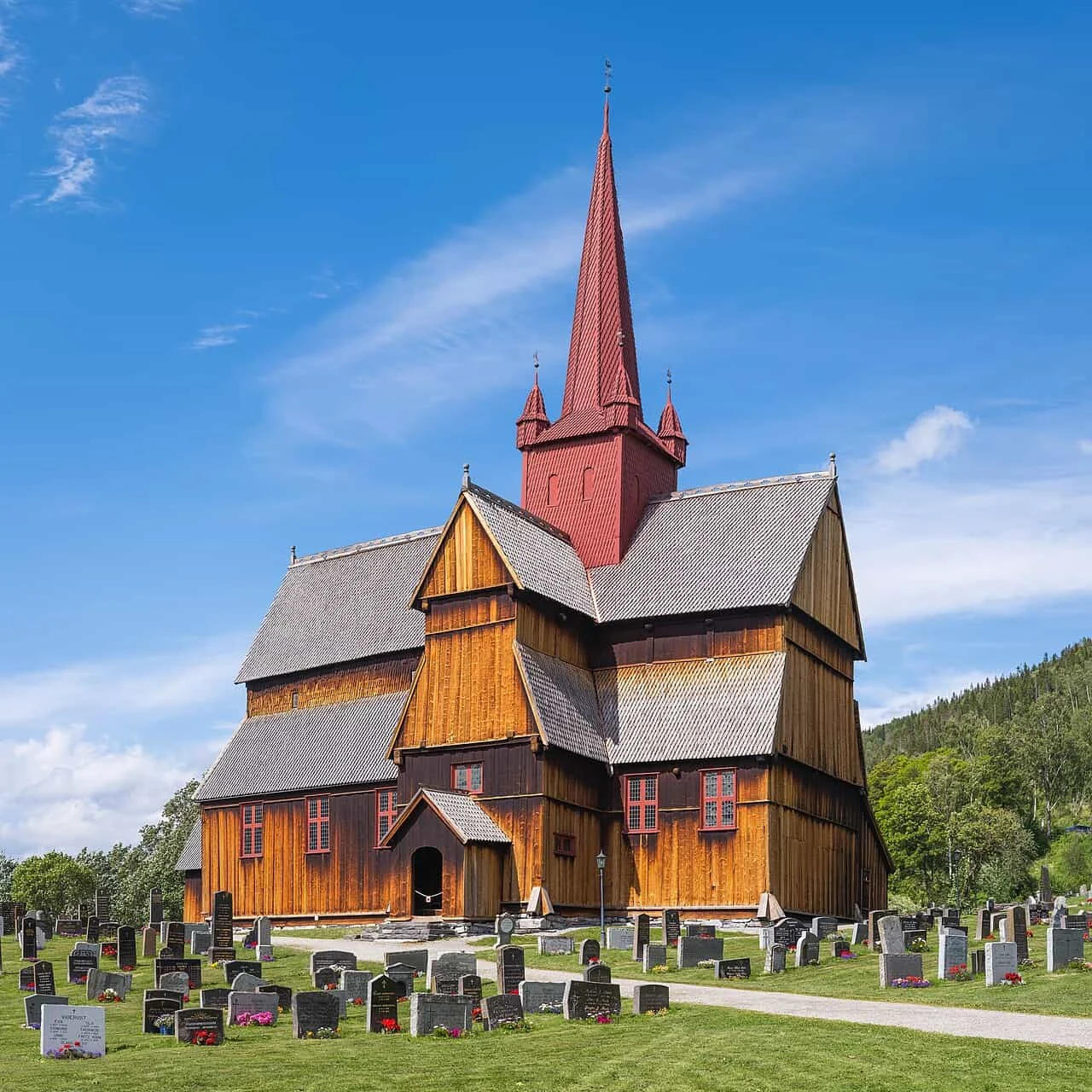
Ringebu makes a useful valley stop on the way through Gudbrandsdalen. The elevated setting and distinctive tower make it easy to recognise. Its appearance reflects changes after the medieval building phase, which is part of the story you can see in the finished structure.
Spend a few minutes outside looking at how the tower and church relate to the surrounding fields and slopes. If a guide is present, ask how additions affected the interior. That conversation is often more informative than trying to memorise construction dates across several churches.
Allow about an hour if the site is open. Check the operator’s opening information and make sure a rail traveller has a way to cover the distance from the station. Leave extra time if visiting on the same day as a booked train. Pair it with valley sightseeing rather than a tight mountain detour.
8. Torpo in Hallingdal
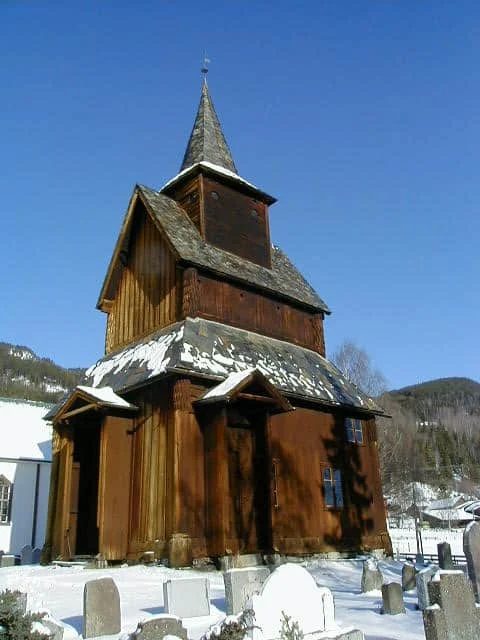
Torpo gives you an opportunity to examine a smaller surviving medieval structure in Hallingdal. It stands alongside a newer church, so visitors can compare two buildings that served the same community in different periods. The medieval interior is a reason to prioritise confirmed opening.
Allow time to read the interpretation before looking up. Torpo is known for medieval painting, which needs attention and suitable lighting to appreciate. Photograph only where permitted and follow instructions designed to protect the interior.
Check the National Trust’s calendar and ticket information before driving. Allow 45–60 minutes, plus time for a stop in Hallingdal. If access is unavailable, decide whether the exterior still justifies the detour based on your onward route and the daylight left.
9. Gol at the Norwegian Museum of Cultural History
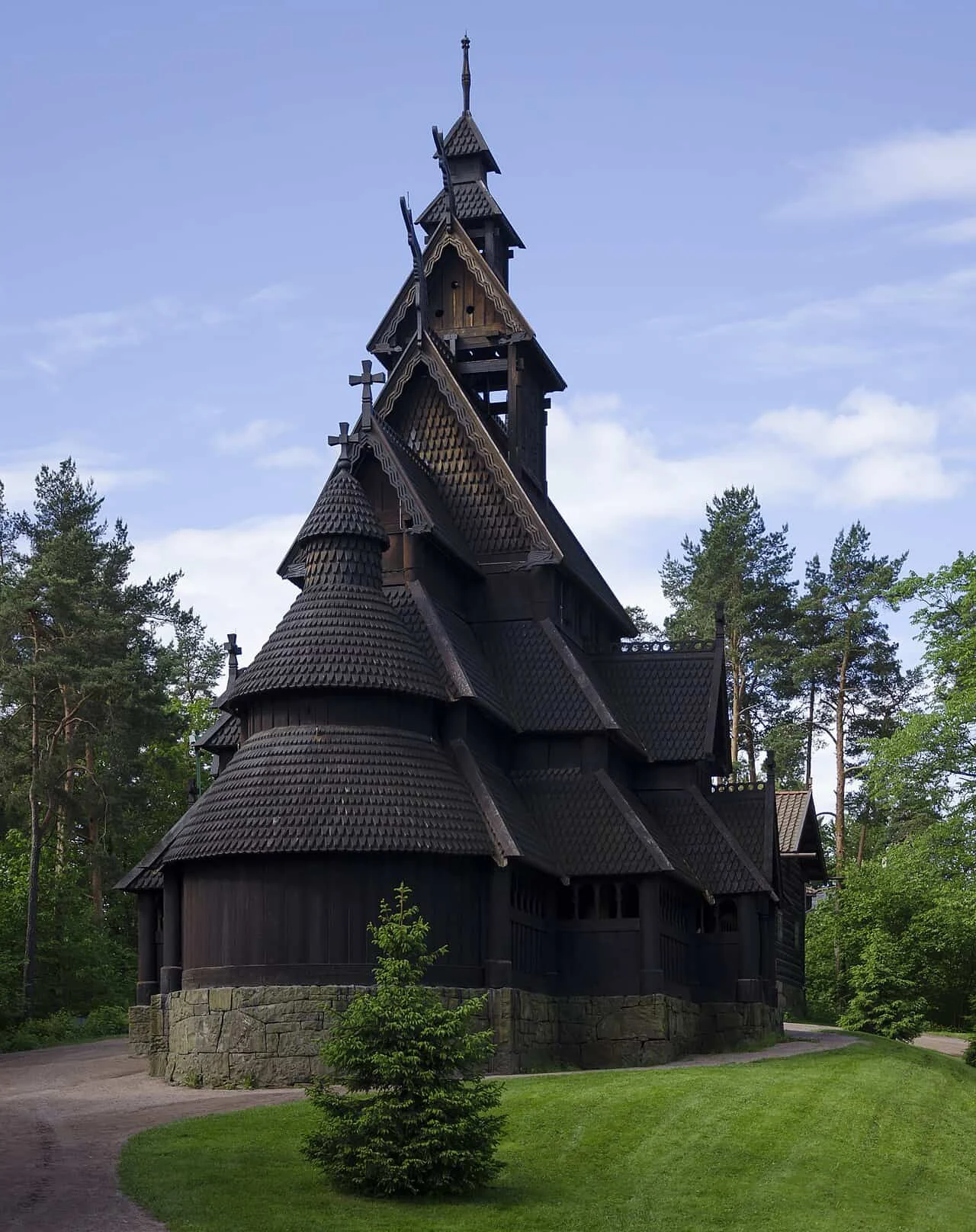
The stave church from Gol now stands at the Norwegian Museum of Cultural History at Bygdøy in Oslo. The original site and present location are different, so use the museum address when planning a visit. Its placement among other buildings makes it easier to compare timber construction across periods.
A museum visit also gives travellers a chance to read about relocation and reconstruction. Approach the church from different angles if paths are open, then compare it with the other wooden structures on the grounds. Allow time for museum interpretation, especially if visiting with children.
Check museum admission and whether interior access follows a separate timetable. Set aside two or more hours for the wider site. Transit is useful, and our Oslo guide helps you plan Bygdøy alongside another city day.
10. Kvernes on Averøy
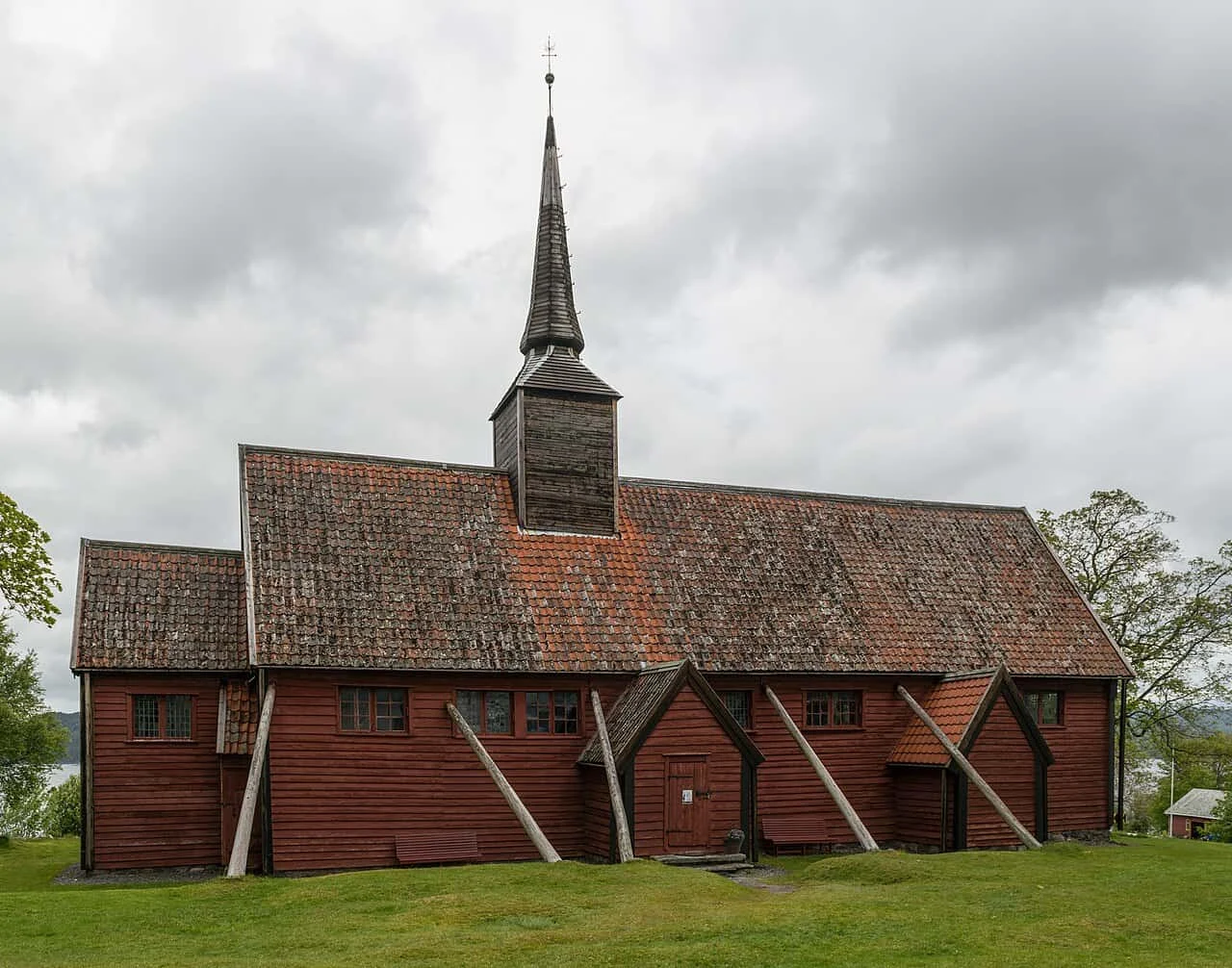
Kvernes sits on Averøy in a coastal setting. The church broadens the comparison beyond the inner fjords and inland valleys. Its dating and decoration are especially useful topics to raise on a guided visit, since visitors may assume every stave church has the same medieval origin.
Spend time observing the exterior structure and its relationship to the churchyard. If the interior is accessible, ask about the painted decoration and about construction features specific to this building. The coastal position is worth some time even when you are continuing toward another destination.
Check the National Trust’s dates, opening hours and current admission. Give the visit about an hour plus time for the drive. If your route also includes the Atlantic Ocean Road, leave a weather margin and use designated parking areas for stops along the way.
Stave churches in Norway itineraries
1-day itinerary
In Oslo, go to Bygdøy in the morning and spend two to three hours at the Norwegian Museum of Cultural History. Give the afternoon to another nearby museum or take transit back to the centre. Eat in town in the evening. During rain, balance the outdoor grounds with indoor exhibitions and check whether the church interior is accessible.
2-day itinerary
For two days based near Sogndal, allow the first morning for travel and visit Kaupanger in the afternoon if it is open. Check the ferry and dinner arrangements that evening. On day two take the Solvorn–Ornes ferry in the morning, walk uphill with time for the visit and return in the afternoon. If the sailing or church is unavailable, choose an accessible inland or waterfront stop and return to your base.
3-day itinerary
For a three-day inner-fjord route, spend day one morning travelling to Lærdal, visit Borgund in the afternoon and eat locally. On day two drive to the Sogndal area in the morning, check Kaupanger access and use the afternoon for the church or waterfront before dinner. On day three give Urnes most of the morning and early afternoon, then return for an evening in the same base. In poor weather or outside the season, build the days around sites with confirmed interior opening and check road and ferry status.
Stave churches in Norway travel tips
Check each site separately for admission, hours and last entry. Take a screenshot of the timetable if travelling through areas with variable mobile coverage. Allow time to leave the main road and to walk uphill or on uneven paths.
Book any ticketed guided visit and verify ferry capacity or reservation rules, particularly on busy summer weekends. When driving a loop, compare individual admissions and parking charges, and factor in travel and lunch. Most visitors learn more from two unhurried sites than a long checklist of locked doors.
Dress for cool interiors and rain. Follow local rules for photography, touching wood, and services or private events. Ask about steps and uneven ground if mobility is a concern. For a wider itinerary, consult our Norway destination guide.
Include Kvernes in a Molde-area outing
Compare this regional sightseeing tour if you want to include Kvernes in a wider day out. Confirm church entry, opening dates and the meeting point; this is a combined excursion rather than a standalone church ticket.
View the Molde and Kvernes tour →
Check current dates, prices, meeting points and cancellation terms on Viator. Affiliate link: we may earn a commission if you book.
Related planning
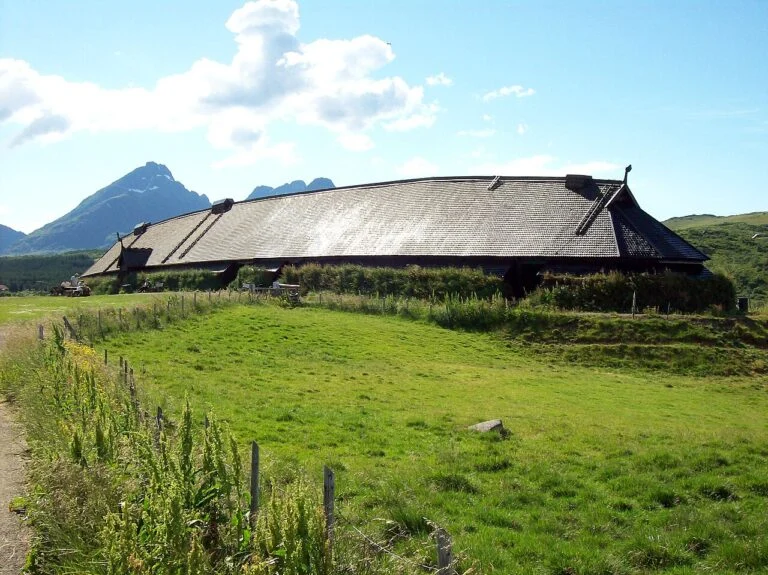
Viking Sites and Museums in Norway
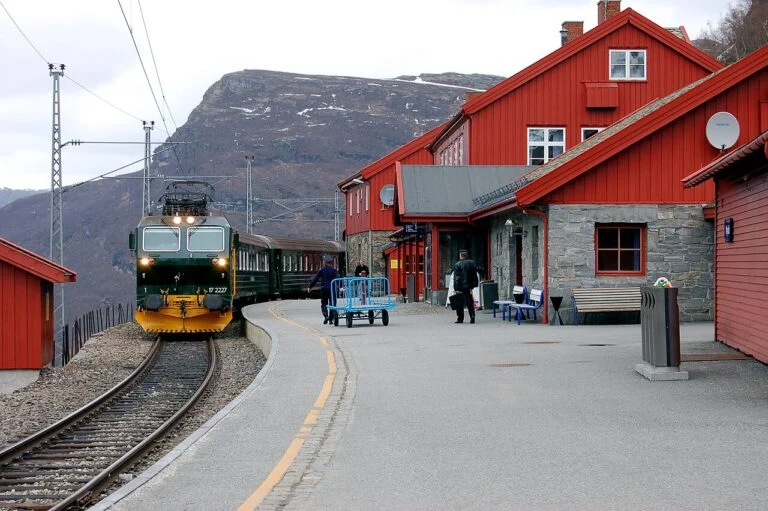
Scenic Train Journeys and the Flåm Railway

Scenic Road Trips in Norway
Destinations for your trip
Frequently asked questions
Are stave churches worth a detour?
Yes if you are interested in timber architecture and can confirm access. Borgund and Urnes reward time on site. Gol is convenient on a short Oslo stay.
How long does a visit take?
Allow about an hour at an individual church. Urnes needs more time for the ferry and walk. Gol is part of a museum that can occupy several hours.
When should I go?
Summer usually offers the greatest choice of staffed openings. Check the operator if visiting in spring, autumn or winter.
What does it cost?
Admissions differ by site, and a museum may use an overall ticket. Price any ferry, road tolls or parking separately.
Should I reserve?
Check if your intended visit uses timed entry or a guide. Confirm ferry capacity and timing at Urnes, especially if travelling with a vehicle.
Can I visit without a car?
Gol is easy to combine with Oslo public transport. For rural churches, check the complete journey in both directions and allow for gaps between services.
Conclusion
Choose one church for the feature you most want to see, then build the rest of the day around confirmed opening and transport. Comparing a second building makes the differences in size, setting and restoration easier to understand.
Official sources and current conditions
Check operators and official visitor sites for current prices, opening hours, departures and booking requirements.