10 Best Things to Do in Ålesund: A Practical Travel Guide
The best things to do in Ålesund combine a walkable Art Nouveau centre with saltwater, island views and museums explaining why the town faces the sea. Spend your first day around Brosundet and Aksla, then use extra time for the aquarium or Alnes. This guide distinguishes central sights from excursions so you can choose a realistic route rather than spend your visit chasing distant viewpoints. You can see the core without a car, while island visits need more deliberate transport planning.
A practical Ålesund travel guide with ten ranked experiences, realistic one to three day itineraries and advice on weather, costs and transport.
Ålesund: quick answers
- Worth visiting?
- Yes, especially for architecture, coastal scenery and a compact city break.
- Time needed
- Two days; three for an island excursion or hiking buffer.
- Best time
- May–September for outdoor flexibility; winter for a quieter urban visit.
- Cost level
- High; free walks balance paid museums and excursions.
- Getting around
- Walk centrally; use buses, booked tours or a car outside town.
- Top priorities
- Brosundet architecture, Aksla, Jugendstilsenteret.
How this list was selected: This editorial ranking weighs local character, first-time usefulness, variety and the effort needed to reach each place. It is not a visitor-vote league table. Outdoor priorities depend on visibility and safe conditions; a lower-ranked indoor attraction may be the better decision during a storm.
In this guide
- Walk the Art Nouveau streets around Brosundet
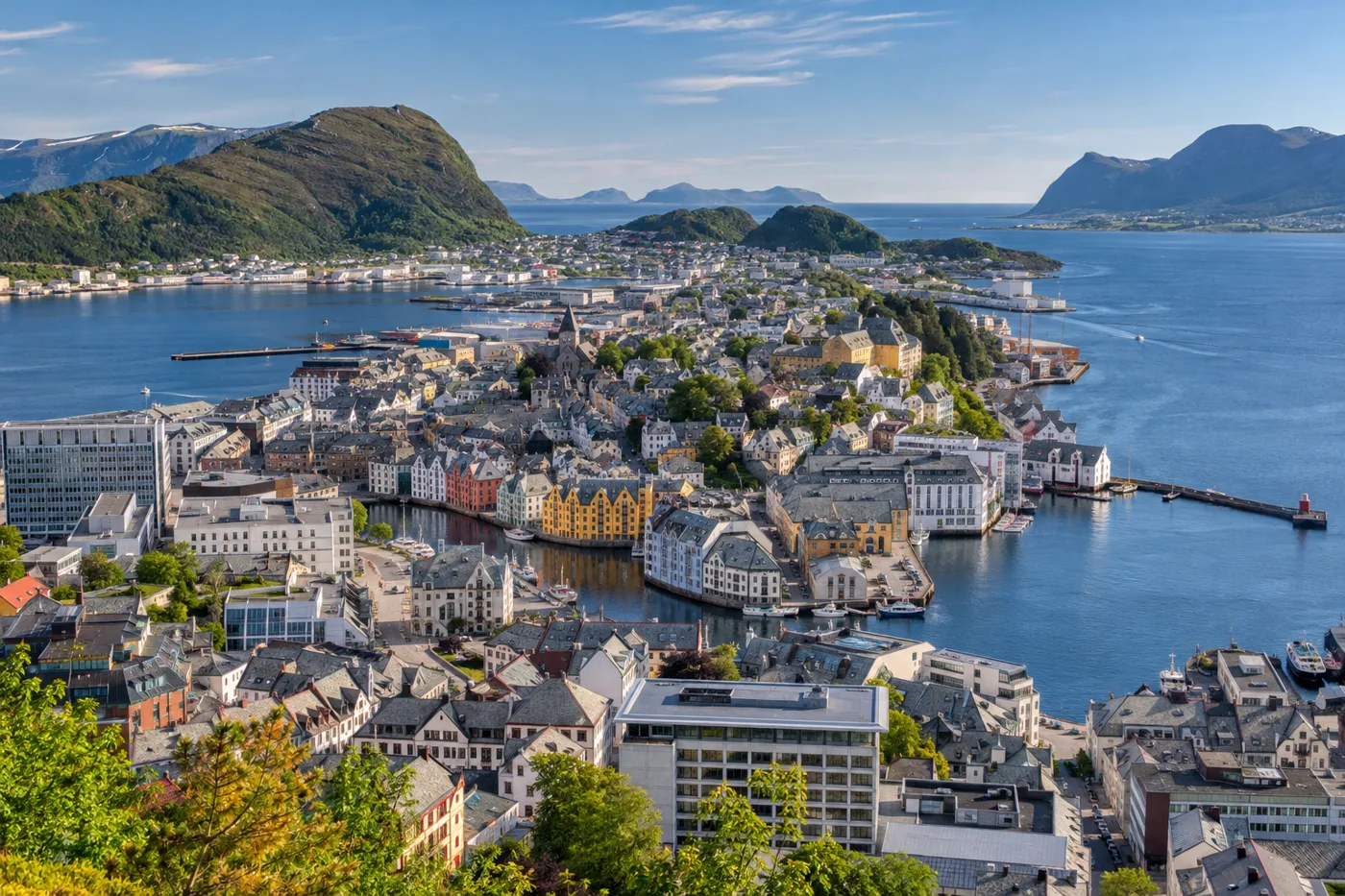
- Climb Aksla for the town and islands
- Visit Jugendstilsenteret and KUBE
- Explore Atlanterhavsparken at Tueneset
- See traditional buildings at Sunnmøre Museum
- Follow the fishing story at the Fisheries Museum
- Visit Alnes lighthouse and the outer coast
- Hike Sukkertoppen in suitable conditions
- Walk or paddle around the harbour edges
- Choose a local food stop with a maritime connection
Best things to do in Ålesund: the Top 10
Bookings through Viator may earn us a commission.
1. Walk the Art Nouveau streets around Brosundet
Book here with Viator → Small-Group Walk in Ålesund: Art Nouveau & Insider Tips
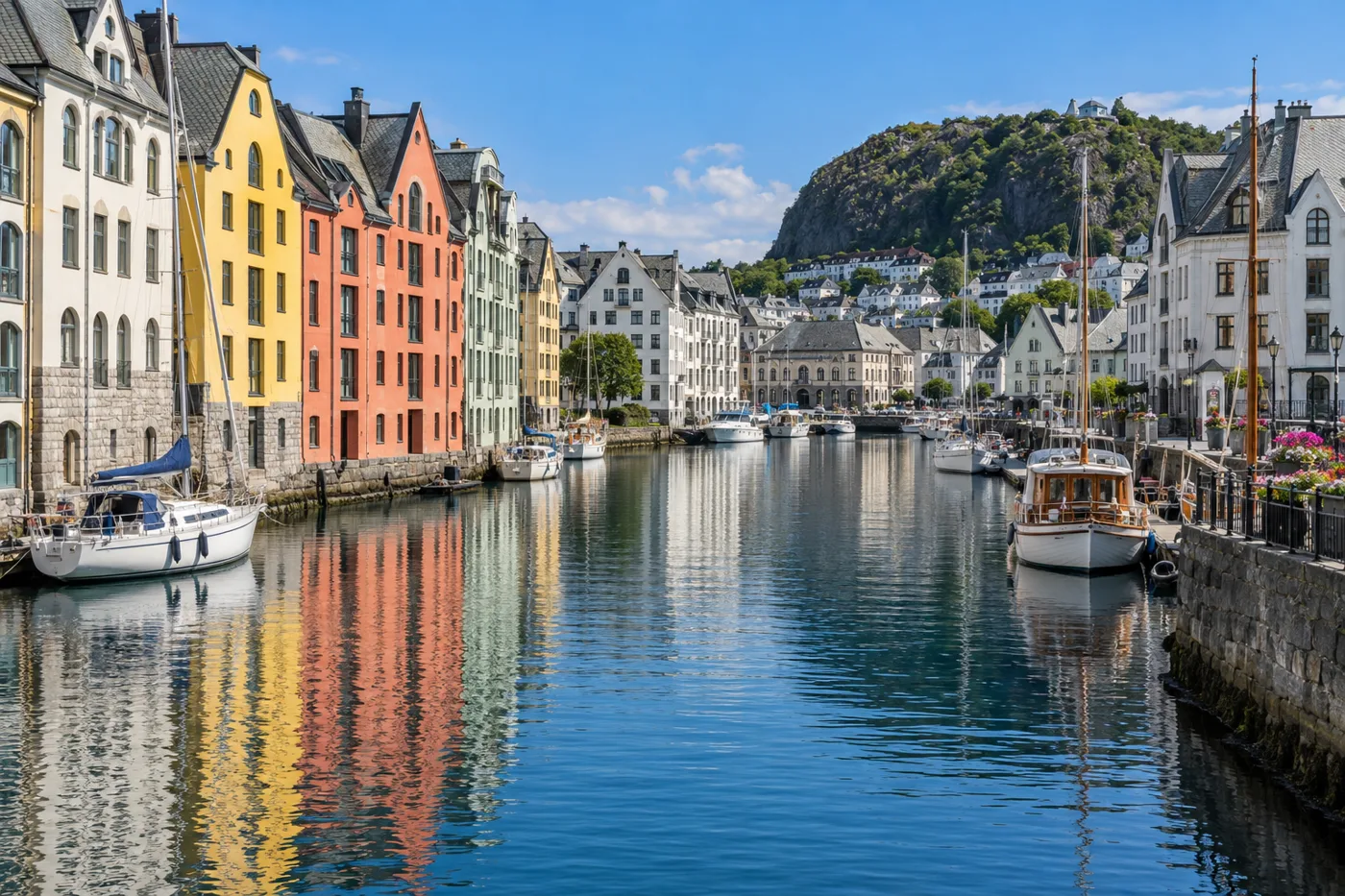
Brosundet is the natural starting point for understanding Ålesund. The narrow waterway divides streets of rendered facades, towers and decorative details associated with rebuilding after the 1904 fire. Seeing the architecture on foot also makes the town’s geography clearer: this is a coastal settlement threaded around water, with homes, shops and maritime activity sharing a compact space.
Walk slowly between the bridge, Apotekertorget and neighbouring streets, looking above shopfront level. Compare rooflines, bay windows and ornament rather than trying to identify every architect. A guided town walk adds historical context, while an independent circuit lets you stop for coffee and work around passing showers. Keep clear of private entrances and working businesses when taking photographs.
Allow roughly 60–90 minutes for an introductory circuit, longer with a guide. Public streets have no admission charge; guided tours are paid separately. Morning is useful for a quieter start, and evening changes the light on the water. Pair the walk with Jugendstilsenteret, which explains what you have just seen. In wet weather, alternate short outdoor stretches with a confirmed museum visit.
Best for: first-time orientation. Wear shoes that handle wet paving.
2. Climb Aksla for the town and islands
Book here with Viator → Sightseeing tour including Aksla
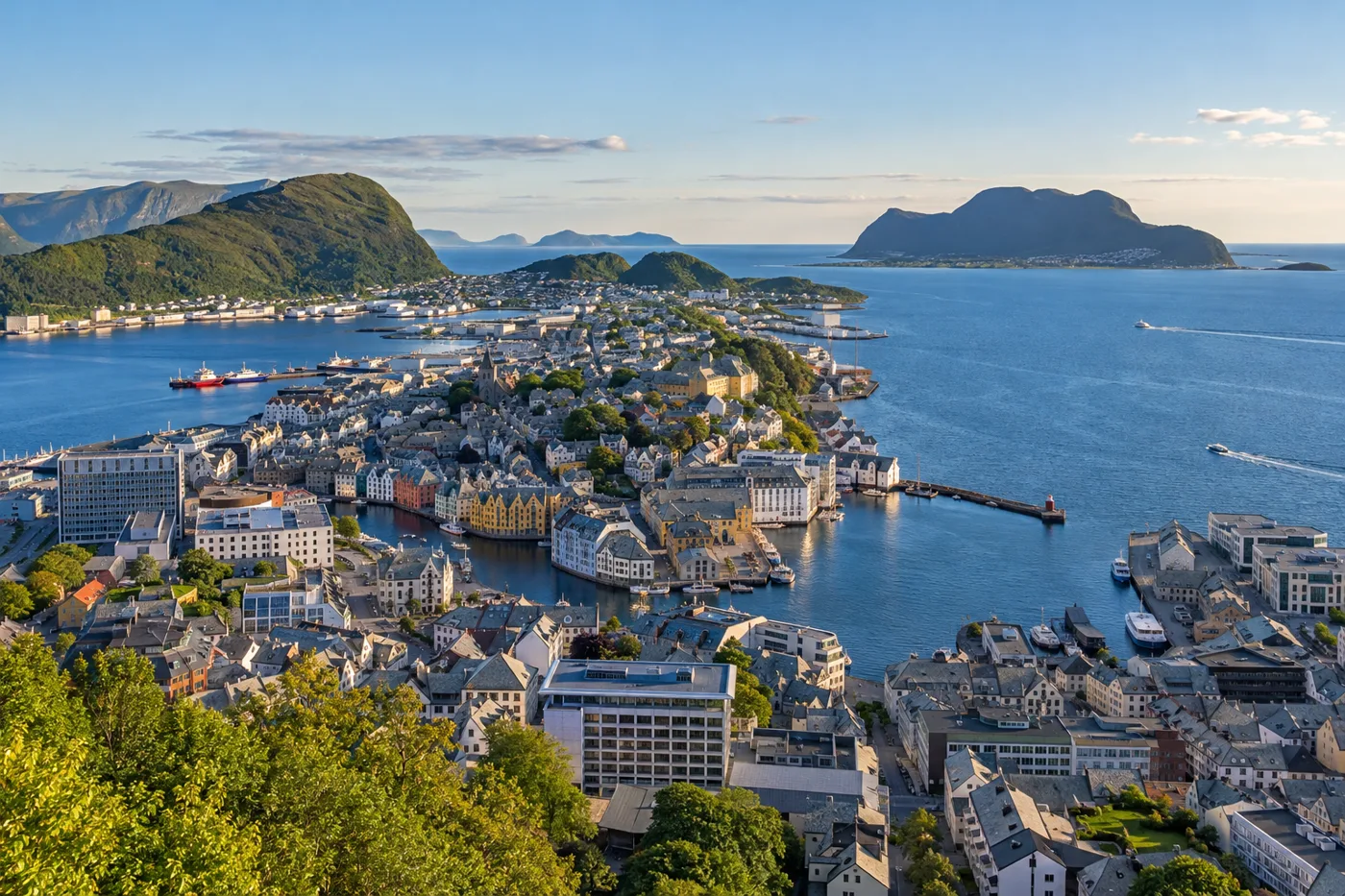
Aksla provides the overview that street level cannot: the town’s narrow island setting, surrounding channels and the mountains behind the coast. The view helps explain Ålesund rather than simply providing a distant panorama. The ascent from the town park is a familiar part of a city visit, but its long staircase still demands a sustained effort and deserves more time than a brief photo stop.
Take the steps at a comfortable pace and use stopping places without blocking other walkers. From above, trace your earlier route around Brosundet and look towards the outer islands. Clear visibility matters more than a particular hour. If the summit is in cloud, visiting a museum first and trying later may be the better choice. Wet leaves or frost can make descending less comfortable than climbing.
Budget about 1–2 hours for walking and stops, depending on fitness and starting point. Walking has no attraction ticket; refreshments and any motor transport cost extra. Ask locally about current access if mobility is limited, rather than assuming the stair route suits everyone. During winter, check footing and daylight before setting out. Carry a windproof layer even when the streets below feel mild.
Best for: geographical context. Choose a clear, safe weather window.
3. Visit Jugendstilsenteret and KUBE
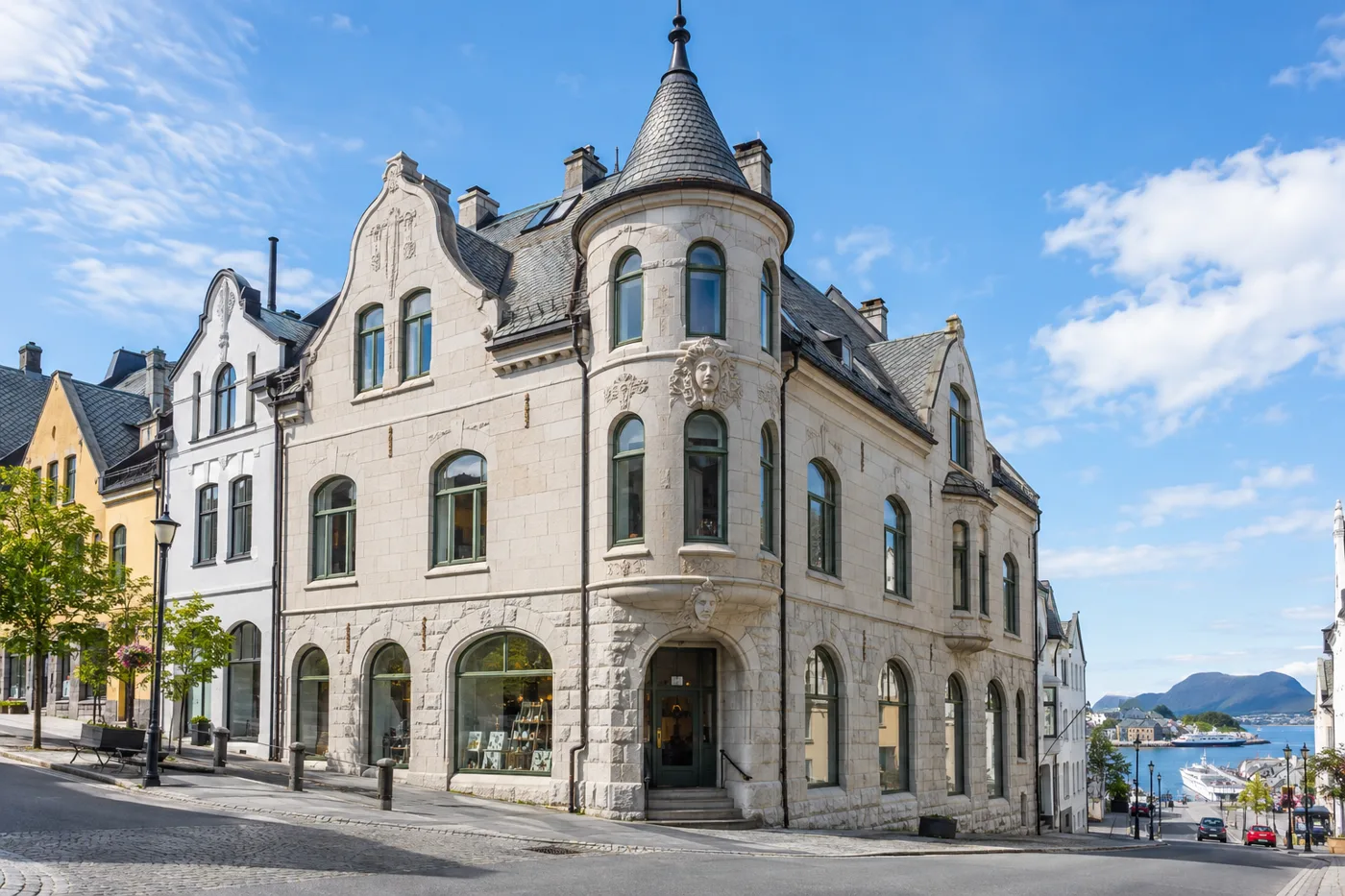
Jugendstilsenteret occupies the former Swan Pharmacy, a building that makes the architectural story tangible indoors. Together with KUBE it brings decorative arts and changing art exhibitions into the city itinerary. This is a strong complement to an architecture walk, especially when you want to understand interiors and design choices rather than leave with only a collection of facade photographs.
Focus on the relationship between the surviving interiors, design details and Ålesund’s rebuilding. Contemporary exhibitions at KUBE offer a different visual language, so leave time to look rather than treating the combined visit as a quick shelter from rain. The contrast between practical pharmacy functions and carefully considered surroundings is part of the interest. Ask about the current exhibition before deciding how to divide your time.
Allow approximately 1½–2 hours and check the current opening calendar, ticket options and exhibition access before going. Admission is paid; rates and combinations can change. Its central position makes it a practical wet-weather anchor between Brosundet and a meal. Book ahead for a scheduled guided visit or group visit. Check access details directly if steps or narrow interiors would affect your visit.
Best for: architecture and art. Verify both buildings’ arrangements.
4. Explore Atlanterhavsparken at Tueneset
Book here with Viator → Private sightseeing including aquarium stop; admission separate
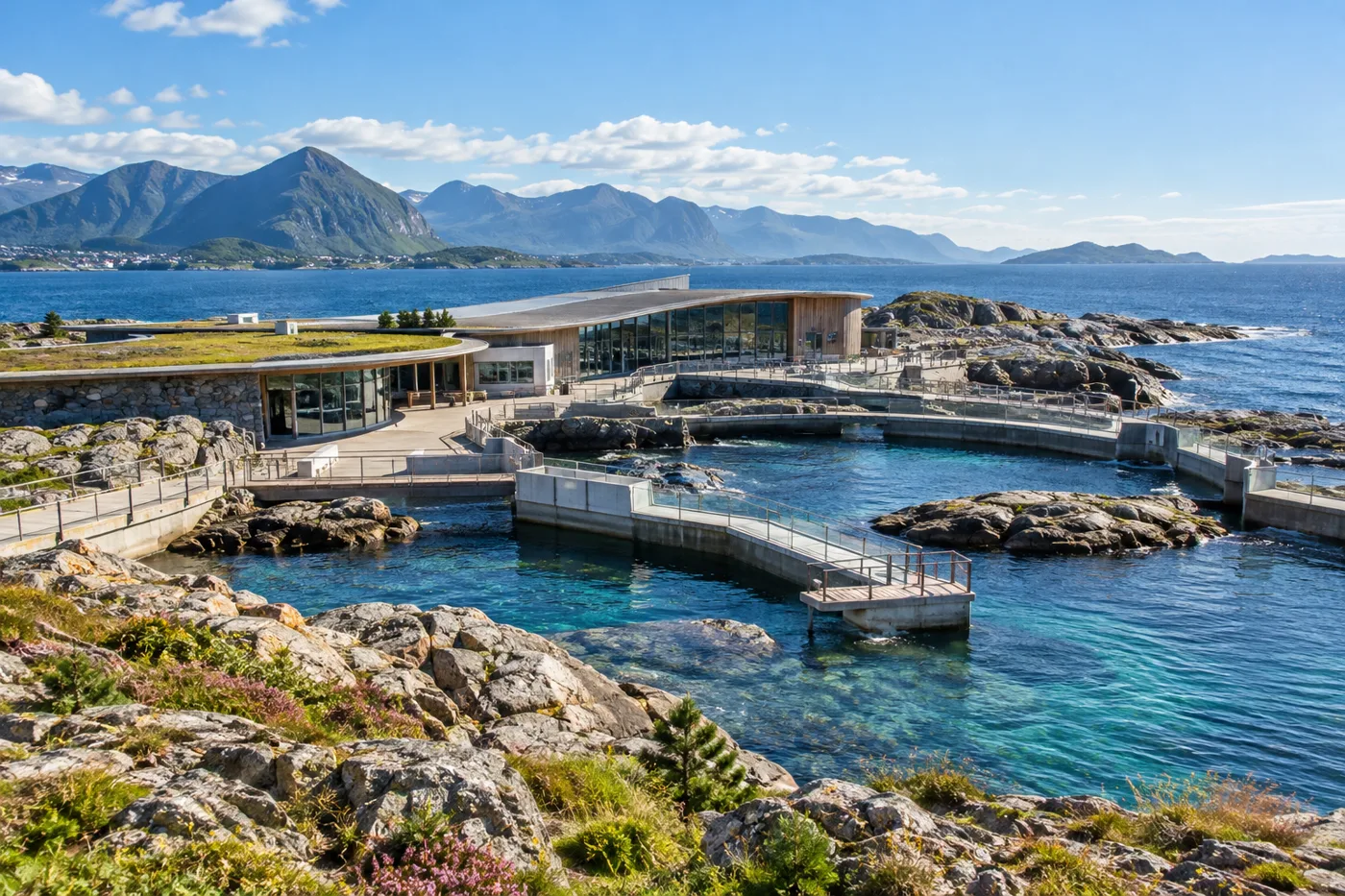
Atlanterhavsparken shifts attention from buildings to the marine environment around Norway’s coast. The aquarium, science centre and aquaculture displays share the site, giving families several ways to explore the same subject. It is outside the compact centre and deserves a proper half-day rather than being squeezed into an uncertain gap between town sights or an afternoon departure.
Look at the daily programme before choosing a route through the exhibits. Scheduled activities can shape your visit, while outdoor areas connect the displays with the coastal setting. In poor weather, indoor exhibits are useful, although getting there and any outdoor sections still require waterproof clothing. Do not assume every demonstration operates every day, and allow children time to return to something that interested them.
Allow roughly 2–3 hours on site plus transport. The aquarium describes the walk from town as approximately 3.6 kilometres; its nearest bus stop also involves a walk. Check FRAM for current connections and the operator for admission, hours and programme. A taxi can simplify a family visit but needs a separate budget. Confirm food availability rather than assuming lunch is always served at your chosen time.
Best for: families and marine life. Reserve travel time in both directions.
A private sightseeing tour can include Atlanterhavsparken, but aquarium admission is not included. Check the time allocated to the visit.
5. See traditional buildings at Sunnmøre Museum
Book here with Viator → Sightseeing tour including Sunnmøre Museum admission
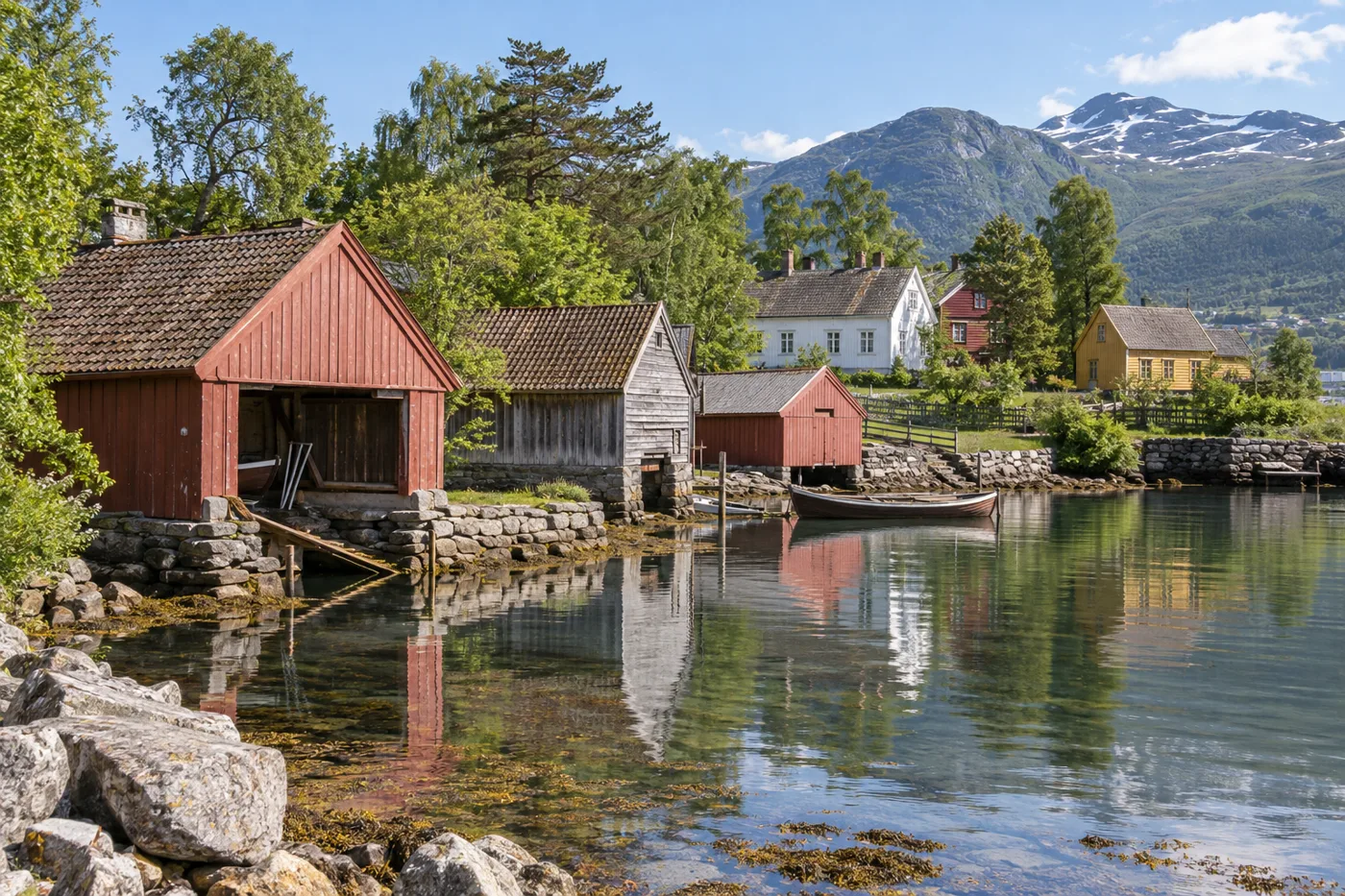
Sunnmøre Museum adds rural and maritime history to a visit otherwise dominated by the city’s rebuilt centre. Its open-air collection gives context to older regional ways of living, with timber buildings and boat collections showing how households and the sea were connected. It is particularly useful for visitors continuing into the fjord region who want to understand more than the scenery.
Walk through the grounds at a measured pace and use exhibitions to understand the buildings’ original functions. This differs from an enclosed city museum: surfaces can be wet and the weather influences how long you want to remain outside. With children, alternate indoor sections and short stretches across the grounds rather than attempting every building. Respect closed doors and do not assume every structure is accessible.
Plan around two hours, plus travel from central Ålesund. Check Viti’s seasonal programme, admission and which interiors are open on your date. Grounds access and exhibition opening are not necessarily identical. This fits well on a day when you are already travelling east from the centre. Avoid combining it with Alnes unless you have deliberately allowed for crossing the city and a long day.
Best for: regional history. Check interior access as well as general opening.
6. Follow the fishing story at the Fisheries Museum
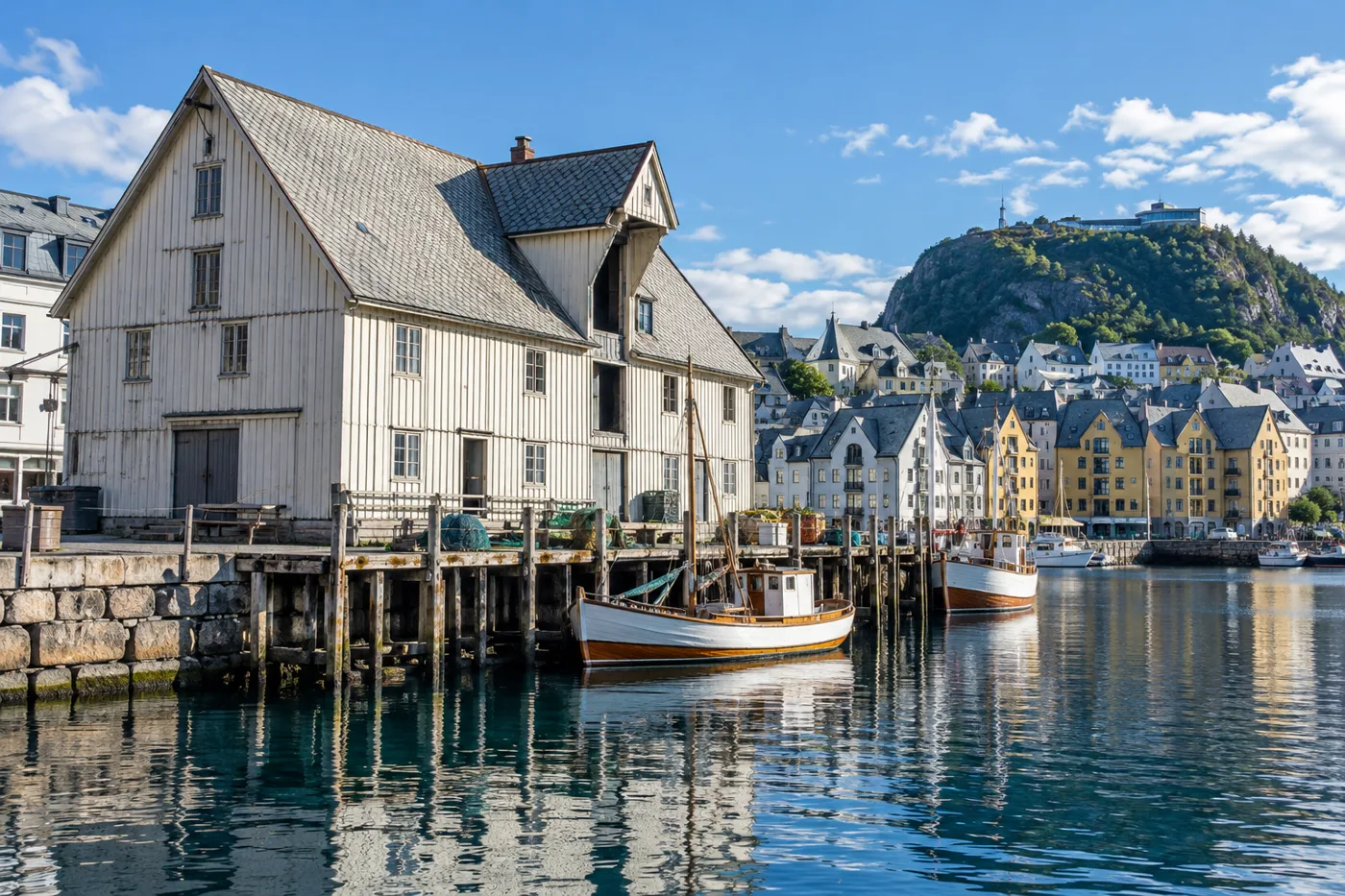
The Fisheries Museum explains the economic activity behind the attractive waterfront. Fishing, processing and export linked Ålesund with distant markets, and the story of klippfisk gives a concrete reason for those connections. It is a useful corrective to seeing the town only as architecture rebuilt after a disaster: the sea also supported the businesses and households that filled those buildings.
Look for the sequence from catching fish to preserving, handling and selling it. Equipment has more meaning when considered as part of a working system rather than as isolated old objects. Pairing the visit with a seafood meal can make the history easier to remember. Ask restaurants about provenance instead of assuming every fish dish uses a catch landed locally that morning.
Allow approximately 1–1½ hours and verify seasonal opening with Viti before building a day around it. Check current admission or museum combinations directly rather than relying on old guidebook prices. Its waterfront setting pairs naturally with a central walk. It offers a focused alternative if you prefer maritime history to art, but a shorter subject-specific museum should not be expected to occupy an entire afternoon.
Best for: maritime heritage. Seasonal opening needs checking.
7. Visit Alnes lighthouse and the outer coast
Book here with Viator → Sightseeing tour including an Alnes stop; admission separate
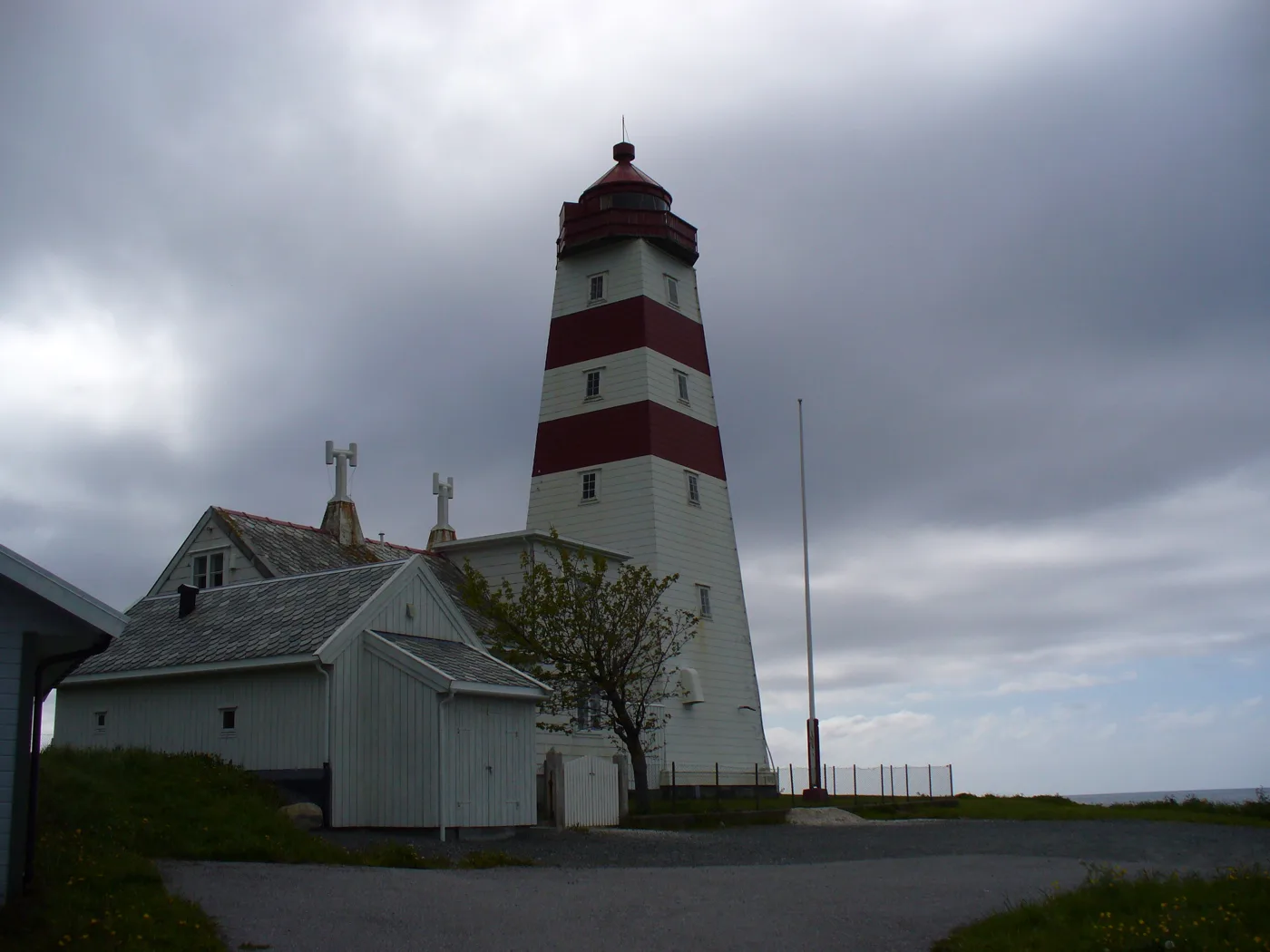
Alnes on Godøya offers a different scale from central Ålesund: a lighthouse, a fishing village and open Atlantic surroundings. The excursion is useful for understanding the islands rather than simply photographing them from Aksla. It is a separate trip requiring deliberate transport planning, with the exposed shore providing a strong contrast to the more sheltered town streets.
Walk around the village and public coastal areas without entering gardens or blocking residents’ access. Lighthouse and visitor facilities provide cultural context when open. On a calm day, leave time to observe the shore; in strong wind, shorten the exposed walk. Breaking waves deserve distance even when the rock beneath your feet appears dry. A café stop is welcome only if its opening fits your visit.
Allow at least half a day including travel, longer with public transport. Check actual outward and return bus journeys in FRAM, or book an excursion explicitly including Alnes. Lighthouse admission, exhibitions and café hours vary seasonally. A car gives flexibility but does not remove the need to check conditions. If the forecast deteriorates, choose a city museum rather than treating the trip as compulsory.
Best for: coastal atmosphere. Confirm your return before leaving town.
8. Hike Sukkertoppen in suitable conditions
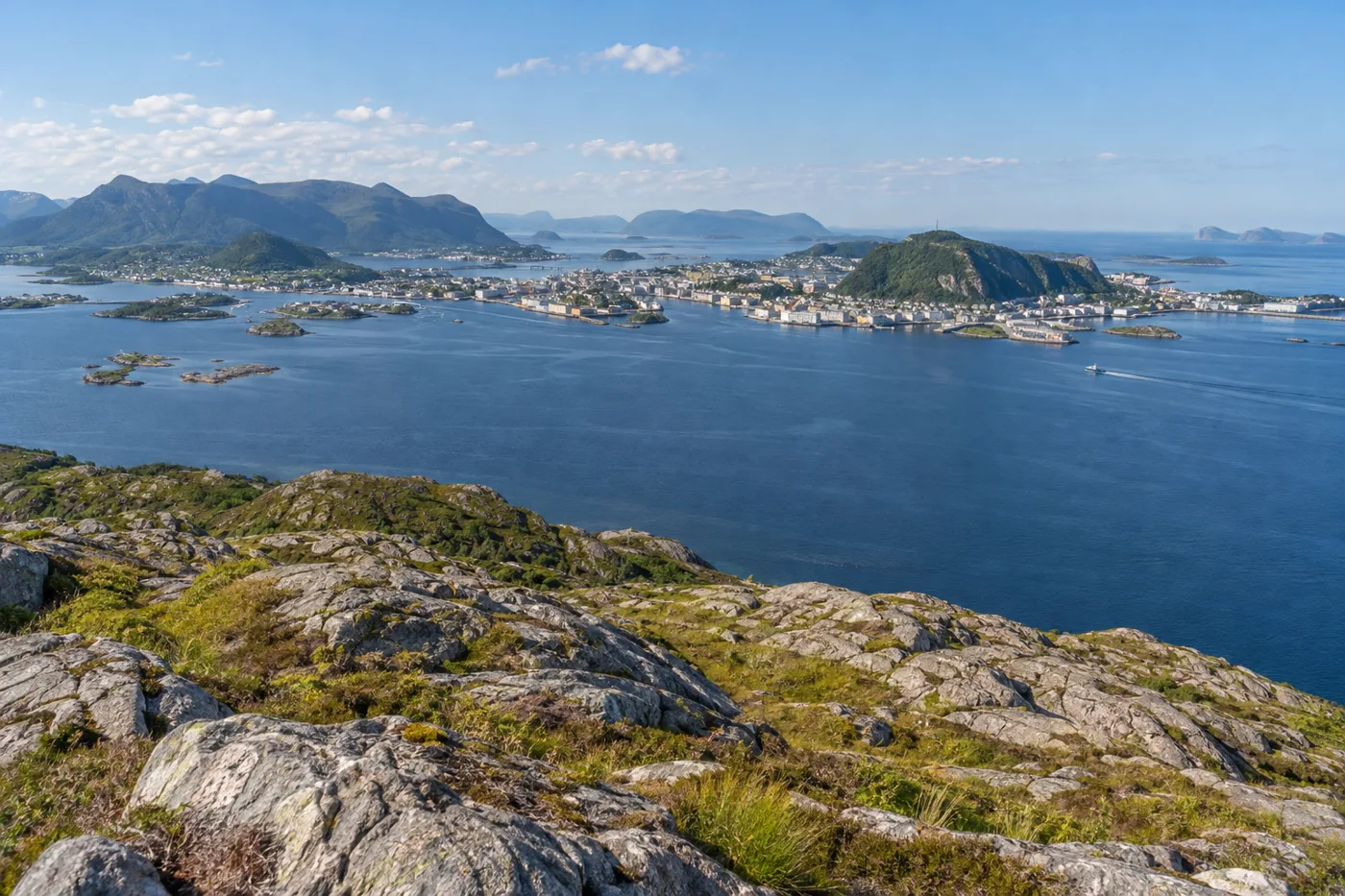
Sukkertoppen is a hill walk above the coast, offering a more active perspective than Aksla. Visit Norway identifies the Ålesund summit at 314 metres; it should not be confused with other Norwegian hills of the same name. The outing suits visitors wanting exercise and a less urban view, provided they have suitable footwear and a weather forecast that matches their experience.
Expect uneven ground and a sustained climb rather than a paved sightseeing path. Carry a map, follow the established route and respect the residential neighbourhood near the trailhead. The interest is the relationship between coast, city and fjord. Turning back in cloud or strong wind remains a sound decision: a relatively low summit can still feel very exposed when Atlantic weather arrives.
Allow about 2–3 hours for walking and stops, plus transport; your pace may differ considerably. There is no ordinary hiking admission ticket. Ask locally about route conditions and suitable trailhead access. Bring waterproof layers and water. Winter ice changes the character of the outing, so do not follow summer walking estimates blindly or start too late to return safely in daylight.
Best for: active visitors. Skip exposed terrain in unsafe weather.
9. Walk or paddle around the harbour edges
Book here with Viator → Guided sea kayaking and hike
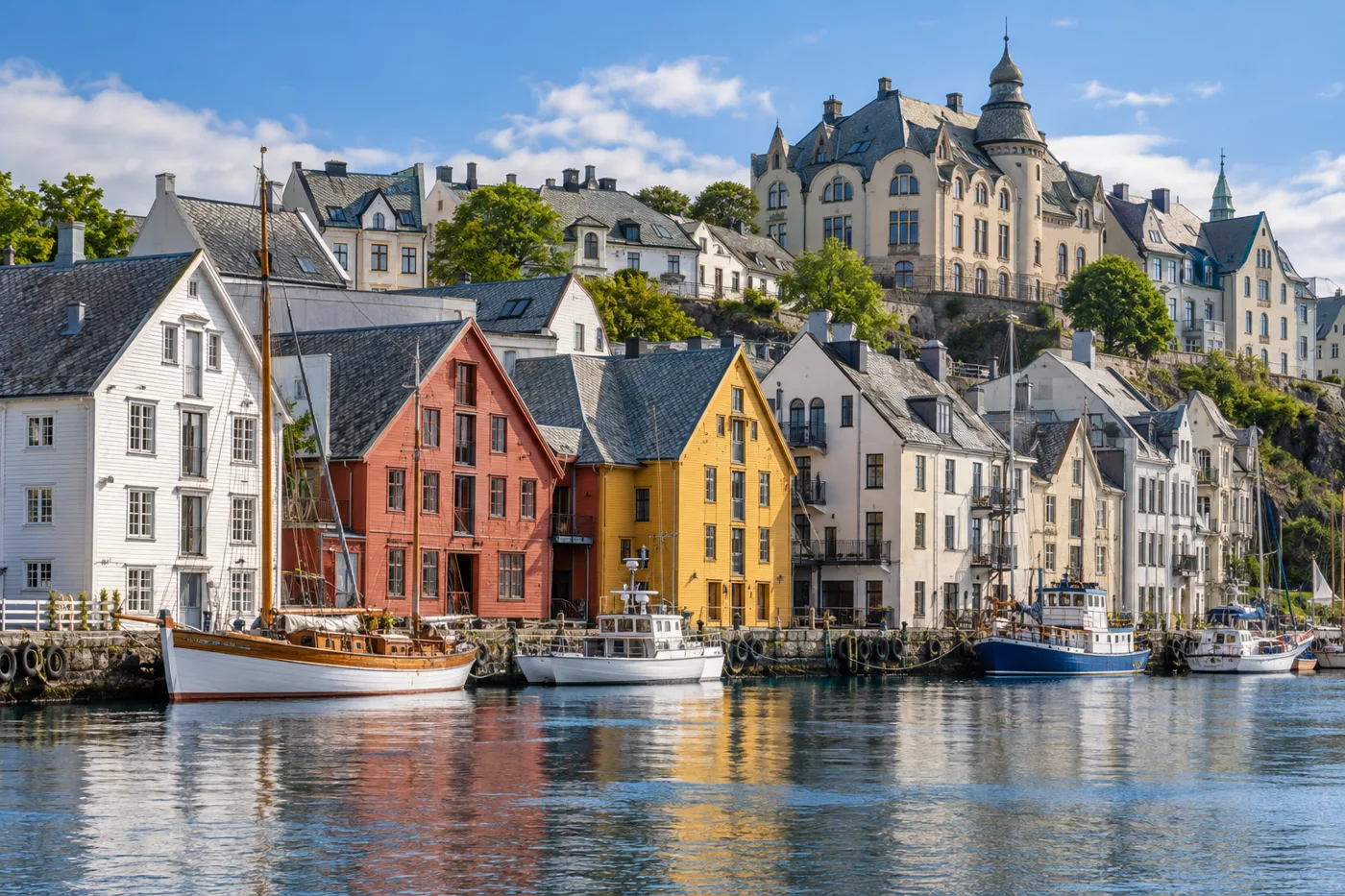
Molovegen and the harbour margins provide a slower counterpoint to the main sightseeing circuit. Here the relationship with boats, waterfront buildings and the outer sea becomes more immediate. It is a modest experience rather than a major ticketed attraction, which makes it useful between larger commitments when you want to stay outside without beginning another long outing.
Look back towards town as well as out towards the water. Changing angles reveal how buildings meet their waterfront and how narrow some settled strips are. Keep to public routes and let working harbour activity take priority. A short walk followed by a warm drink is often more enjoyable than extending an exposed outing simply to fill an itinerary. Barriers and operational quays are not optional boundaries.
Allow 30–60 minutes, with no street admission charge. Daylight and calmer weather make orientation easier, while wind can quickly change the feel of the route. Pair it with the Fisheries Museum if open, or use it before an early evening meal. Do not cross private hotel access or working areas for photographs. This is an easy activity to shorten if a shower arrives.
Best for: a short free walk. Respect working waterfront access.
For a more active way to experience the harbour, a guided kayak and hiking outing begins in Ålesund and travels through Brosundet; check conditions and fitness requirements.
10. Choose a local food stop with a maritime connection
Book here with Viator → Guided local food walk
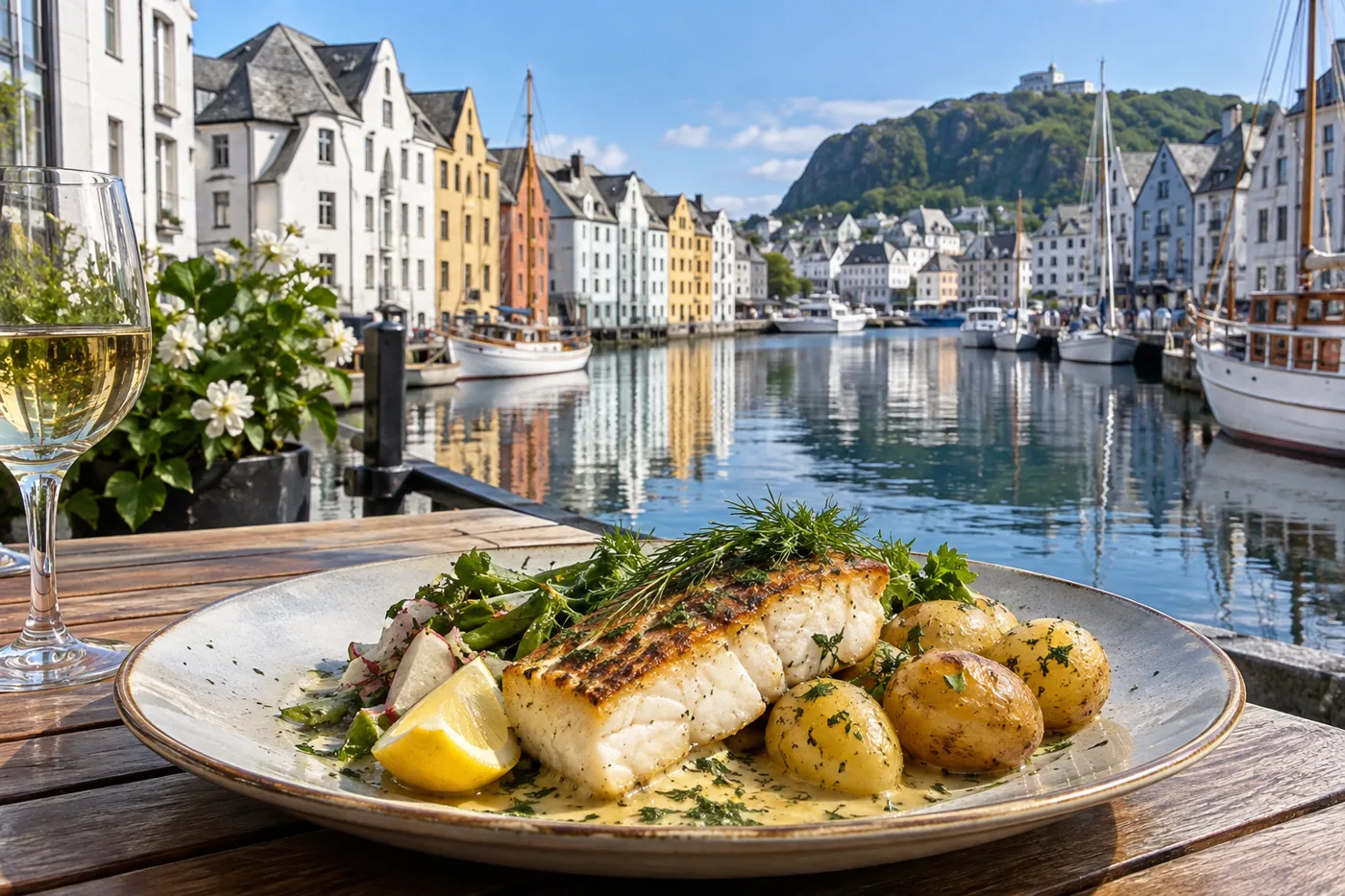
A deliberate food stop belongs in an Ålesund itinerary because fishing and trade helped shape the town. Look for menus identifying fish, shellfish or preserved-fish traditions clearly. You do not need a formal tasting menu to make that connection: a carefully chosen lunch can give useful context without taking over the day or consuming the entire excursion budget.
Ask what is seasonal and actually being served rather than assuming every seafood dish uses a local catch. Klippfisk gives a direct link to the Fisheries Museum, while a bakery stop is practical between walks. Discuss dietary needs before sitting down during a busy service. The most useful choice is a meal fitting your route and interests, not simply the most photographed dining room.
Reserve popular dinner tables, especially on weekends and busy summer evenings. Allow 45–60 minutes for lunch or about 1½ hours for dinner. Prices depend on venue and choices; read the menu before ordering and remember alcohol adds substantially. Keep one flexible meal in your schedule so a changed bus or boat journey does not cause a missed reservation. Confirm opening before planning a late arrival.
Best for: regional context. Check menus and reservations directly.
A guided food walk combines city architecture with tastings at local venues. Check what is included and dietary requirements.
Ålesund itinerary: one, two or three days
1-day Ålesund itinerary: stay central
Morning, 09:00–12:00: walk Brosundet and nearby Art Nouveau streets, then visit Jugendstilsenteret and KUBE when their calendar permits. These places connect on foot, leaving a sensible lunch break. Reverse the street walk and museum if rain is passing.
Afternoon, 13:00–16:30: climb Aksla during the clearest safe weather window, with rests and a return through the park. If the steps are icy or visibility poor, select a museum confirmed open. Evening, 17:00 onwards: take a short harbour walk and dine centrally. No outlying excursion is necessary.
2-day Ålesund itinerary: add marine life
Use day one for the central route. Day two, 09:30–13:30: travel to Atlanterhavsparken and allow a substantial visit plus transport. Check the daily programme so you do not arrive just after the activity you wanted. Carry lunch or confirm food availability.
Return for a late lunch, then use 15:00–17:00 for the Fisheries Museum if open or Molovegen. Evening stays flexible for dinner. In settled weather, confident walkers can substitute Sukkertoppen for the museum. This is a replacement, not another attraction added to an already busy day.
3-day Ålesund itinerary: add Alnes
Dedicate the third morning and early afternoon to Alnes, approximately 09:00–15:00 including travel and a meal. Book an excursion or build the journey around actual bus departures. A car allows a flexible return but still requires parking and walking time.
Keep late afternoon as a buffer. In strong coastal wind, replace Alnes with Sunnmøre Museum and another indoor exhibition. Evening is a final waterfront meal. Geiranger is a separate full-day excursion with seasonal connections; do not treat it as a casual addition after Alnes.
Planning the best things to do in Ålesund
Book accommodation and essential excursions before filling small museum slots. Cruise visitors can make central areas busy at particular times, so an early or later walk may feel different from a midday circuit. A ship schedule helps with planning but cannot predict every crowded street.
Use FRAM and Entur for public transport, checking return services as carefully as outward journeys. Airport travel is a separate connection. For island outings, missing a departure can change your whole day; save tickets and route details offline.
Carry waterproof clothing in every season. Coastal wind makes mild temperatures feel colder, and winter daylight limits outdoor plans. Ålesund does not have the Arctic midnight sun, although long summer evenings are helpful. Hiking in ice requires a different plan from a dry summer ascent.
Balance paid attractions with free architecture and harbour walks. Compare menus, avoid hiring a car solely for the compact centre and include parking in any car budget. Opening hours, fares and departures change seasonally; check official operators before booking. The time allowances here are planning estimates rather than timetables.
Ålesund travel guide: frequently asked questions
Is Ålesund worth visiting without a car?
Yes. Architecture, Brosundet, central museums and Aksla form a useful walking visit. Buses or a booked excursion can cover outlying attractions when connections are confirmed.
How many days do I need in Ålesund?
Two days give you the centre and an aquarium or museum day. A third supports Alnes or a weather buffer.
What is the best time to visit?
May to September offers longer daylight and outdoor flexibility. Winter can suit a quieter city break, but wind, slippery paths and seasonal opening reduce excursion choices.
Is Ålesund expensive?
Accommodation and dining follow Norway’s generally high costs. Free town walks and Aksla control spending; tours, seafood dinners and car hire add significantly.
What should I book ahead?
Reserve accommodation and time-specific excursions for busy dates. Check aquarium and museum tickets directly against the actual opening calendar.
Can I combine Ålesund and Geiranger in a day?
Seasonal organised connections make an excursion possible, but it is a full travel day. Check current transport and do not combine it with Alnes or a long hike.
Where to go next in Norway
Choose a connected next stop and allow separate travel time between regions. These guides explain what each destination needs.
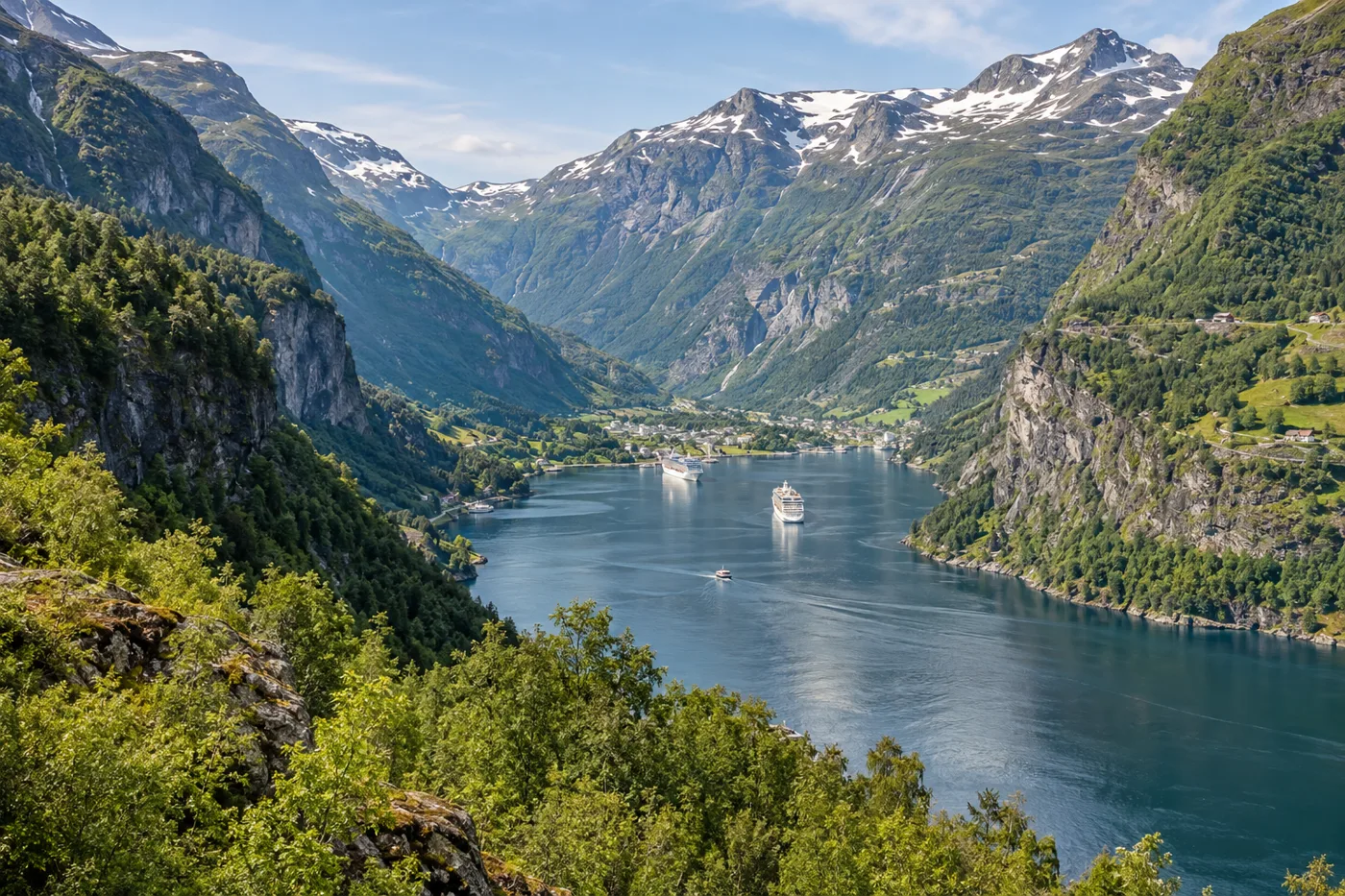 10 Best Things to Do in Geirangerfjord: Plan Your Visit
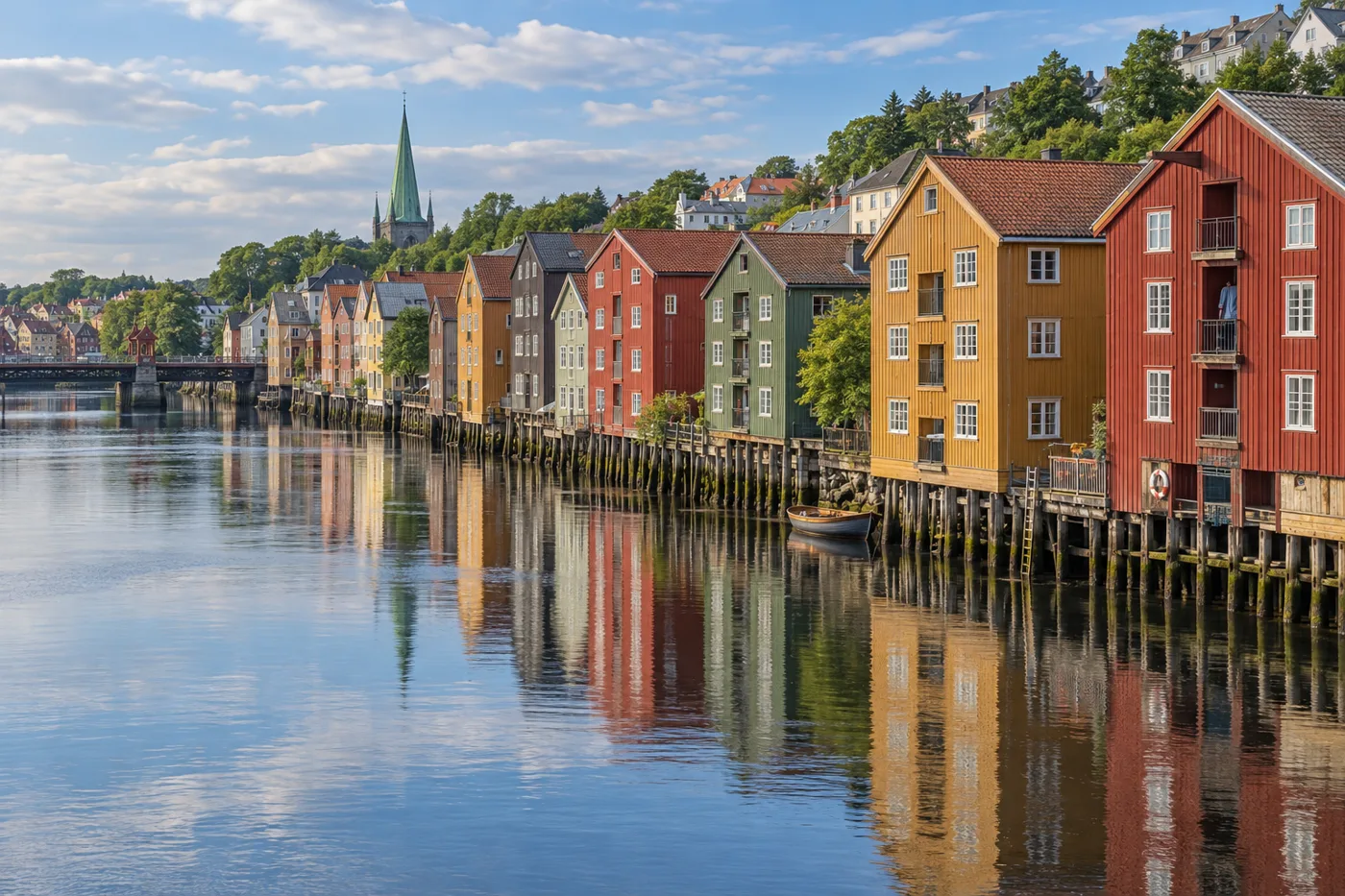 10 Best Things to Do in Trondheim: A Practical Travel Guide
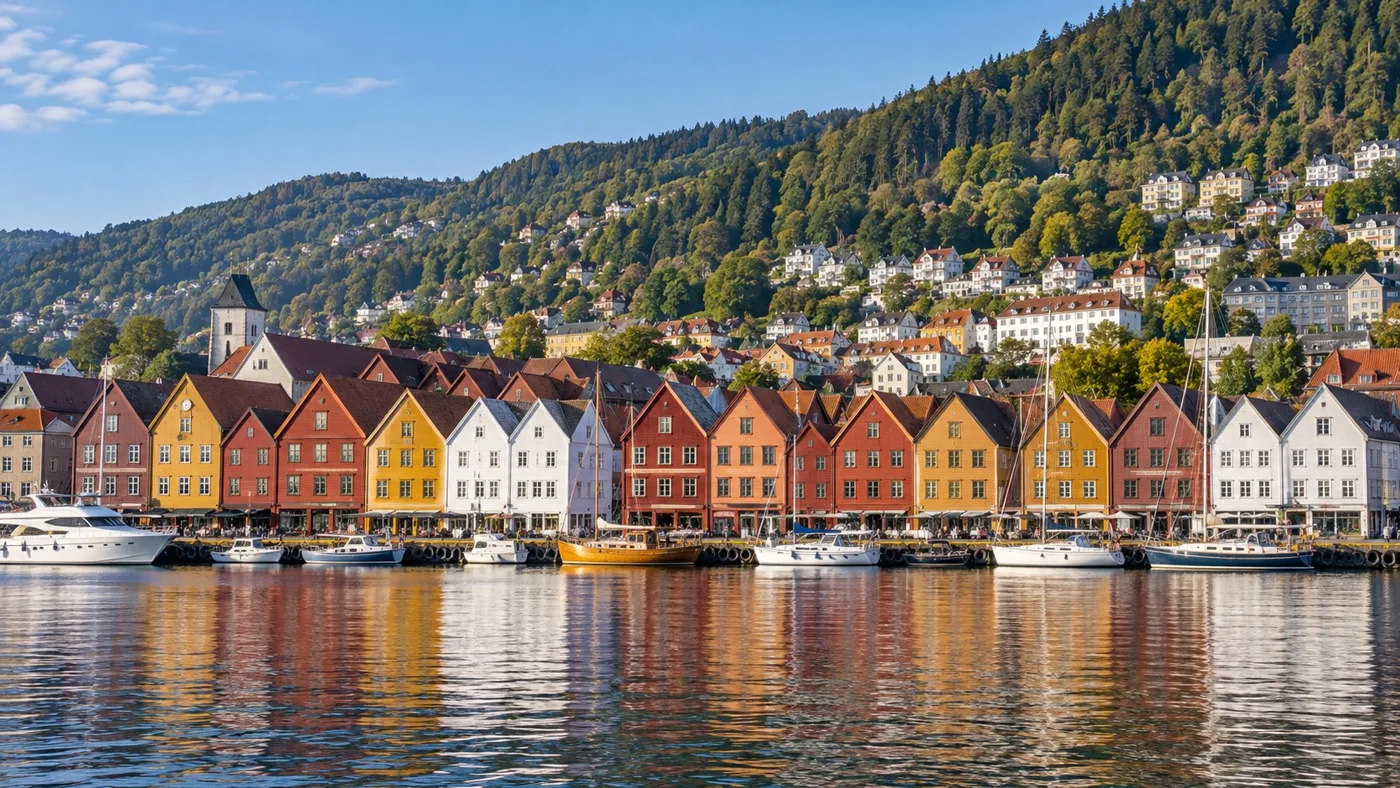 10 Best Things to Do in Bergen: A Practical City Guide
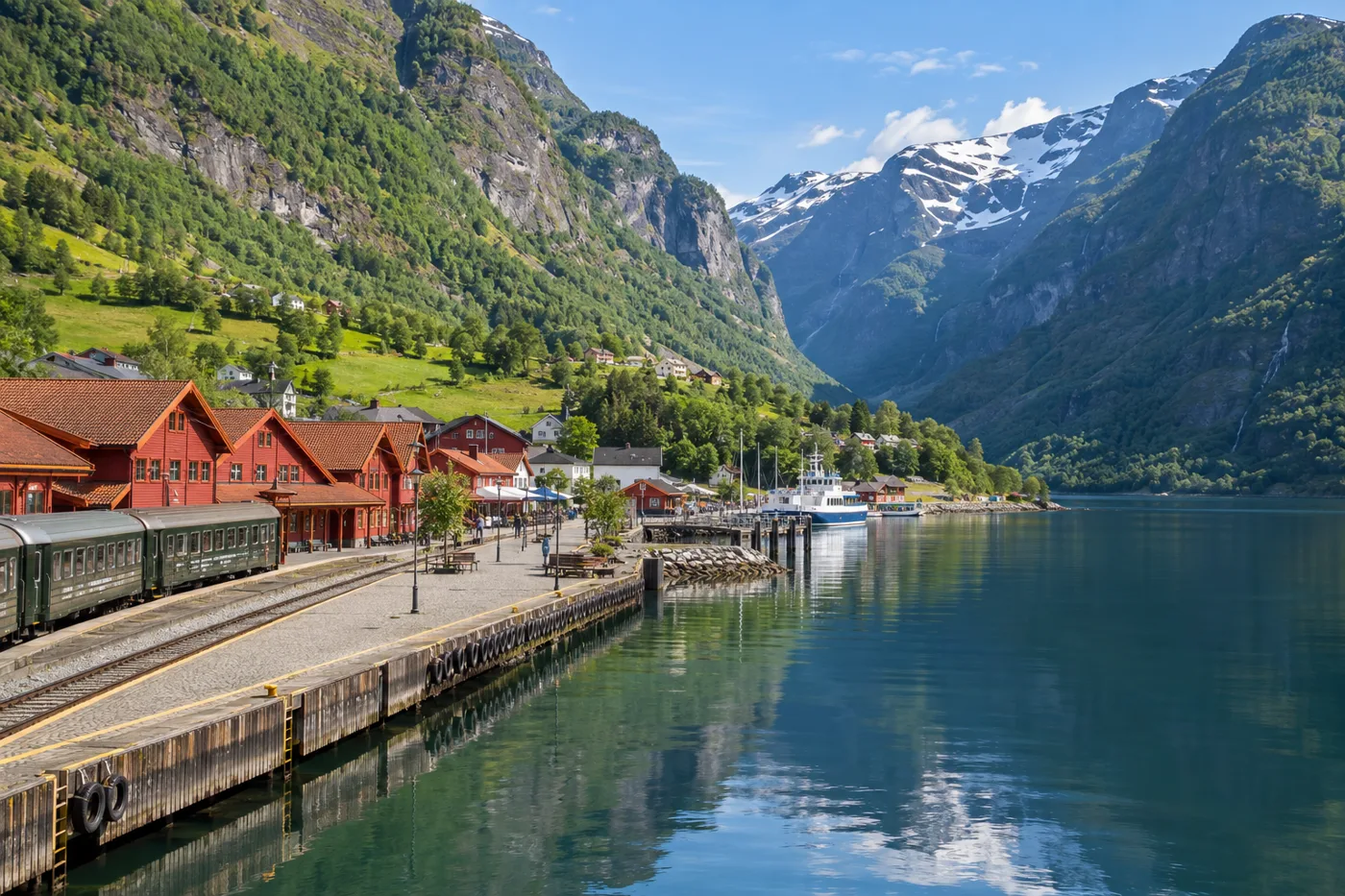 10 Best Things to Do in Flåm: Railway, Fjords and Walks
Planning your visit to Ålesund
Start with Brosundet, its architecture and Aksla: these explain Ålesund efficiently. Add marine life, regional history or Alnes according to your interests and the forecast, leaving space for weather to change the order.
Official sources and practical checks
Official information was reviewed during preparation. Fares, hours, road access and departures can change. Check the operator for your dates before booking. Suggested visit durations are editorial planning allowances.
- Fjord Norway: Ålesund
- Fjord Norway: Jugendstilsenteret
- Viti museums
- Atlanterhavsparken visitor information
- Visit Norway: Sukkertoppen
- FRAM transport
- Entur journey planner
Links labelled as affiliate links may earn NorwayTop10 a commission on eligible bookings. Read our editorial policy and commercial disclosure.
Choose accommodation and plan Ålesund
Compare accommodation options alongside the places you want to visit. Check the journey to the property before reserving.
Plan experiences around your stay
These guides compare regional options and practical considerations. Check the actual departure point; a related guide is not a promise that every activity is available in this town.
Puffin Watching in Norway
Compare guided activities before booking
Use these tour comparisons to match your available time, meeting point and travel season with the right experience in this region:
Plan an additional overnight in Romsdal
For a journey onwards to the Atlantic Ocean Road, Molde hotels provide a different base from Åndalsnes hotels, which suit rail and valley trips. Check the chosen ferry or road connection and leave a buffer for delays.
Diving and Snorkeling in Norway