10 Best Things to Do in Senja: A Practical Travel Guide
The best things to do on Senja include roadside viewpoints, fishing communities, beaches and walking routes, but the island is too large and the roads too indirect to treat it as one compact attraction. A good first visit chooses a base and follows a sensible section of the outer coast rather than repeatedly crossing the island. The Norwegian Scenic Route provides a useful framework, with Bergsbotn, Tungeneset and Ersfjordstranda among its recognised stops. Mountain photographs can be seductive, but a rewarding Senja trip does not require climbing Segla or Hesten. Coastal viewpoints and short village walks offer plenty of scenery in their own right. Allow at least two full days for a useful introduction and three for a slower route or a separate outdoor activity. Summer ferries, winter road conditions and weather all need checking for the actual dates of travel.
Senja: quick answers
- Worth visiting?
- Yes, for fishing villages, coastal viewpoints and slower road trips.
- Time needed
- Two full days; three or more with a separate hike or tour.
- Best time
- Summer for long daylight; winter for aurora with flexible road plans.
- Cost level
- High for scattered lodging, car hire and regional excursions.
- Getting around
- A car helps; check ferries and buses before committing to connections.
- Top priorities
- Bergsbotn, Tungeneset, coastal fishing villages.
How this list was selected: NorwayTop10’s editorial choices balance distinctive places, practical access and variety for a first visit. The order is a planning guide rather than a public vote. Outings beyond the destination are identified in their descriptions; ten entries do not mean ten stops in one day.
Compare the ten options
Times are editorial planning allowances, not operator schedules. Add travel and waiting time unless the row explicitly describes a whole outing. For guided experiences, use the confirmed booking duration. See each description for terrain and seasonal restrictions.
| Place or activity | Access to plan | Time to allow |
|---|---|---|
| Start with the view from Bergsbotn | Scenic-road viewpoint | 15–30 min at the viewpoint |
| Walk the Tungeneset boardwalk | Road approach and boardwalk | 30–60 min |
| Pause at Ersfjordstranda | Road approach and public shore | 45–90 min |
| Spend time in Mefjordvær | Road or dated bus connection | 45–90 min |
| Visit the compact fishing village of Husøy | Road or dated bus connection | 45–90 min |
| Explore Gryllefjord and its harbour setting | Road or seasonal ferry connection | 45–90 min |
| Use Hamn as a sheltered coastal stop | Road approach | 1–2 hr |
| Walk from the Ånderdalen National Park gateway | Travel to the national-park gateway | Use the selected return walking time |
| Choose a guided sea-kayaking trip | Operator meeting point | Use the booked activity duration |
| Consider Hesten or Segla only as a prepared mountain outing | Travel to the chosen trailhead | Dedicated hike using the official route time |
Bookings through Viator may earn us a commission.
1. Start with the view from Bergsbotn
Verified planning detail: Norwegian Scenic Routes describes Bergsbotn's viewing platform as 44 metres long and lists wheelchair access. Confirm current road and site access separately before travelling. Official visitor information.
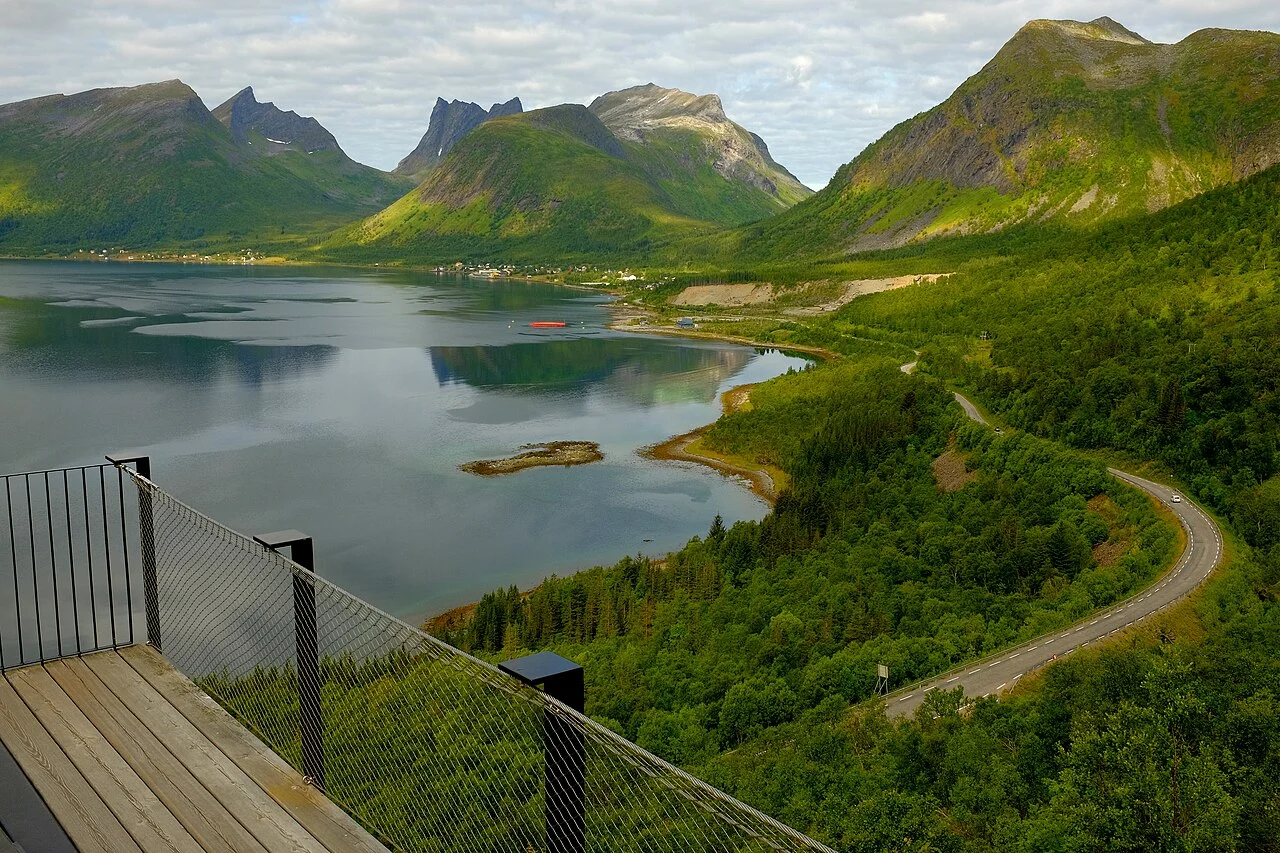
Bergsbotn’s purpose-built viewing platform offers an introduction to the scale of Senja’s fjords and mountains without requiring a summit hike. Its position above the fjord makes it a useful first stop on a scenic-route itinerary. The attraction is a carefully framed landscape view, so its success depends partly on visibility and safe access.
Use the designated stopping area and follow the walkway rather than walking in the road to improve an angle. In snow, ice or strong wind, check whether the platform can be used safely and respect any closure. A short, accessible-looking structure can still become slippery or exposed when the weather changes.
Give yourself time to look rather than treating the stop as a race between parking and a photograph. It combines naturally with other places on the same part of the outer-coast route. If cloud hides the fjord, continue with a sensible local plan rather than repeatedly driving back and forth in the hope of a perfect gap.
2. Walk the Tungeneset boardwalk
Book here with Viator → Scenic route day trip departing Tromsø
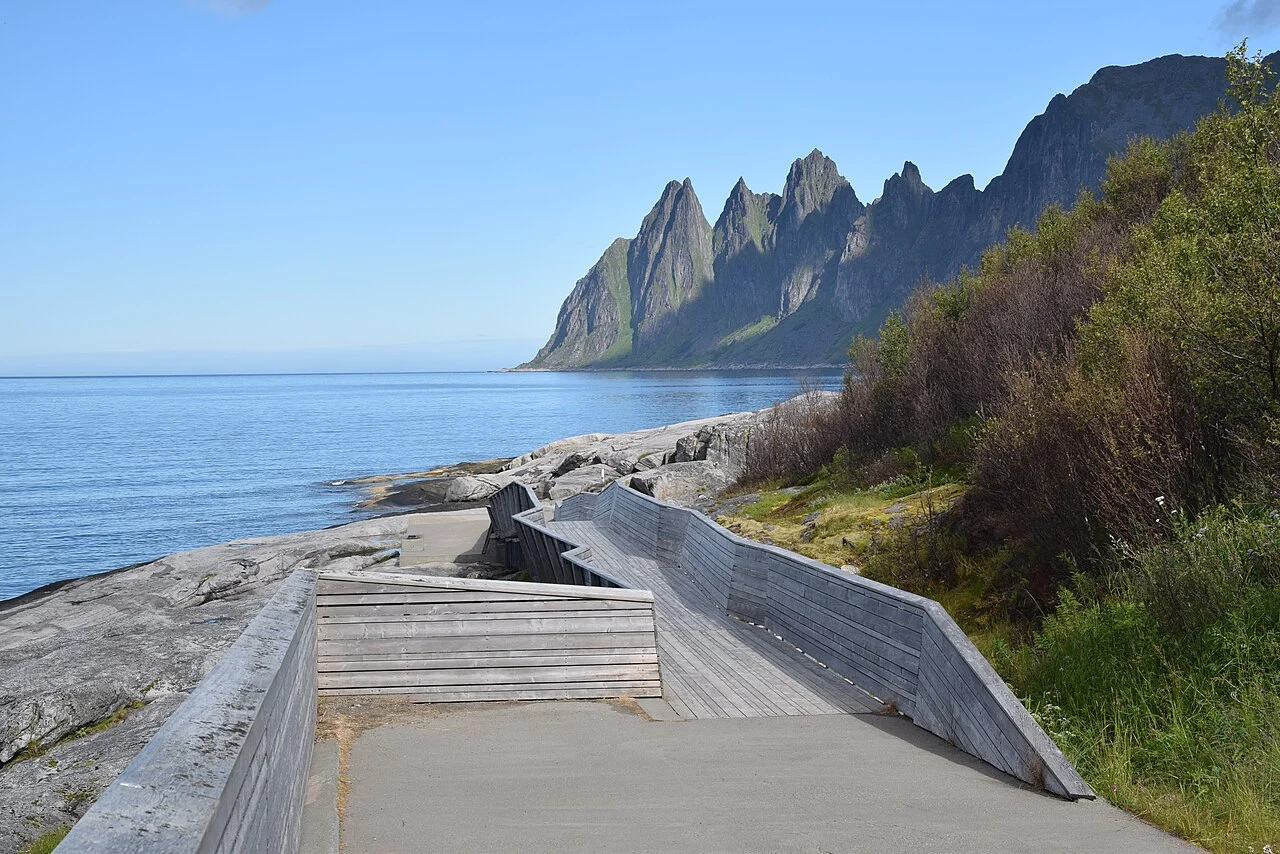
Tungeneset provides another distinctive scenic-route stop, with a timber walkway leading toward the rocky shore and views of the striking mountain profile across the water. It is a good example of using a short route to experience the coast without needing a demanding hike. The surrounding rocks, however, are not an unrestricted playground.
Stay on the intended access route and judge the sea conditions before approaching any exposed shore. Wet rock, spray and ice can be hazardous even when the car park feels sheltered. Keep children close and avoid stepping onto sloping surfaces for a composition that looks easy in a summer photograph. A boardwalk does not remove the risks beyond it.
Pair the visit with Ersfjordstranda and a nearby village rather than adding a long inland detour to the same block. Allow a little time to watch changes in the water and light. If conditions are rough, a shorter stop from a secure position is more sensible than trying to reproduce a familiar image from social media.
3. Pause at Ersfjordstranda
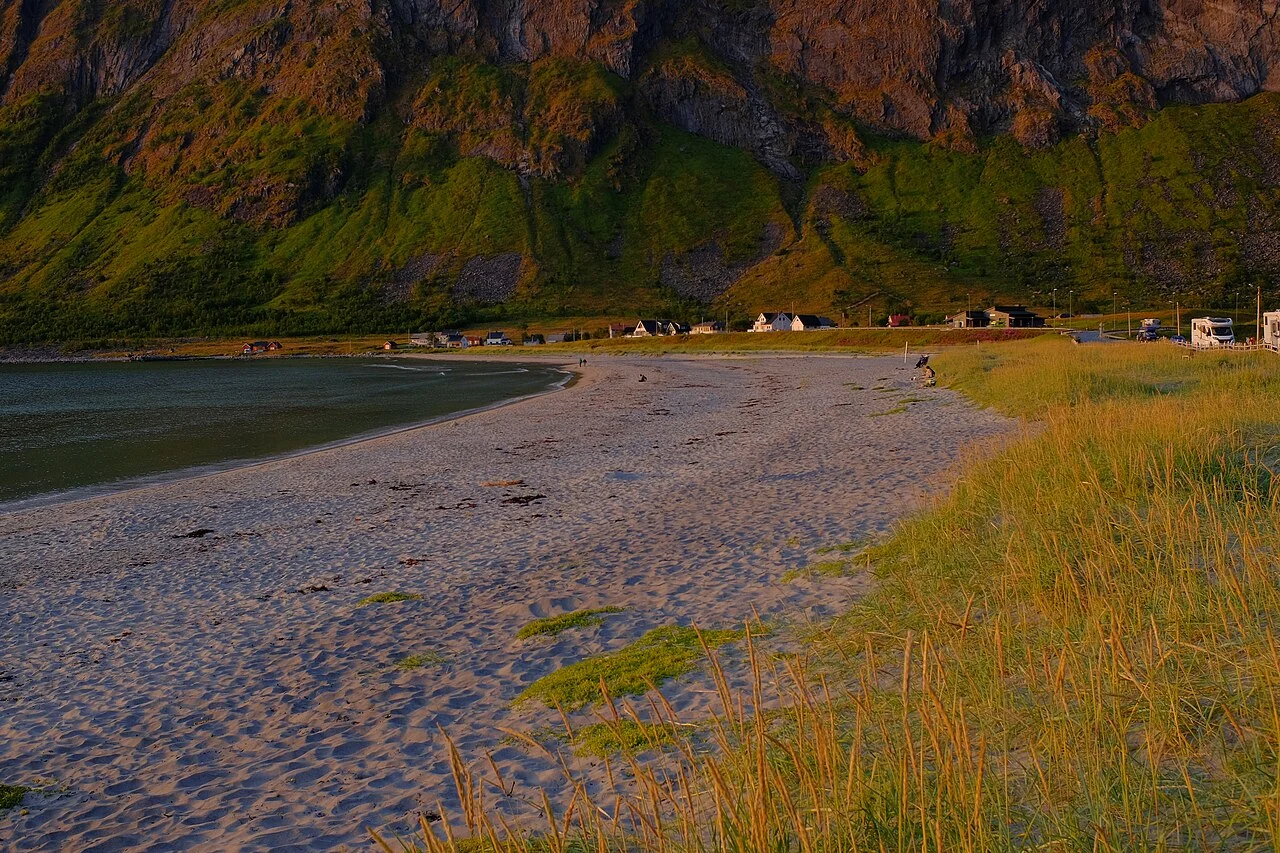
Ersfjordstranda brings pale sand and a broad mountain-framed bay into a Senja itinerary. It is an attractive place for a walk, a picnic or simply a break from driving. The Arctic setting is important: clear water and bright sand do not imply warm temperatures, gentle surf or a beach suited to casual swimming in every condition.
Use the designated facilities and parking arrangements, and respect the beach and nearby homes. A calm summer visit may invite a longer stay, while cold wind can make a short walk the better choice. Carry layers even if the beach looks sunny from the road, and leave wildlife and natural materials undisturbed.
This is a useful place to slow the pace of the scenic route rather than add another distant viewpoint. Check local rules before camping or using any overnight parking area. Take waste away, including food scraps, and do not occupy access routes with equipment or vehicles. The beach remains part of a living local community, not only a visitor stop.
4. Spend time in Mefjordvær
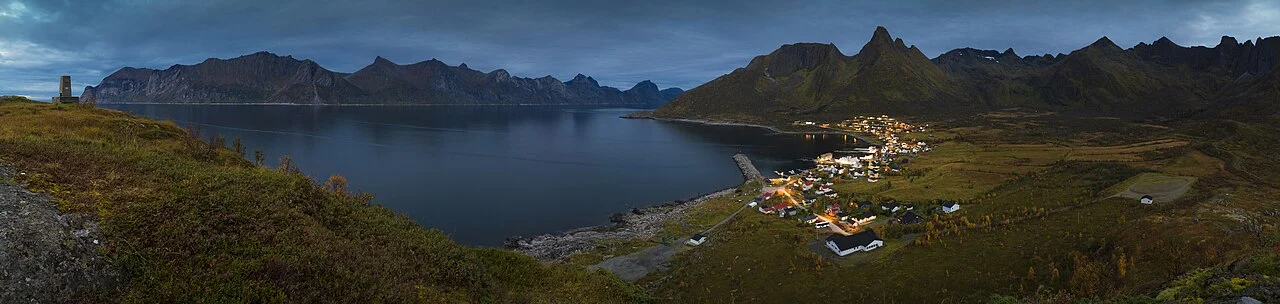
Mefjordvær offers a fishing-community setting in which to appreciate Senja beyond roadside panoramas. The harbour, houses and surrounding mountains provide a good reason to stop and walk on public routes. A village visit is most rewarding when it includes time for the place itself rather than a hurried drive to the end of the road.
Check what food, accommodation or guided activities are operating during your dates if you intend to build a longer stop around them. Seasonal opening and advance booking can matter in a small community. Keep clear of working harbour areas and private property, and avoid treating every attractive waterfront building as publicly accessible.
Mefjordvær can work as a base or an unhurried detour from the scenic route, depending on the rest of your journey. Choose a nearby short walk only after checking current advice and conditions. A pleasant harbour circuit and a meal can be a better use of a tired afternoon than adding a mountain path simply because it begins nearby.
5. Visit the compact fishing village of Husøy
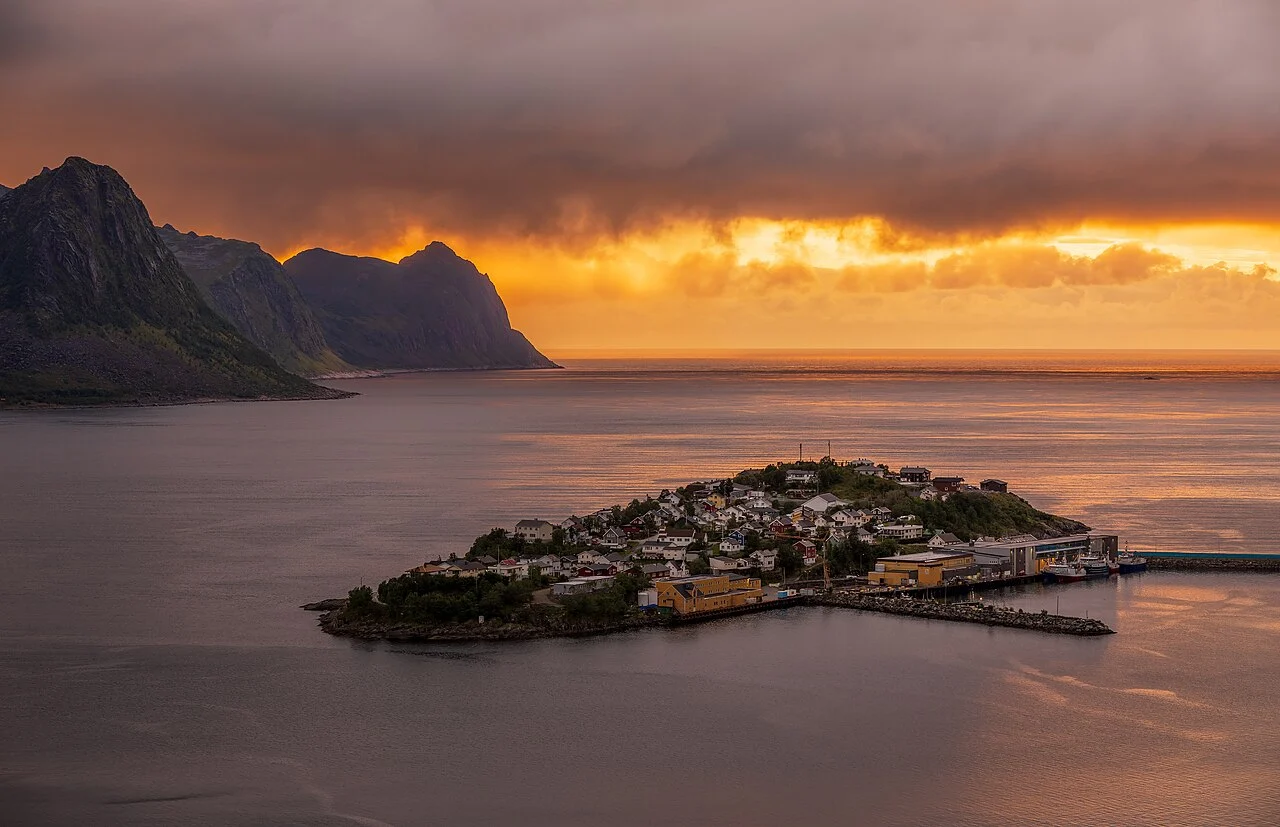
Husøy is a distinctive fishing settlement on a small island connected to Senja. Its compact setting helps reveal how buildings and working space fit into a constrained coastal landscape. The journey and village atmosphere are the point; do not expect a large open-air museum designed to accommodate unlimited tourist parking and foot traffic.
Use designated public access and park considerately before exploring on foot. Fishing activity, deliveries and residents’ routines take priority over a photograph. If the road or weather makes the detour awkward, it is reasonable to choose another village rather than insisting that every settlement on a suggested route must be visited.
Allow enough time to appreciate the approach and a short walk, but keep the visit proportional to the wider day. Husøy combines best with other stops in the same northern part of the island. Check food and facilities separately, especially out of season, and avoid assuming a small fishing community has services matching a busy town.
6. Explore Gryllefjord and its harbour setting
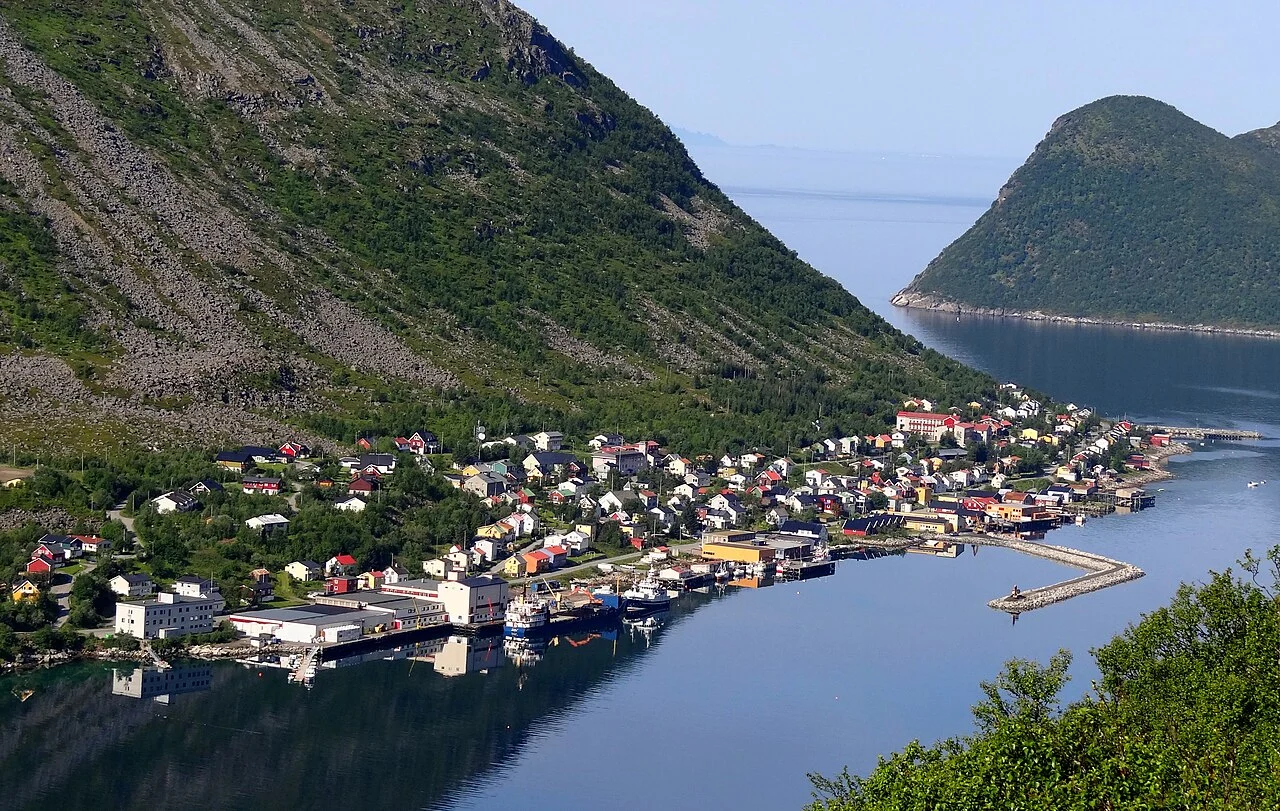
Gryllefjord provides another perspective on Senja’s outer coast, with a settlement closely framed by water and steep terrain. It is also associated with the ferry connection toward Andenes, which can shape a summer road trip. A pleasant visit need not involve taking the ferry: public village and harbour routes can be the main activity.
Verify the actual ferry season, departures, capacity and booking arrangements before making it a fixed part of your onward journey. An old summer timetable is not a reliable year-round connection. If the crossing is important, allow a margin and know your alternative route rather than planning the rest of the holiday around an assumed place on a sailing.
Keep ferry traffic and working harbour areas in mind when walking. A meal or short local exploration can make waiting useful, but do not leave a vehicle where it blocks the queue or residents. On an itinerary staying on Senja, combine Gryllefjord with the western coast rather than using it as an excuse for repeated long drives across the island.
7. Use Hamn as a sheltered coastal stop
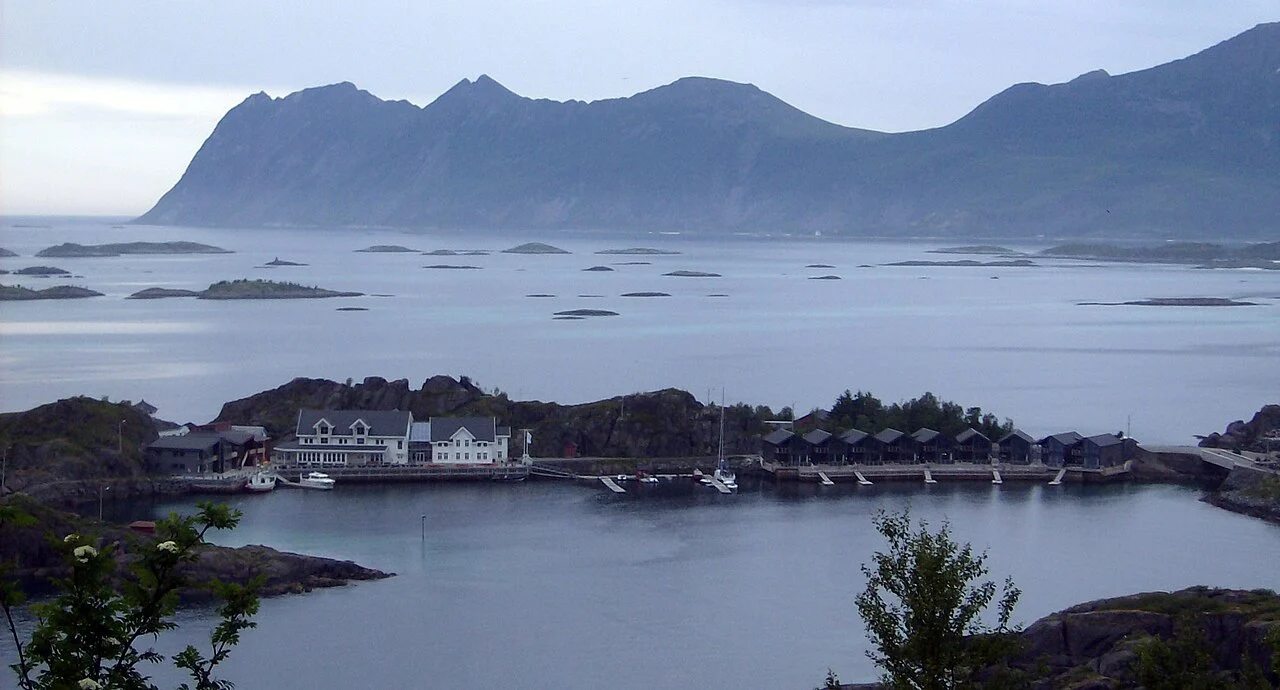
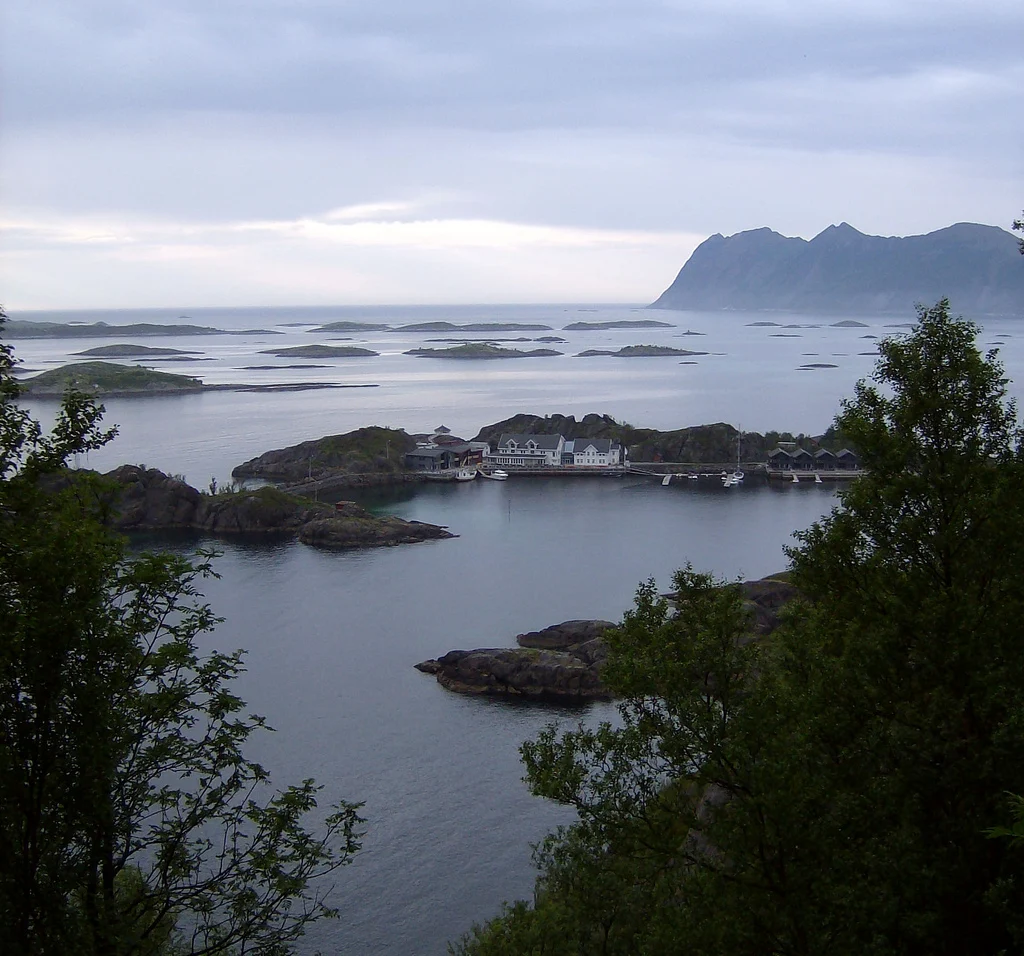
Hamn i Senja offers an archipelago setting and a base for locally organised coastal activities. It is a useful contrast to roadside viewpoints because visitors can spend time close to the water rather than immediately continuing to the next lookout. Food, accommodation and specific activities operate as separate commercial services, so choose what actually suits your visit.
Check access, reservations and the programme directly before arriving with a fixed expectation. A stay, a meal, a guided kayak trip and equipment rental are not interchangeable bookings. If you simply want a scenic pause, confirm where public access is appropriate and respect private guest areas and operational space.
This part of the coast works well as the centre of a slower day, especially if you add one guided activity. Leave enough time for the weather and a comfortable return. Do not fill the same day with both a long mountain hike and a water-based booking unless you understand their real durations and have a generous margin.
8. Walk from the Ånderdalen National Park gateway
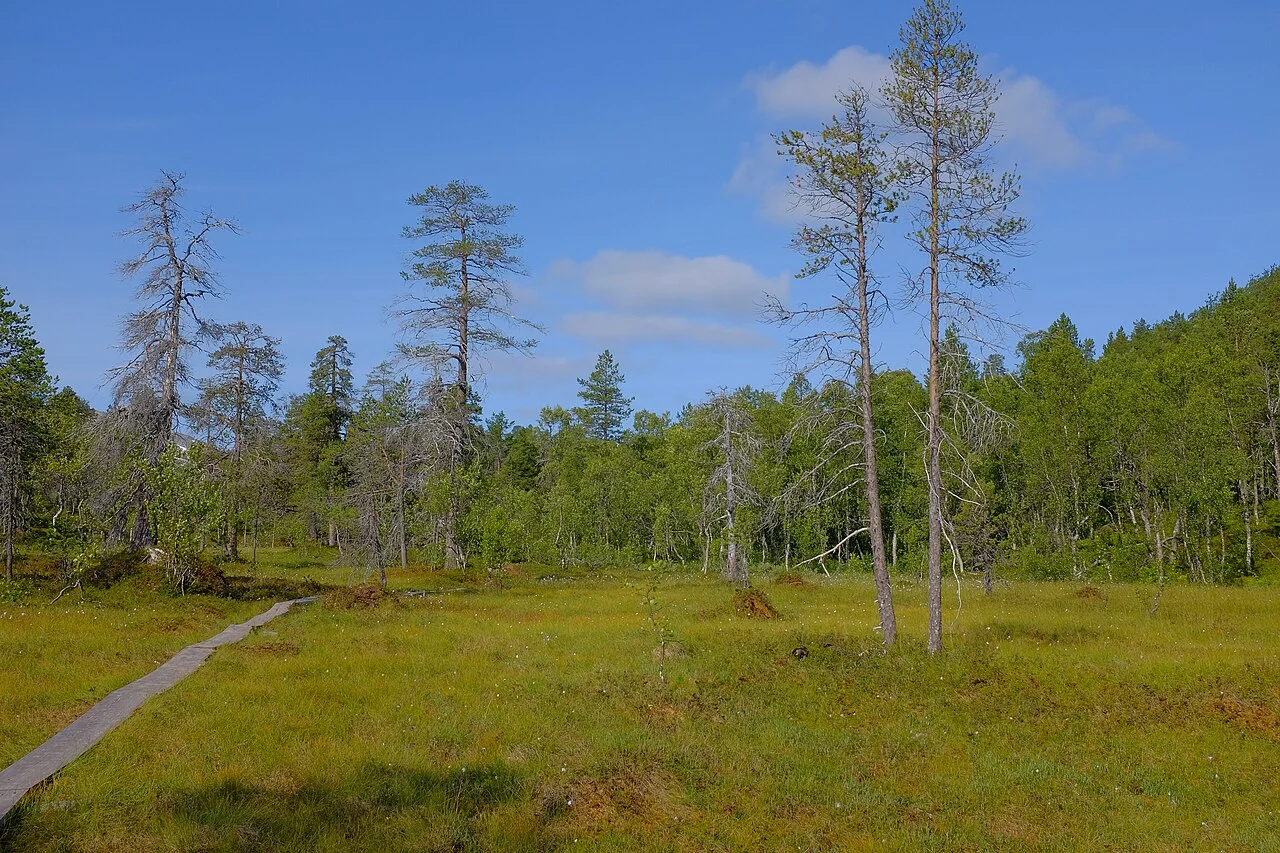
Ånderdalen offers a different Senja landscape, with woodland, wetlands and a more sheltered inland feel than the exposed outer coast. The gateway at Tranøybotn includes an adapted approach toward the park boundary. Beyond that initial access, routes vary in length and difficulty, so the whole national park should not be described as one universally easy walk.
Choose your route using current park and visitor information. A short out-and-back from the entrance can suit a family or a quieter day; longer routes require more preparation and navigation. Respect conservation rules, wildlife and reindeer, and do not leave the trail to approach animals or seek an unobstructed photograph.
Plan this as a distinct southern-island outing rather than an automatic addition to every outer-coast day. Bring food, water, weather protection and suitable footwear for wet ground. In winter, consult local advice before treating a summer walking description as usable. The park is a rewarding alternative for visitors who prefer forest and slower exploration to a summit challenge.
9. Choose a guided sea-kayaking trip
Book here with Viator → Small-group kayaking from Senja
Sea kayaking offers a closer view of Senja’s waterline, islands and mountain backdrop. Guided trips are available in the region, including around Hamn, but the appropriate route depends on weather, sea conditions and experience. Clear photographs of calm turquoise water should not be taken as evidence that the sea will be benign during your visit.
Choose a trip explicitly suitable for your ability and ask about clothing, safety equipment, group size and the expected time on the water. Cold-water immersion is a serious consideration even in summer. Visitors without suitable rescue skills should not treat a rental kayak as equivalent to joining a supervised introductory excursion.
Leave a flexible window for cancellation or changes and avoid a tight onward connection. A guide may select a different sheltered route or decide that conditions are unsuitable. That judgement protects the experience rather than diminishing it. Pair the excursion with a relaxed local afternoon instead of adding another strenuous activity simply to maximise the number of bookings.
A small-group guided paddling trip is available from Senja; confirm the local meeting point and conditions.
10. Consider Hesten or Segla only as a prepared mountain outing
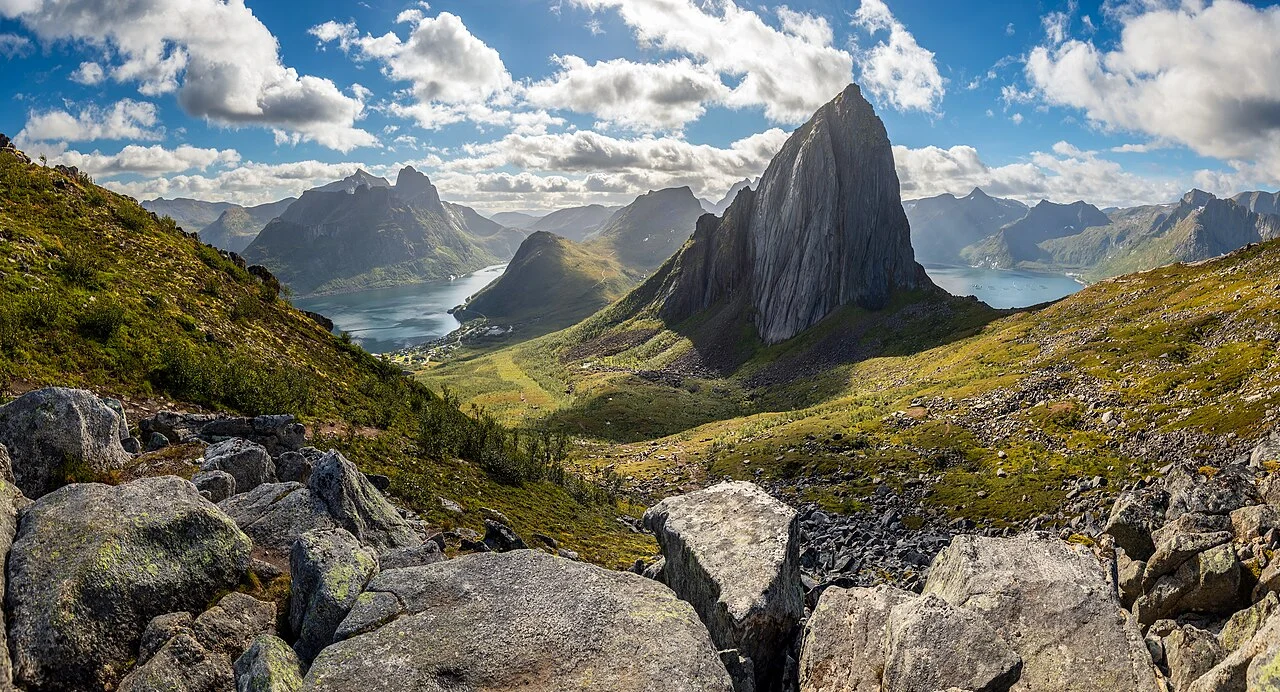
The mountain scenery around Fjordgård is strongly associated with images of Segla, including views obtained from the direction of Hesten. These are mountain outings with ascent, uneven terrain and exposed places, not roadside viewpoints. A Senja visit can be excellent without attempting either route, especially when conditions or experience make a hike unsuitable.
Research the exact route, recent conditions and local parking arrangements, and consider a qualified guide. Do not choose a route solely from a dramatic photograph without knowing where the photographer stood. Cloud, rain, snow and wind can change the risk significantly, while the descent requires attention even after the main viewpoint has been reached.
Reserve the day’s best weather window and sufficient energy for one appropriate route. Stay back from edges, follow local guidance and turn around when conditions deteriorate. Avoid framing the hike as a compulsory achievement. Bergsbotn, Tungeneset and other lower coastal stops remain worthwhile alternatives that do not require a visitor to exceed their capabilities.
Realistic Senja itineraries
One day: choose a section of the scenic coast
Start from your actual accommodation and follow one manageable section linking Bergsbotn, Tungeneset and Ersfjordstranda if the distances work. Add one village rather than every possible detour. Do not assume a day trip from Tromsø leaves the same sightseeing time as a full day already based on Senja. Confirm any ferry independently.
Two days: separate the outer coast into sensible groups
Use the first day for the scenic-route viewpoints and a nearby village such as Mefjordvær. Devote the second to the western coast around Hamn and Gryllefjord, or another group appropriate to your base. Leave time for meals and short walks rather than treating the driving time between pins as the whole duration of each visit.
Three days: add one substantial outdoor activity
Keep the two coast days flexible, then choose a guided kayak outing, a suitable mountain hike or the Ånderdalen gateway for the third day. These are alternatives rather than a single combined programme. Use weather to decide the order, and protect the final journey with enough margin for narrow roads, stops and possible ferry queues.
Practical travel tips
- Choose accommodation in relation to your main interests. An outer-coast base can reduce repeated driving to viewpoints, while other parts of Senja make more sense for inland or southern activities. A map distance alone can hide slow, indirect roads.
- Check the ferry timetable for your actual travel date. Connections can be seasonal or operate with different frequencies; a route described in a summer travel story is not a guaranteed link in autumn or winter.
- Use designated parking and stopping areas. Never stop in a tunnel, on a blind bend or in a passing place for a photograph, and keep village access and fishing operations clear.
- Treat beaches as Arctic coastal environments. Even sunny conditions can involve cold water and wind; a scenic beach walk does not require swimming, and children need supervision around surf and rock.
- Choose one substantial activity per day when it involves a hike or the sea. Transfers, equipment, safety briefings, food and recovery take time that a short promotional duration may not fully communicate.
- For winter travel, consult official road information, local weather and relevant avalanche advice. Do not apply a summer itinerary unchanged to short daylight, snow-covered trails and icy access points.
Frequently asked questions
How many days should I spend on Senja?
Two full days give a useful introduction to selected coastal stops, while three allow a quieter route or a substantial outdoor activity. Travelling to the island also takes time. A one-day visit should focus on a manageable section from your actual starting point rather than trying to drive every detour and include a summit hike.
Do I need to hike to enjoy Senja?
No. Viewpoints such as Bergsbotn and Tungeneset, the beach at Ersfjordstranda and village visits provide a rewarding itinerary without climbing a mountain. Access still depends on conditions, especially in winter, but there is no reason to select Hesten or Segla unless the route genuinely suits your ability and preparation.
Is a car necessary?
A car provides flexibility for dispersed coastal stops, although organised tours and selected transport services can work for specific itineraries. Public transport does not necessarily connect several attractions conveniently in one day. Plan actual services and return journeys before choosing a car-free trip, and use local advice for seasonal connections.
Can I rely on the ferry to Andenes?
Only after checking the current operating season, timetable and capacity arrangements for your dates. The Gryllefjord–Andenes connection is associated with summer travel and should not be assumed to run year-round. Leave a margin for queues or changes and understand the alternative road journey if the crossing is essential to your plan.
Are Hesten and Segla easy walks?
They are mountain routes rather than casual sightseeing strolls, with uneven terrain, ascent and exposed areas. The appropriate choice depends on conditions and your experience. Consult current local guidance or a qualified guide, allow sufficient time and choose lower coastal alternatives if cloud, ice, wind or limited fitness makes the route unsuitable.
When is the best time to visit?
Summer generally offers longer light and greater outdoor flexibility, while the darker season can bring aurora opportunities and winter landscapes. Each has trade-offs. Snow, road conditions and limited daylight change what is practical, and neither the midnight sun behind cloud nor an aurora display can be guaranteed during a particular stay.
Continue exploring Norway
Sources and current travel checks
Official tourism, museum and operator information informed this guide. Opening calendars, access, fares and transport can change; follow these sources for your travel dates. Suggested visit lengths and itineraries are editorial planning allowances.
Choose accommodation and plan Senja
Compare accommodation options alongside the places you want to visit. Check the journey to the property before reserving.
Plan experiences around your stay
These guides compare regional options and practical considerations. Check the actual departure point; a related guide is not a promise that every activity is available in this town.