Cold-Water Surfing in Norway: 10 Trip Planning Tips
Cold-water surfing in Norway is easiest to plan around a coached session in Lofoten. Compare Unstad, Flakstad and options farther south, then build in enough time for the school to choose a suitable tide and beach.
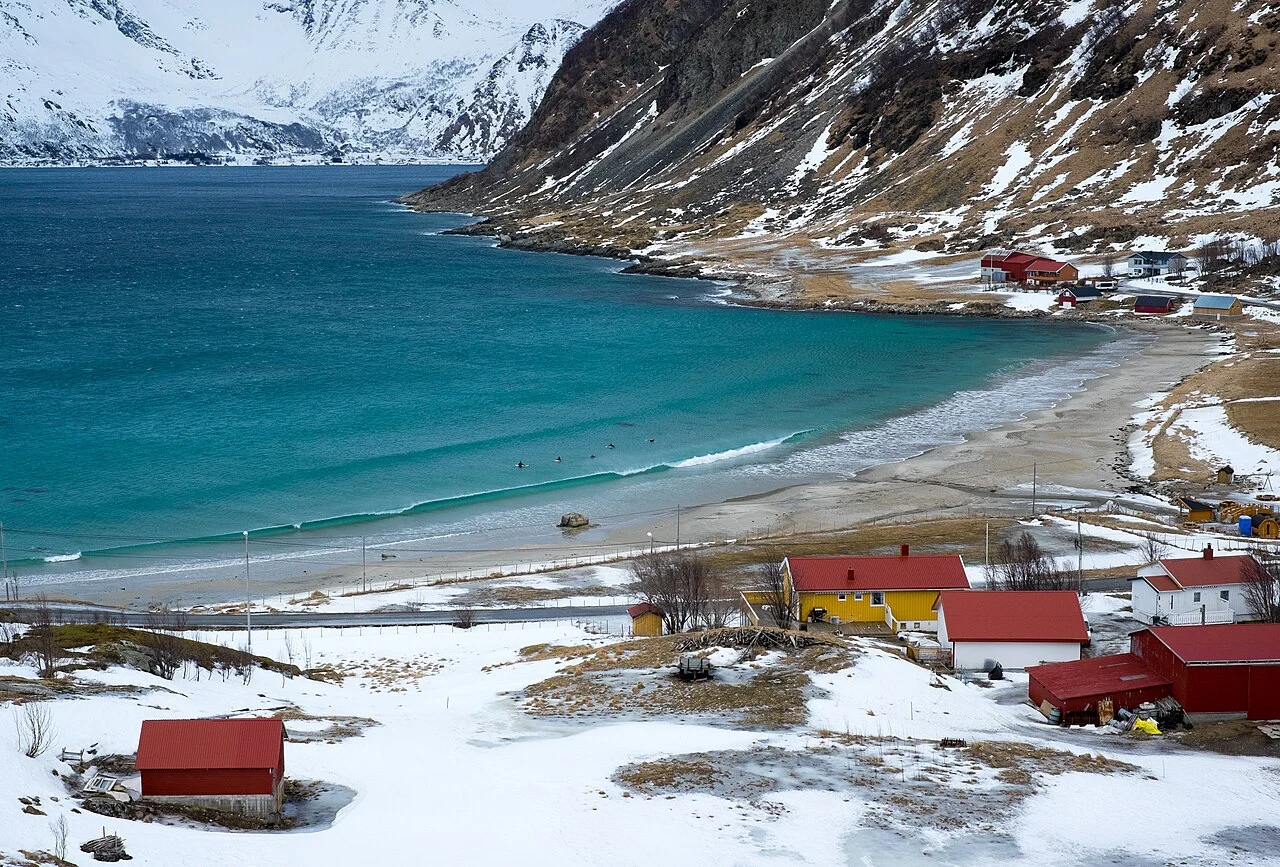
Cold-water surfing in Norway at a glance
- Worth trying? Yes, if you want a coached introduction and are comfortable in the water.
- How long? Half a day for a lesson. Keep two or three days if surfing is the focus.
- When? Summer is the simplest starting point for many beginners.
- Cost? Example group rates at Unstad are roughly NOK 1,200–2,200.
- Transport? Use a car or confirm the bus and final walk before booking.
- Three priorities. Book instruction, check the gear and keep a second weather window.
1. Cold-water surfing in Norway at Unstad
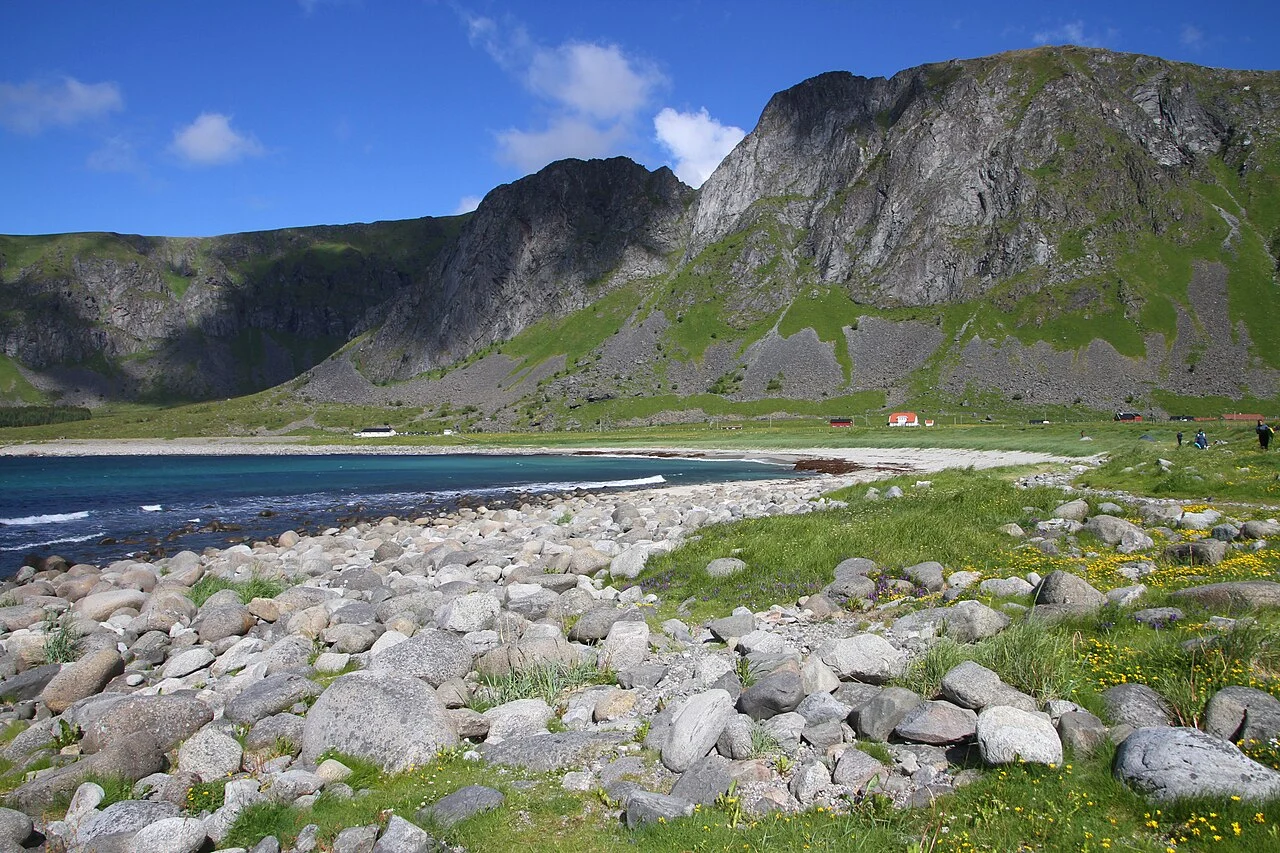
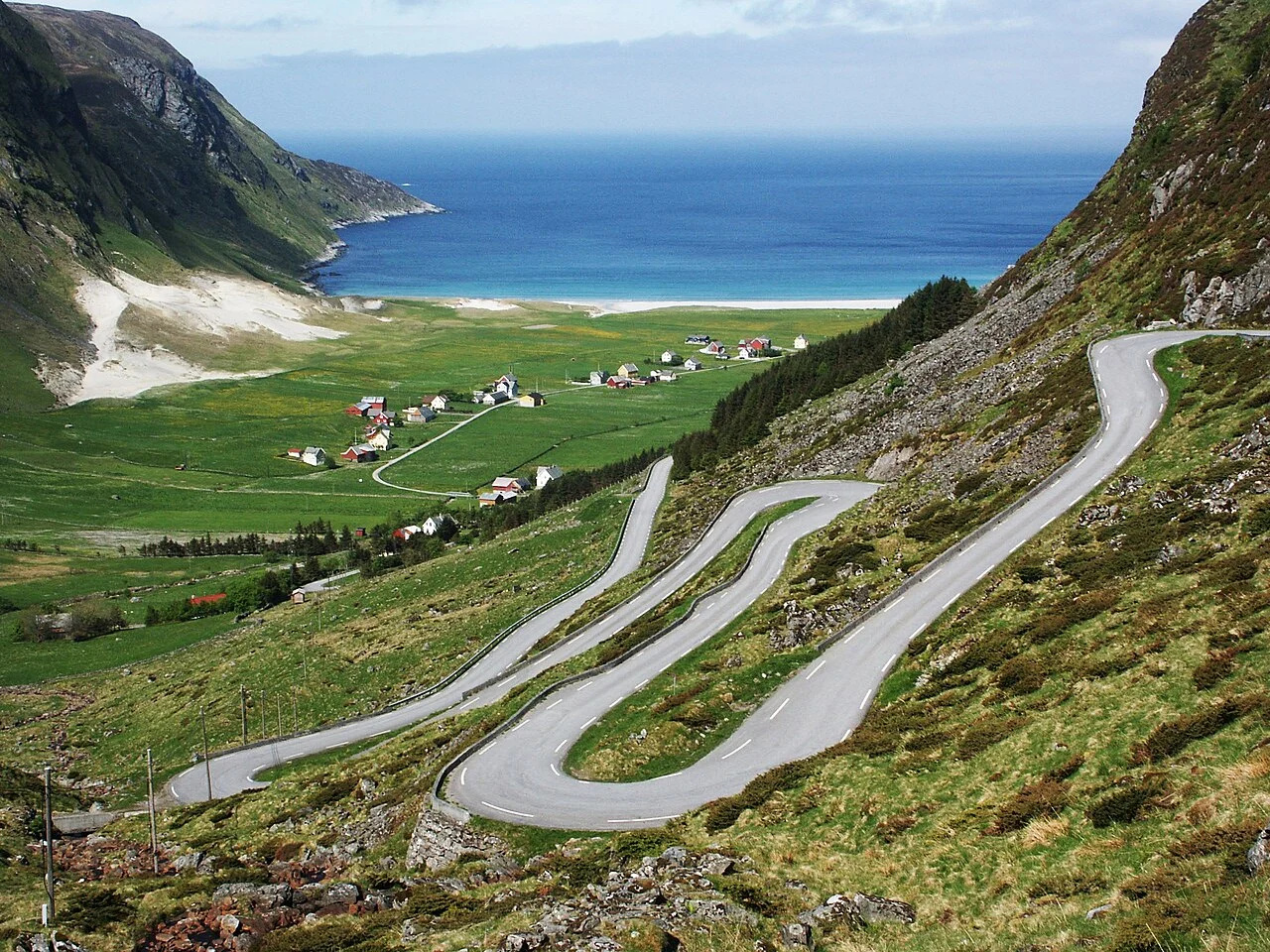
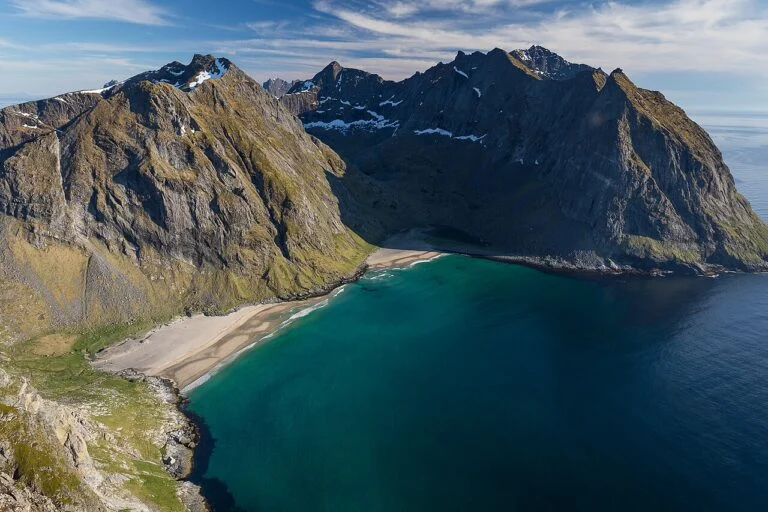
The road through the valley ends at a bay framed by steep mountains. Visit Lofoten describes a sandy beach between point breaks with stony bottoms. That distinction matters when you stand in the car park deciding what to do. Your coach may teach in broken waves in a suitable part of the bay while more experienced surfers use another part of the same beach. Watching a competent surfer get out easily gives you very little information about whether the conditions suit you.
Lofoten Surfsenter advertises a three-hour beginner group lesson at NOK 1,190 with equipment included. It asks families to contact it about children under 14. Visit Lofoten lists an Unstad Arctic Surf small-group lesson from NOK 2,190, with equipment and about three to four hours allocated. The listing says the time is confirmed about a day ahead to account for the tide. Compare the group size, meeting point and cancellation terms before choosing. Leave half a day for fitting, instruction, changing and warming up.
For a first visit, make the lesson the main event and get a meal in the area afterwards if the café is open. Confirm where to change, store a bag and wait if someone in your party is staying on shore. A spectator will have a different experience on a windy day from someone in the water, especially when the shore facilities are closed. If you want photos, ask the school whether they are part of the booking before paying for a separate service.
2. Flakstad and the westbound Lofoten route
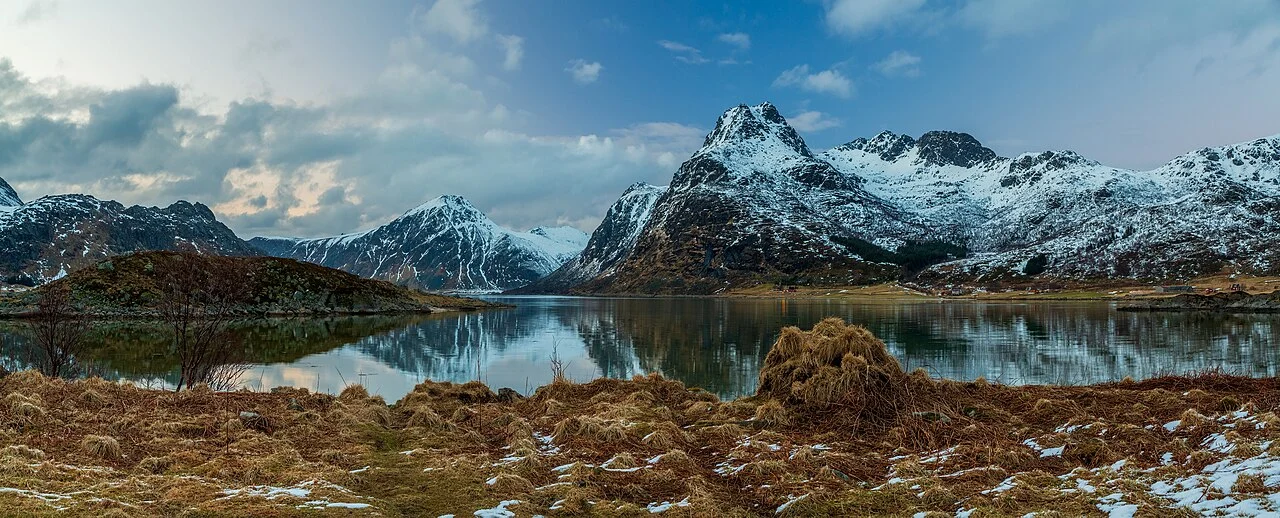
Flakstad is the other principal Lofoten surf area highlighted by the regional visitor office. It lies farther west than Unstad on a route that can continue toward the villages around Reine. Visit Lofoten describes a sandy beach where waves can be smaller than at Unstad. Let your school judge the actual conditions and choose the teaching area. A good forecast at one beach does not tell you what a different beach will be like when you get there.
Lofoten Beach Camp offers instruction and rentals in the area. Ask the school which sessions operate on your date, the price for your group and what to do if the lesson moves. Check that the included board and wetsuit sizes cover the whole group, especially for children. Leave a half-day free for the lesson and your return drive or bus. If a campsite stay is part of the plan, confirm that food, showers and reception are open during your dates.
For a road trip, set aside one day for surfing and leave the next morning available before continuing west. Sleeping in the Flakstad area reduces the amount of backtracking if you have to return to the same school. If you are staying around Leknes, both beaches can fit the same longer stay, but choose one provider and let them advise on conditions. The Lofoten destination guide can help you plan the days around the lesson.
3. Hoddevik and Jæren for a trip farther south
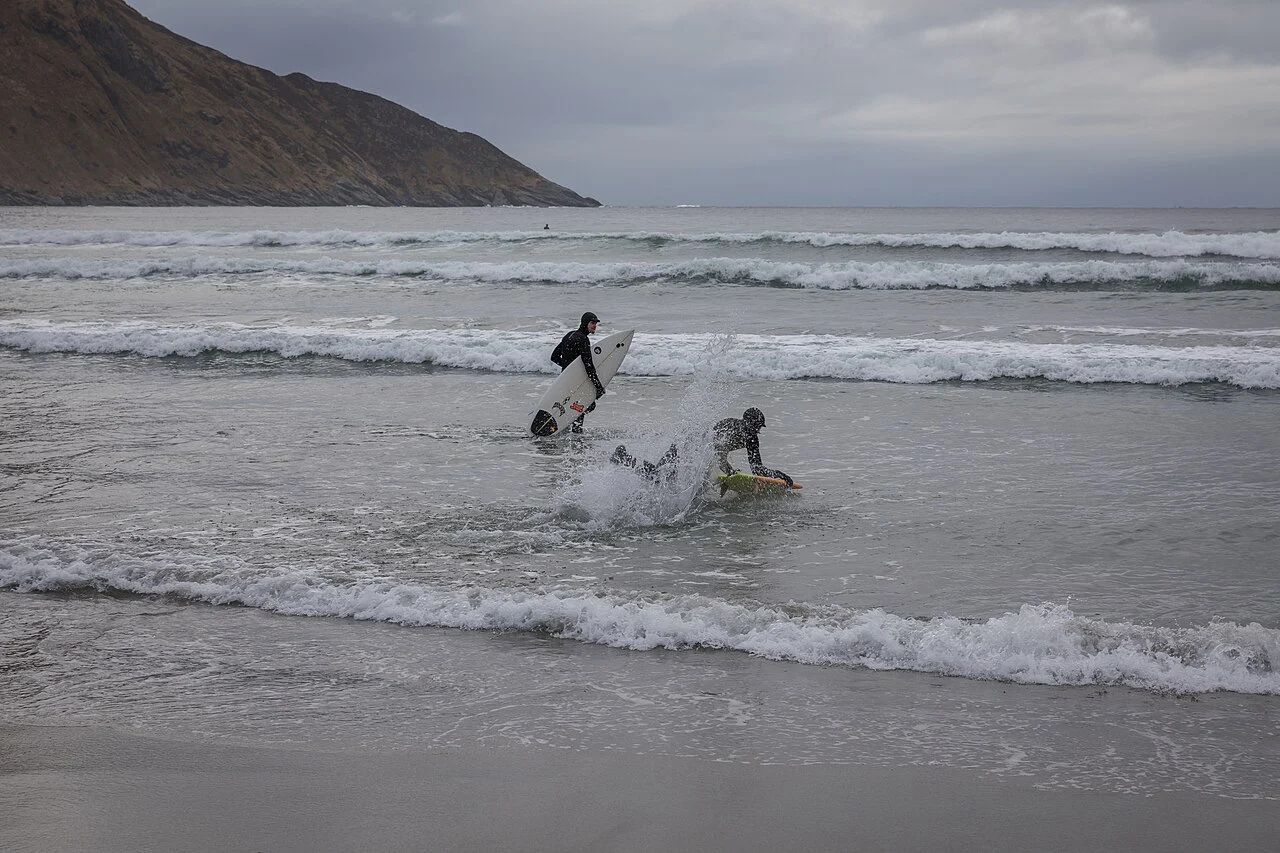
Hoddevik on the Stad peninsula is an option for travellers already planning a west-coast road trip. The beach is approached from inland over the headland, so allow time to drive down, park and locate the school before changing. Stad Surfing describes a beginner group format with about half an hour on land and an hour and a half in the water, with equipment included. Ask for the current quote, seasonal times and suitable accommodation. Book the coach before making a special detour.
Hoddevik and nearby Ervik are separate places. When you contact a school, give it your actual experience and confirm where to go. A beach you found in a video may be an unsuitable choice that day. Ask about a short shore visit or a rescheduled lesson when conditions are poor. A town or village stop on your road trip will be easier to reorganise than two fixed activities with a narrow transfer between them.
Jæren is a better geographic fit when you are based in the Stavanger region. Ask a local provider which beach it uses, whether the beginner lesson runs on your dates and how to reach the meeting point. If you are relying on public transport, plan the final leg and the ride home before paying. Leave time for a change of beach if the school offers that option. Our Stavanger guide covers the city and other outings for days when you stay off the water.
4. Season, prices and the booking decision
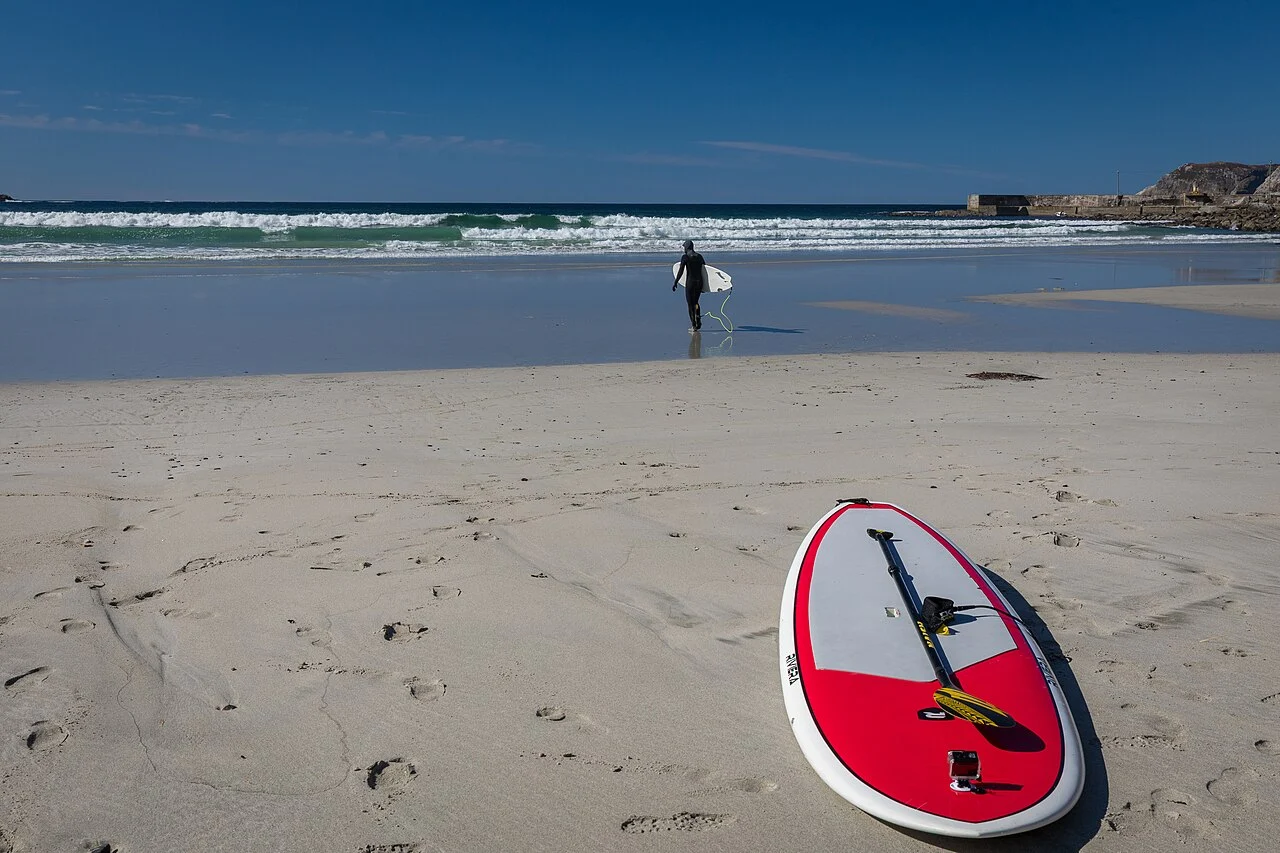
Summer is a sensible first choice for a Lofoten lesson. Visit Lofoten describes generally gentler summer waves at Unstad, while autumn can bring stronger swell. Longer summer daylight also gives you more room to move a road journey or walk around the lesson. Winter adds cold exposure, short daylight and the possibility of powerful conditions. If you are travelling in winter for another purpose, make surfing optional and discuss whether the school is teaching visitors at your level.
The two Unstad group examples run from about NOK 1,200 to 2,200 per person. The cheaper and more expensive products have different formats, so check what the rate actually includes. Lofoten Surfsenter separately lists complete wetsuit gear at NOK 500 and soft-top boards at NOK 300, with a different price for hard boards. Rental rates are useful when planning a return visit. For a first Arctic session, put the money toward coaching and book a lesson that includes fitted equipment.
Reserve a lesson early in your stay and keep a second window open. Check who contacts whom if there is no suitable surf, whether the start time can move and what happens if the group minimum is not reached. If you only have one day, book on terms you are comfortable with if the plan changes. A lesson scheduled around conditions can overlap with the dinner or onward bus you originally planned, so check those dependencies before committing.
5. Cold-water equipment and local instruction
Tell the provider what you have done before, including your swimming confidence, how recently you surfed and whether you have worn cold-water equipment. Ask about the suitability of the session before booking if you have any concerns. Use the school’s fitting and guidance on wetsuit, hood, boots and gloves. Make time for the safety briefing and ask the instructor to explain how the group will enter, exit and keep in contact in the water.
Use a local coach to decide where and when to go in. Photos, road-side observations and a surf forecast cannot replace an assessment of the spot and your ability. A sandy section does not remove currents or guarantee a suitable entry. If the instructor calls off the session, keep it as a shore day. Experienced visitors can also ask a local provider for an assessment before renting and heading to an unfamiliar break.
Carry a dry change and arrange a place to warm up afterwards. Check whether the school has heated changing space or whether you need to go straight to your accommodation. If anyone is watching, give them a warm place to wait and a time to meet after the lesson. If you are booking in winter, read the polar-night planning guide and leave enough time to get back in the available light where practical.
6. Transport, shore stops and what to book first
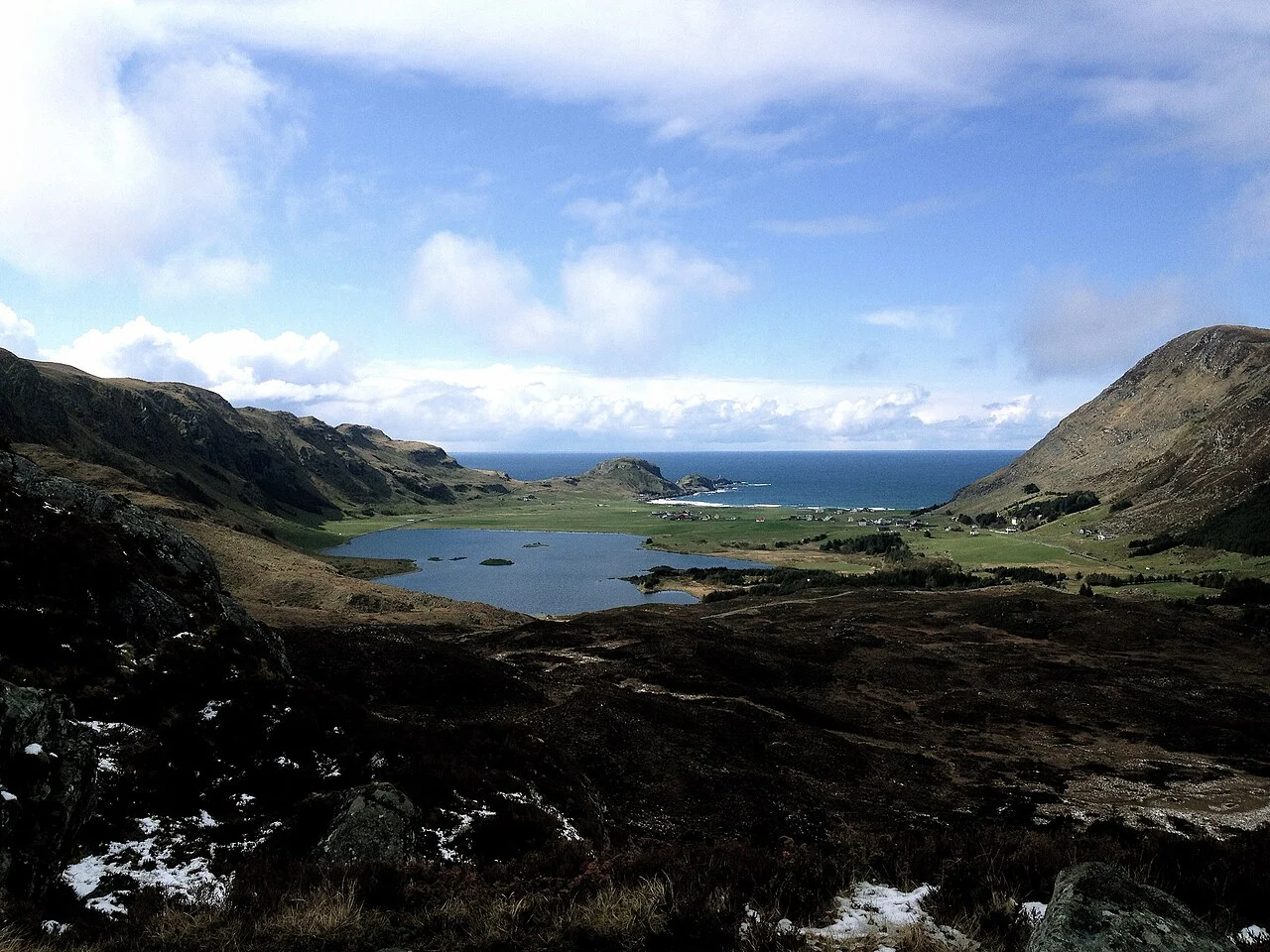
A car makes it easier to reach an outlying school and carry dry clothing. Confirm current bus routes and the walk from the stop if you are travelling without one. Ask the school directly about pickup possibilities. Let the provider know if you have a tight transport window, because an altered lesson time can make an otherwise workable itinerary impractical.
Stay near the part of Lofoten where you intend to surf. This is especially useful if you only have two nights and the weather forecast is unsettled. Keep the first evening simple and avoid arranging a long drive immediately after a cold-water session. For a mixed group, book a warm meeting point or a separate local activity for anyone skipping the lesson.
The booking sequence is lesson, transport and then any extra activity. Recheck the school’s instructions shortly before leaving, including the exact address, the current time and what clothing to bring. If you plan to spend another day outdoors, choose an option with a straightforward retreat to town when visibility or the wind changes.
7. Use Unstad as your main Lofoten stop
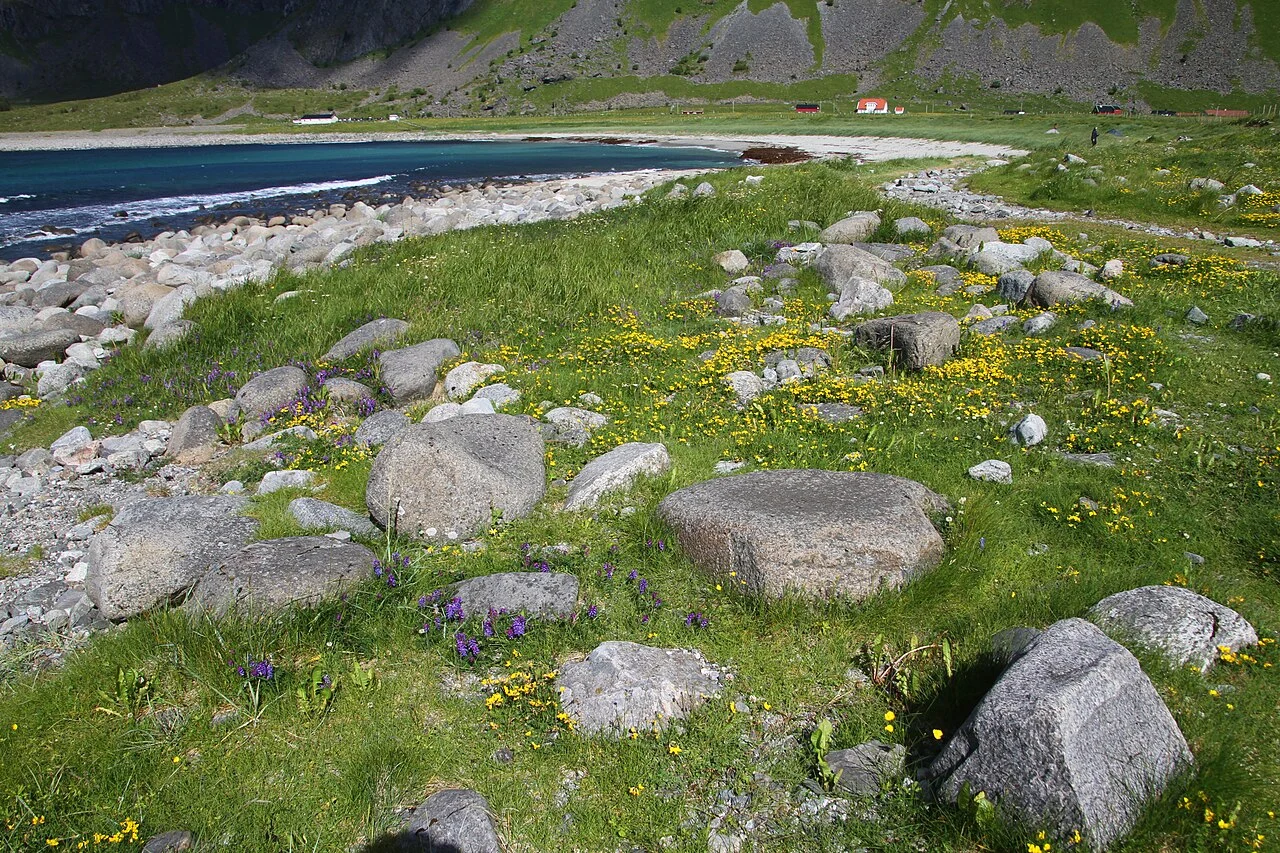
Unstad is a practical base if the lesson is the reason you are travelling west from Leknes.
Give the booking its own morning or afternoon. A beginner lesson includes time on shore for fitting and instruction, so the advertised length is longer than the time spent riding waves.
Compare the total cost with equipment included and confirm the meeting point before driving.
8. Plan a Flakstad shore day
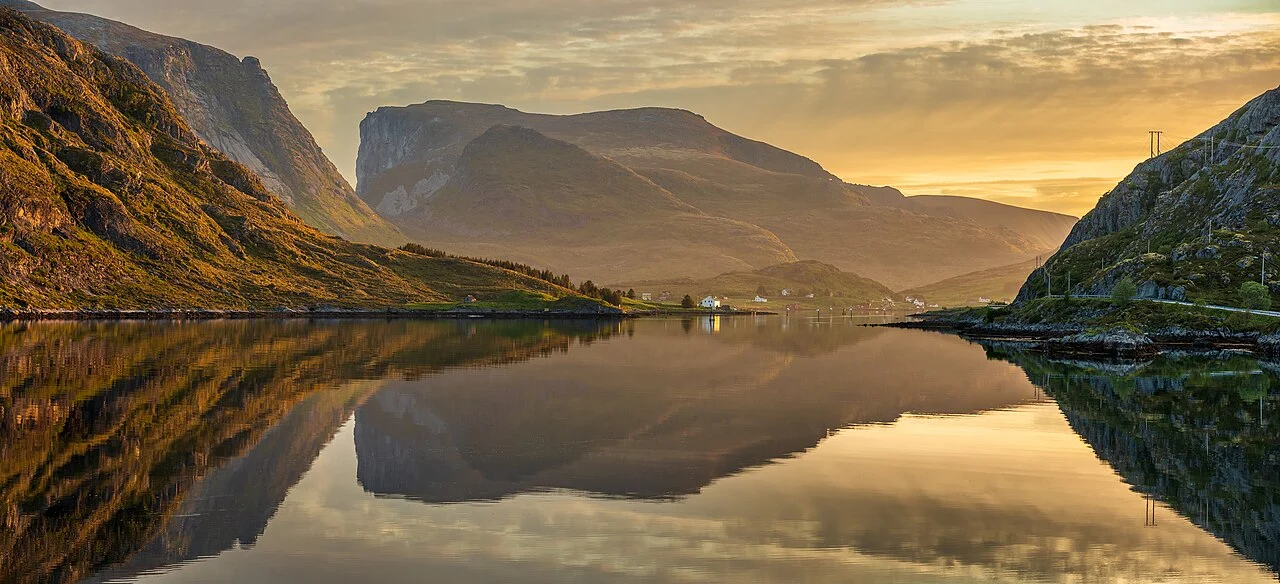
Flakstad offers a beach stop on a westbound Lofoten itinerary even if the day is unsuitable for a lesson.
Use the visit to see how conditions vary across beaches. Save the decision about getting in the water for a local instructor.
Allow an hour for a shore visit. Check parking and make the next drive independent of the lesson timetable.
9. Book Hoddevik around the Stad approach
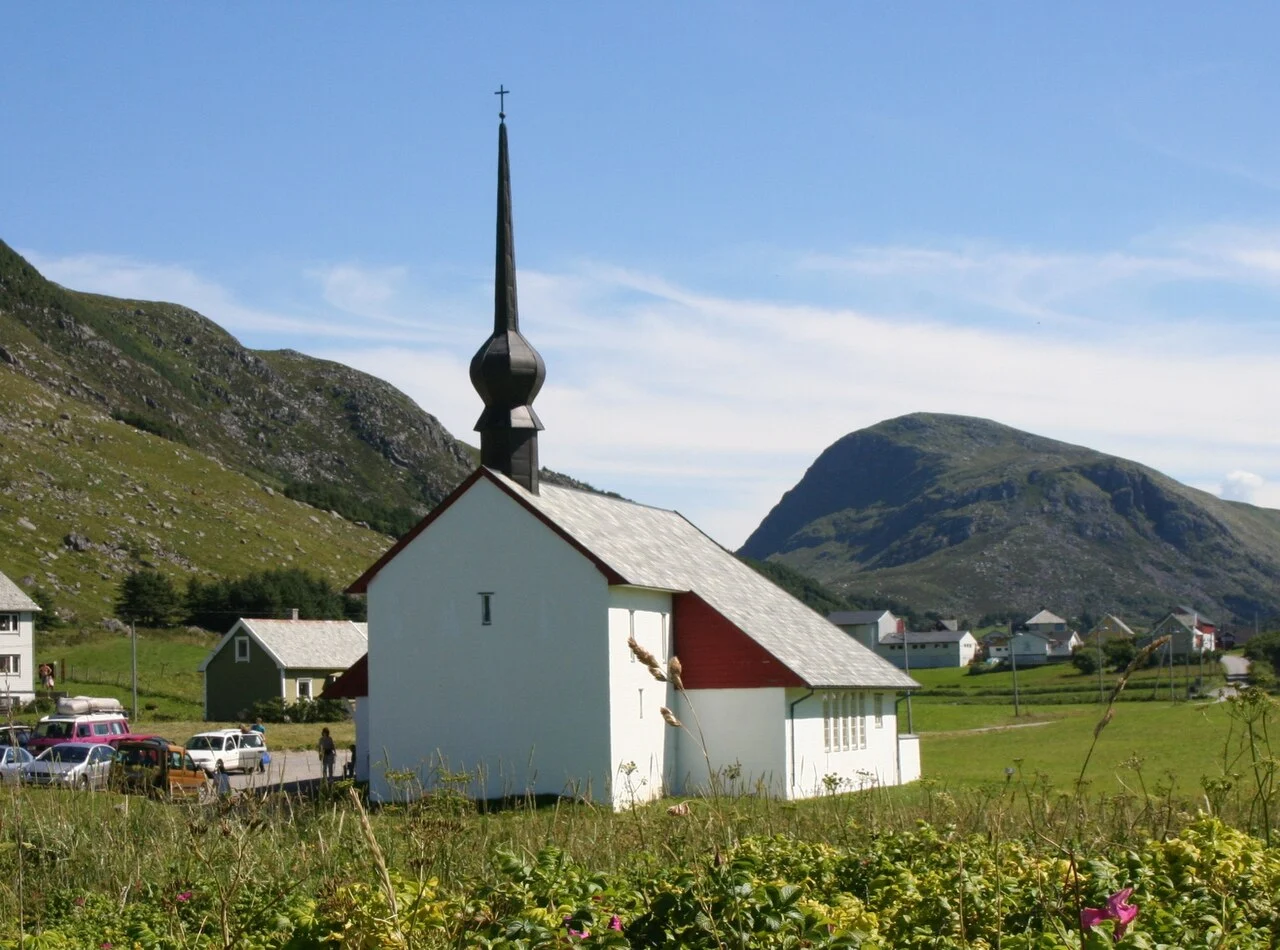
Hoddevik works best as part of a separate Stad stay. It is a poor addition to a day already crowded with a long transfer.
Ask where to collect equipment and whether the lesson time depends on conditions. Staying locally leaves room for a revised departure.
Check access, coastal weather and current rates in advance, and allow at least half a day.
10. Compare a Jæren outing from Stavanger
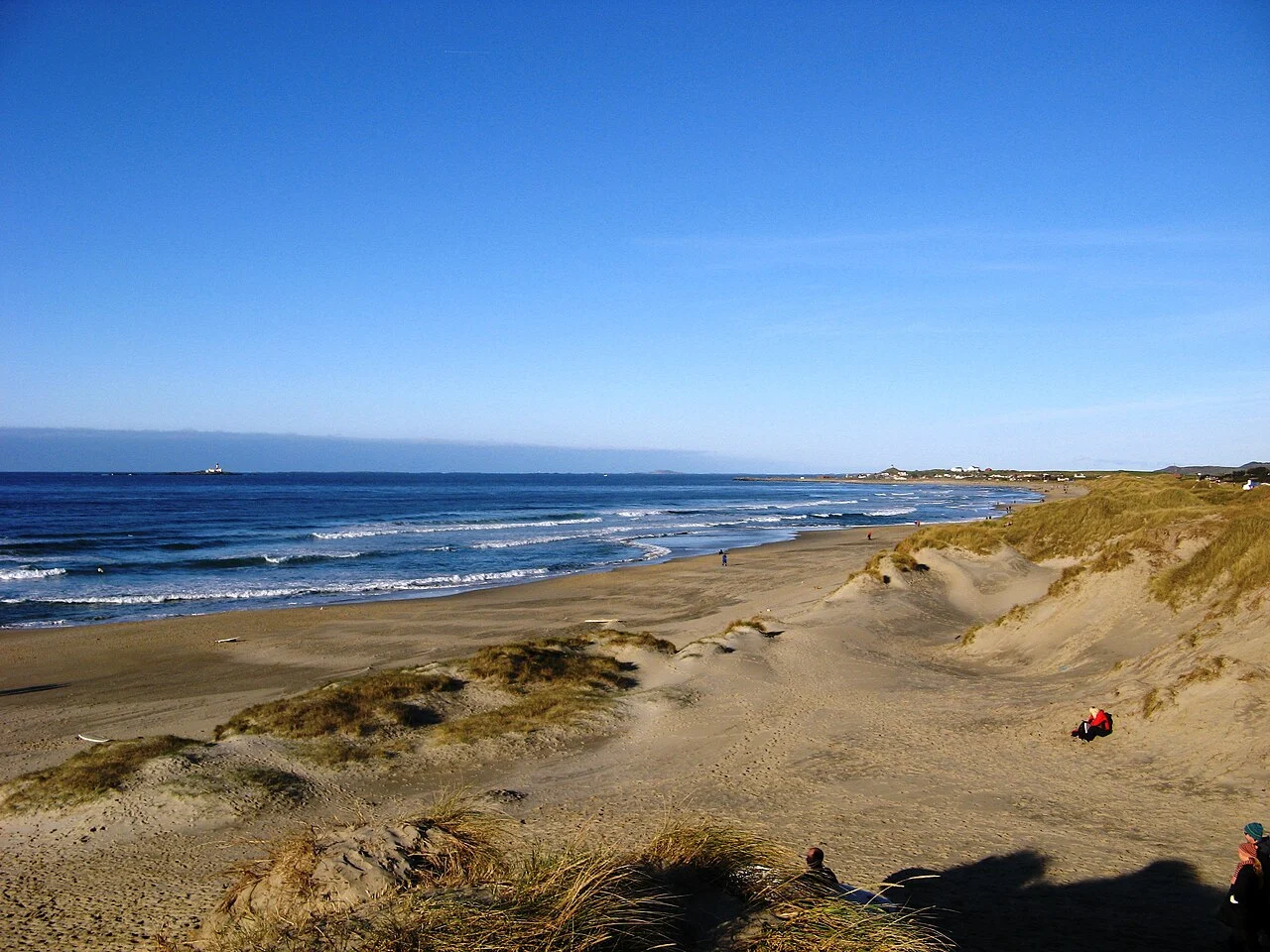
Jæren is the southern option for travellers who already have a Stavanger-area base.
Choose the lesson according to the provider’s current location and your ability. Keep a shore walk available if the water session changes.
Allow a half-day including travel and confirm the return, equipment and cancellation terms before paying.
One-, two- and three-day surf itineraries
One day from Leknes. Keep 09:00–10:30 for breakfast and the drive to Unstad or Flakstad, adjusted to your confirmed check-in time. Hold a late-morning or afternoon block for a lesson of up to four hours, with a warm meal and a change of clothes afterwards. Return to Leknes for dinner. If the school advises against going in, do a short shore visit from a safe place and return to town. Check the last bus before treating this as a car-free day.
Two days in central Lofoten. Arrive the first morning, settle in around Leknes and keep the first afternoon open for the school’s best available slot. If you surf on arrival day, eat near your base and give the next morning to a shore stop or rest. If conditions delay the lesson, use day two for it and leave the afternoon flexible for the return and dinner. Ask about the pickup or parking arrangement before driving over and drop the extra stop if the class runs late.
Three days on a westbound Lofoten trip. On day one, check in near Flakstad, find the meeting point and keep the afternoon flexible for a short walk, then eat locally or return to your accommodation. On day two, use the morning or afternoon for the confirmed lesson and spend the other block warming up or visiting a nearby village. Keep the third morning free for a rescheduled lesson before heading west. If wind or winter roads disrupt the plan, stay local or leave earlier for your next base. Use the Norwegian Public Roads Administration traffic service before setting out.
Take a surf lesson at Hoddevik
If your route takes you to Stad, compare this Hoddevik surfing experience. Confirm where the session actually starts and what equipment is included; the listing’s Skjolden category is not a transfer arrangement.
View the Hoddevik surf experience →
Check current dates, prices, meeting points and cancellation terms on Viator. Affiliate link: we may earn a commission if you book.
Related planning
Destinations for your trip
Questions and answers
Can a beginner surf in Lofoten?
Yes, book a suitable lesson and let the coach decide whether the conditions work on the day.
When is the best time to learn?
Start with summer at Unstad or Flakstad. Confirm the dates and let the school choose the session time.
How much is a surf lesson?
The published Unstad examples are NOK 1,190 and from NOK 2,190. Both include gear, and the formats differ.
Can I go without renting a car?
Check the last leg from the bus to the school and the return trip at the likely lesson time. Ask about pickup if a bus connection is difficult.
Do I need my own wetsuit?
The Unstad lesson examples include equipment. Ask about your size and exactly which accessories are provided.
What happens if the surf is unsuitable?
Ask the school how it handles changes, credits and refunds before you book. Leave a second block of time open if the lesson is the priority.
Build the day around the lesson
Choose the beach that fits your base and work with a local instructor on the timing. Leave a second slot available, then use the rest of the trip for shore stops that work in the same part of Norway.
Sources and further reading
Confirm prices, opening hours, transport and current conditions before booking or travelling.