10 Best Waterfalls to Visit in Norway
By NorwayTop10 Editorial
The best waterfalls to visit in Norway range from short road stops in Hardanger to a steep trail in Frafjord and a boat view from Geirangerfjord. Pick the waterfall that fits your route and walking ability before comparing height or planning a detour.
Compare ten Norwegian waterfall visits by access, walking effort, season and the journey you need to book.
Best waterfalls to visit in Norway at a glance
Worth visiting? Yes, especially when the falls fit an existing fjord or rail route. Time needed One day for two compatible road stops, two or three for a regional loop. Best time Late spring and summer often offer useful daylight and flow, but check local access and regulated releases. Cost Roadside stops mainly involve driving and any posted parking charge. Railway, sailing and guiding are paid separately. Transport Use a car for road stops, the Flåm Railway for Kjosfossen and a sailing for the Seven Sisters. Top three Vøringsfossen, Steinsdalsfossen and the Seven Sisters for three different perspectives.
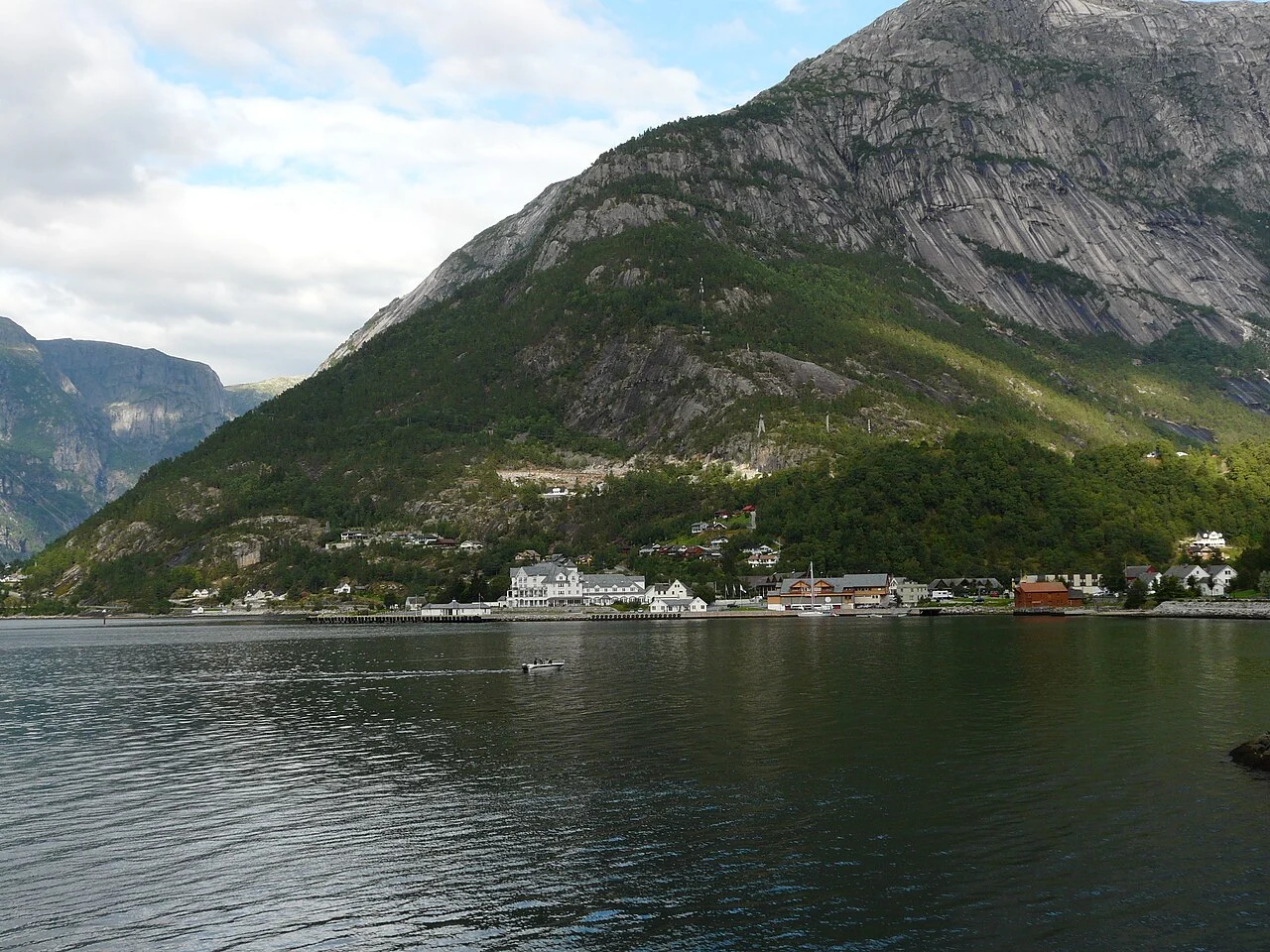
This editorial list weighs how different the visits are, the access information available and whether each fits a realistic itinerary. The cover shows Eidfjord, the approach area for Vøringsfossen.
1. Vøringsfossen for the bridge above Måbødalen
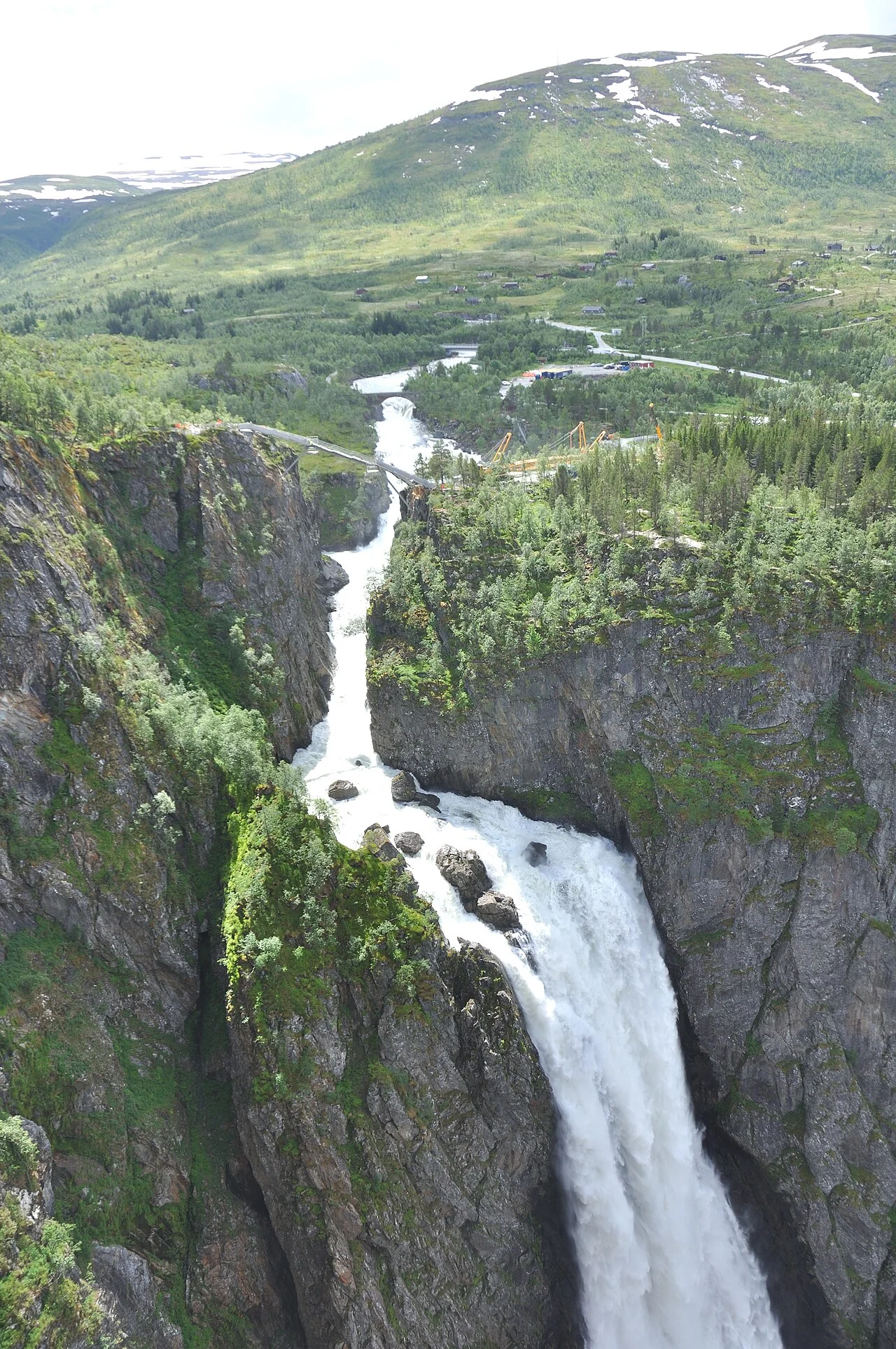
Vøringsfossen drops from the Hardangervidda plateau into Måbødalen above Eidfjord. The engineered walkways, platforms and bridge let visitors read the landscape from above. Start with the designated viewpoint rather than confusing it with the separate valley-bottom route. The bridge gives a different angle from the railings near the approaches.
Spend time looking downstream as well as towards the falling water. In low cloud, visibility can change while you are still at the platforms, and wind can make the bridge feel colder than the village. Choose a shorter section if anyone in your party dislikes heights. Confirm accessibility for the exact platform you want.
Allow roughly 45–90 minutes at the upper site. Check seasonal access and parking arrangements with the scenic-route authority. The upper viewpoints are a practical half-day pairing with Eidfjord and a useful break on a Hardangervidda crossing. Verify whether any walk beyond the designed platforms is open separately.
2. Låtefoss for twin cascades beside Route 13
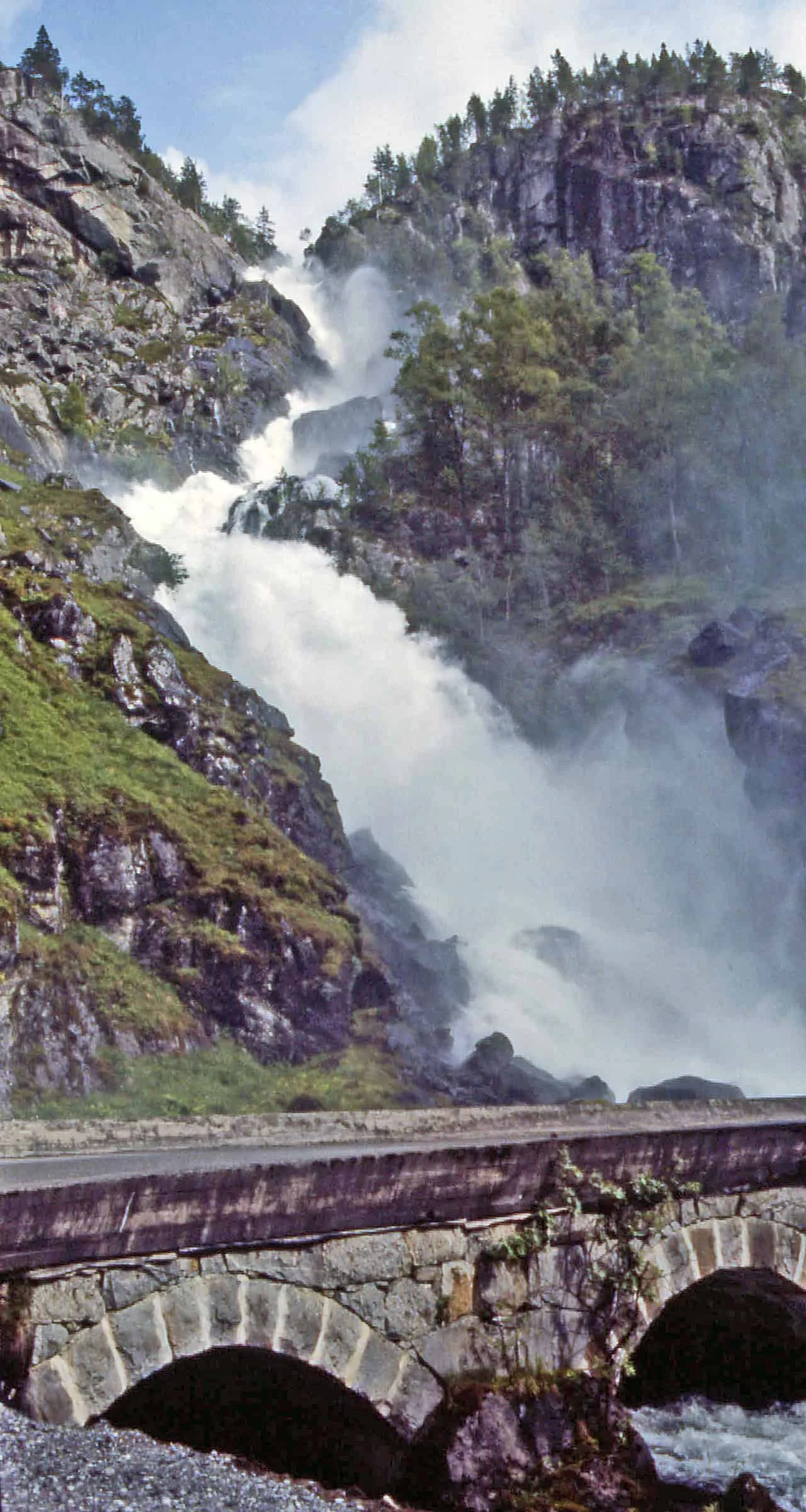
Låtefoss is a twin waterfall in Oddadalen south of Odda. The streams converge beside the old stone road bridge. That arrangement makes it an unusually immediate roadside visit, with a close view of the water and little walking if you find a legal stopping place.
Spray and passing traffic are part of the experience. Take photos from an appropriate public area and put phones away before moving near the road. If the pull-off is full, continue and reassess later. A short visit in a busy corridor is better than stopping in an unsafe place to get a particular angle.
Allow 15–30 minutes when parking and access work. Check current road conditions and follow posted parking and access terms. Pair it with an onward trip south from Odda or see it on the return leg if the first visit is too busy. Bring a waterproof layer in strong flow.
3. Steinsdalsfossen for walking behind the cascade
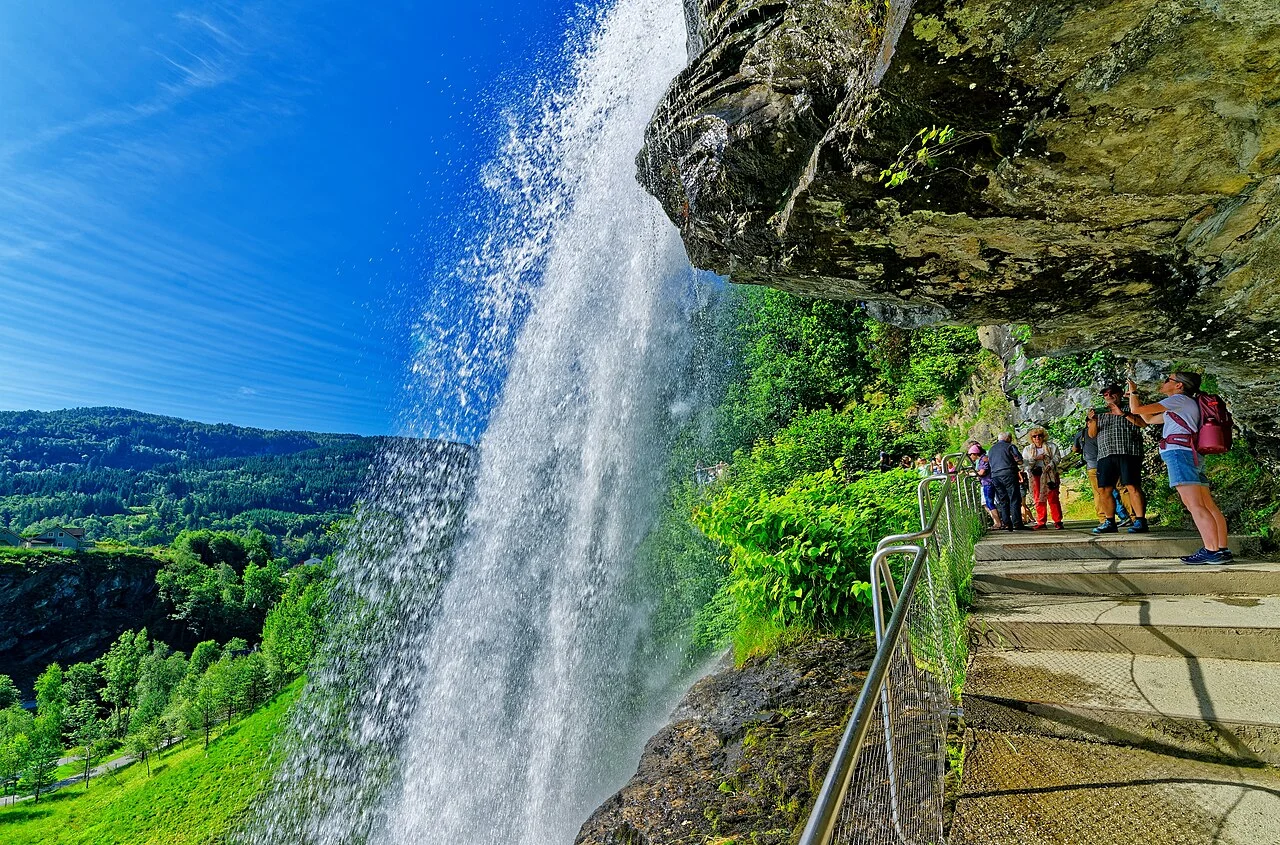
At Steinsdalsfossen near Norheimsund, the path leads behind the water. The appeal is the change in perspective over a short distance. From the approach you see the curtain ahead of you. From behind it, the sound and the view across the field become the focus of the visit.
Start from the signed visitor area and use the maintained path. Take your time at the turn and give others room to pass. The walk can be a better choice than a steep waterfall trail for some parties, but verify the gradient and surface if step-free access is important. The behind-the-water section may be unsuitable in icy conditions.
Set aside about 30–60 minutes, depending on pace and how crowded the path is. Verify the current path and parking terms. Pair the stop with Norheimsund or use it as the first waterfall on a west-to-east Hardanger route. In colder months check access before promising the walk behind the water.
4. Kjosfossen for a Flåm Railway stop
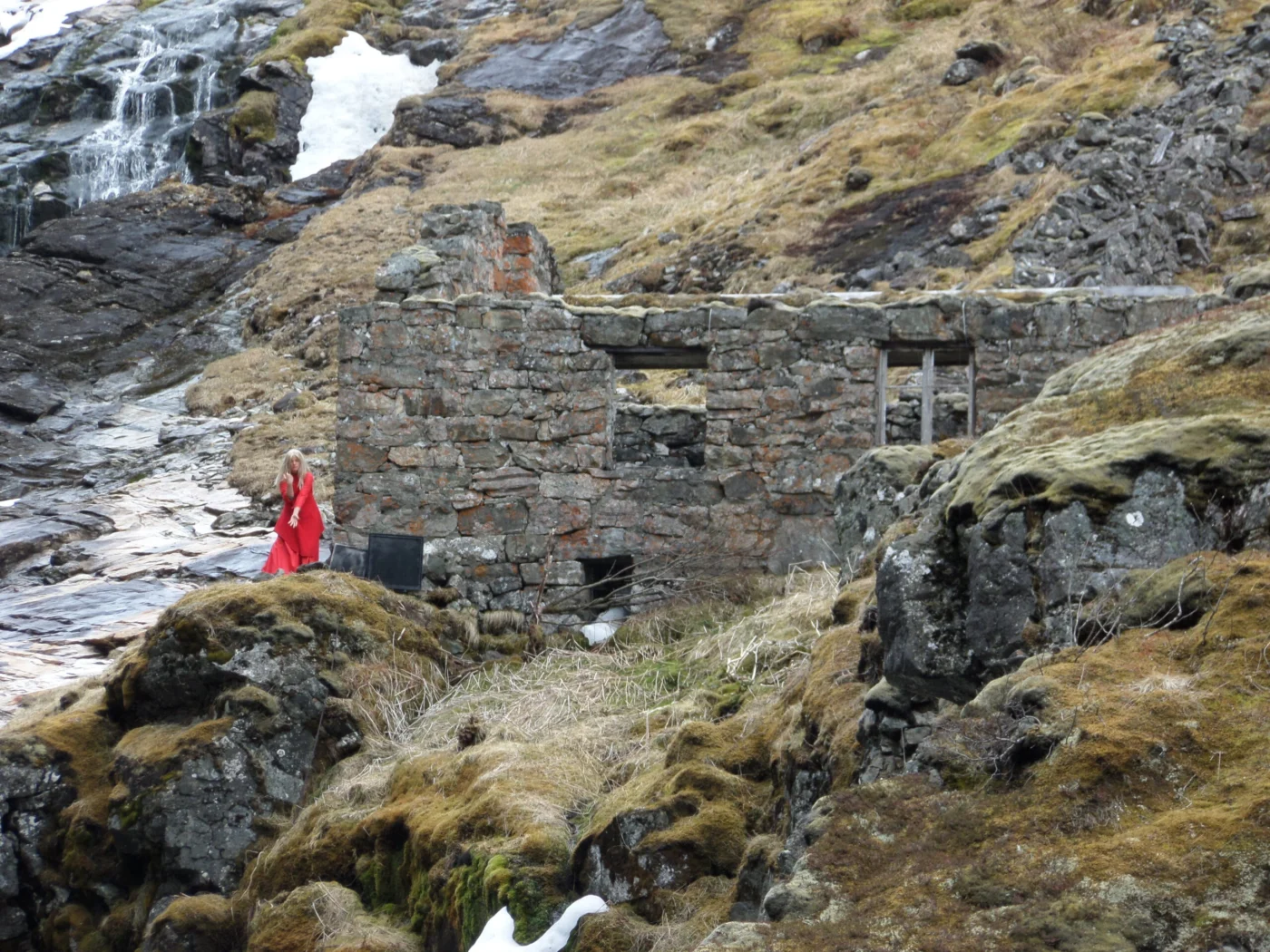
Kjosfossen is different from a roadside waterfall. Norway’s Best advertises a brief photo stop on its Flåm Railway round trip, with a platform for passengers. Treat it as part of the rail experience and confirm your particular departure’s arrangements. The train ride determines the ticket cost and the time you should set aside.
The platform visit can be wet and short. Have your camera and waterproof layer ready before stepping down, and follow crew instructions for reboarding. If you prefer to stay seated or cannot use the platform comfortably, ask the operator about what can be seen from the train and the boarding arrangements in advance.
Reserve the railway journey for your actual dates and use the operator’s timetable for the complete trip. Allow a morning or afternoon rather than budgeting only for the waterfall stop. Pair it with time at Flåm harbour or an overnight nearby. If proceeding through Myrdal, confirm the onward connection separately.
5. The Seven Sisters for a view from Geirangerfjord
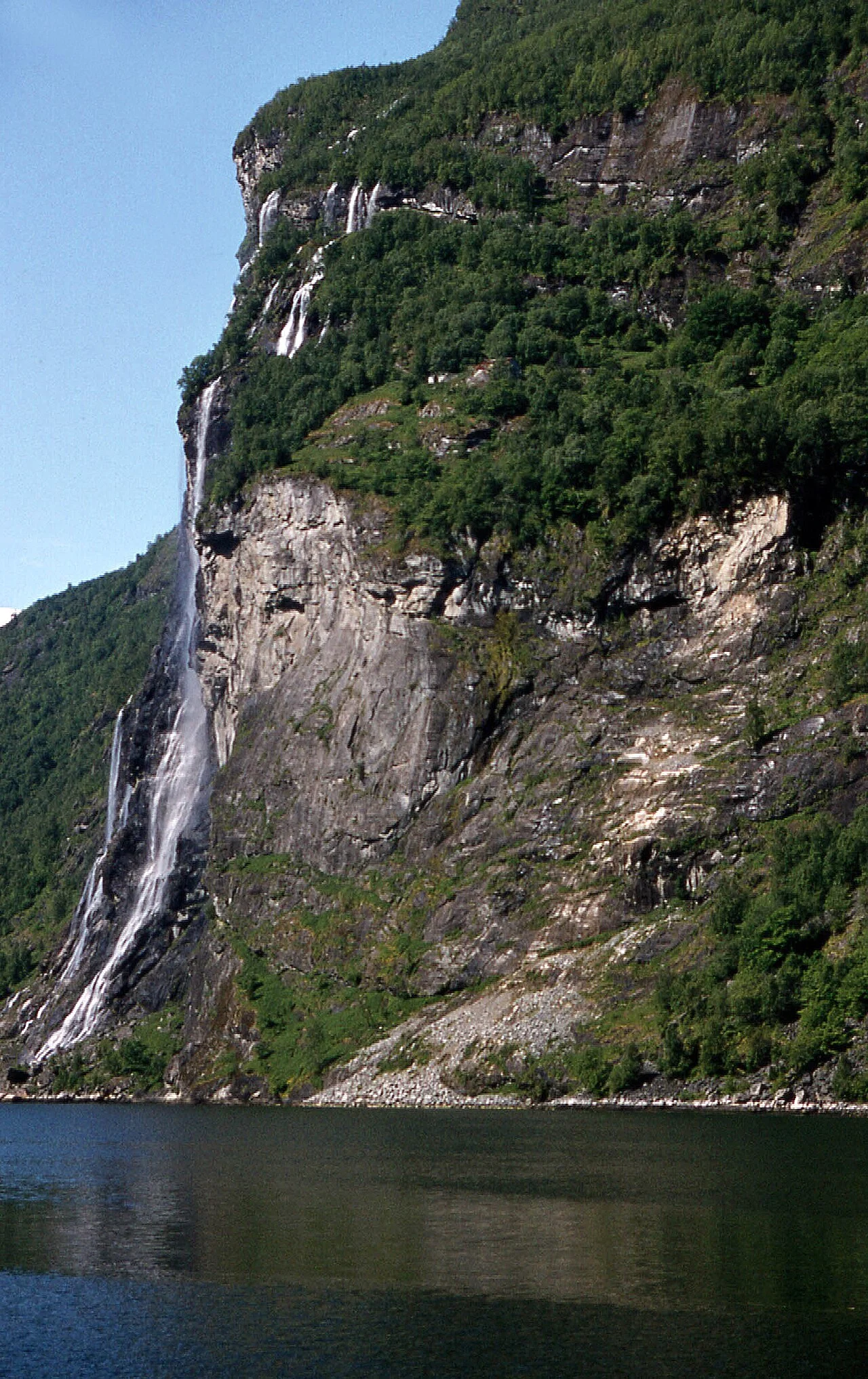
The Seven Sisters fall down the slopes of Geirangerfjord opposite the Suitor. The clearest itinerary is generally a confirmed sailing that passes the falls. From water level you gain a perspective on the cliff and the gap between the waterfalls and the old farms higher on the slopes.
Read the boat route before buying. A sightseeing return and a ferry that takes you onward serve different trips. A covered seat can be welcome in rain, while deck space lets you turn between waterfalls on opposing sides. Bring a layer for wind and let the flow on the day determine what you see.
Set aside a half-day including boarding and any onward transfer. Check the fare, exact quay, route and sailing calendar with the operator. Reserve early if a particular departure is needed in summer. Staying in Geiranger can give you the option to shift the boating day when schedules and ticket conditions permit.
6. Langfoss for a roadside stop or a separate climb
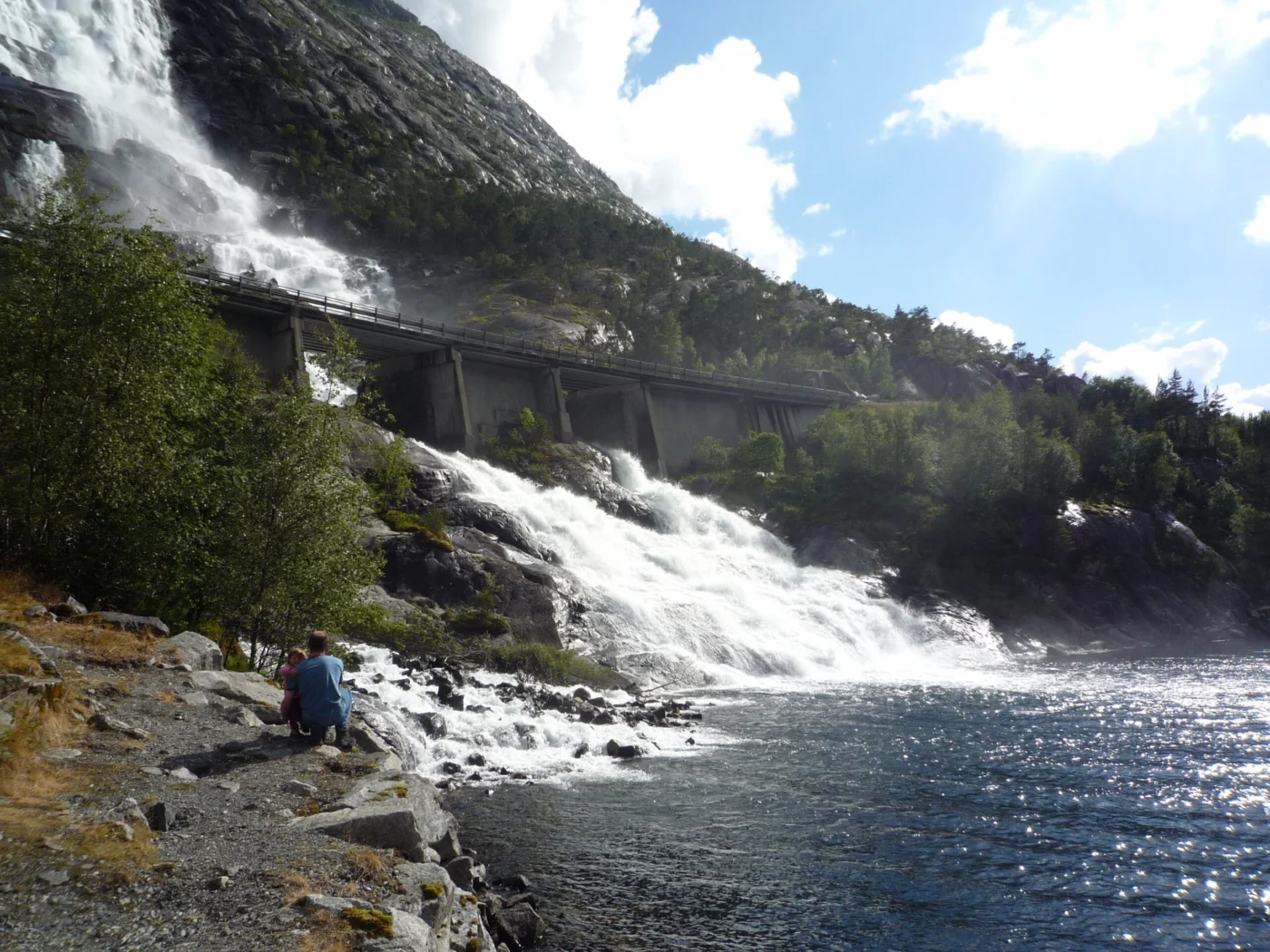
Langfoss runs down the mountainside next to the E134 above Åkrafjord. The road view is enough to see the setting and the relationship between the cascade and fjord. The marked uphill route is a second, substantially longer option. Decide which visit you intend before adding another fixed stop to the day.
On the short version, stay in the designated visitor area and keep clear of traffic. On the hiking version, expect a sustained ascent and choose a turnaround that allows for descent, weather and daylight. Wet rock and a tiring descent can change the effort even if the outward part felt manageable.
Allow about 20–40 minutes for a road stop. For the climb, keep several hours free and verify the current route advice and conditions. Check posted parking terms. Pair the short stop with an E134 road trip, or give the hike its own half-day with modest plans afterward.
7. Tvindefossen for an easy stop north of Voss
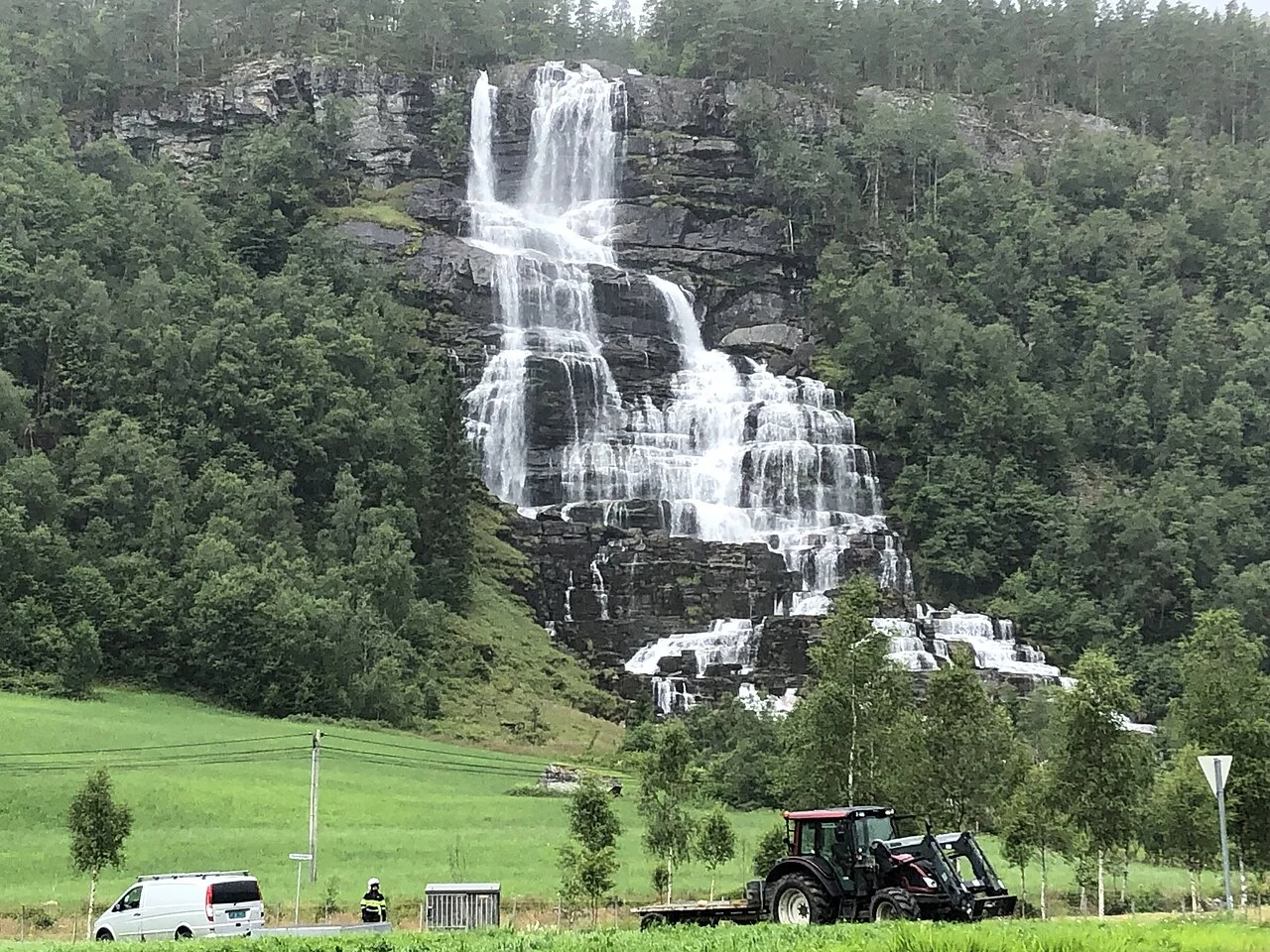
Tvindefossen is a broad cascade north of Vossevangen. It works as an introduction to the waterfalls of western Norway or a brief stop during a longer drive. The water separates into threads across the rock face, which is worth looking at from farther back before moving towards the visitor area.
Give the stop time according to the conditions. In drizzle, a brief visit may be enough. On a brighter day, pause to see how the flow divides on the lower slopes. If you are travelling with children, keep them near you around the visitor and parking areas rather than treating the site as a playground.
Allow around 20–35 minutes for a short look and photographs. Check access and any posted terms before travel. Pair with Voss or a northbound route towards Gudvangen, rather than making an extra drive from a different fjord solely to collect one more waterfall. Reconsider the stop if parking is full.
8. Svandalsfossen for a stair climb on the Ryfylke route
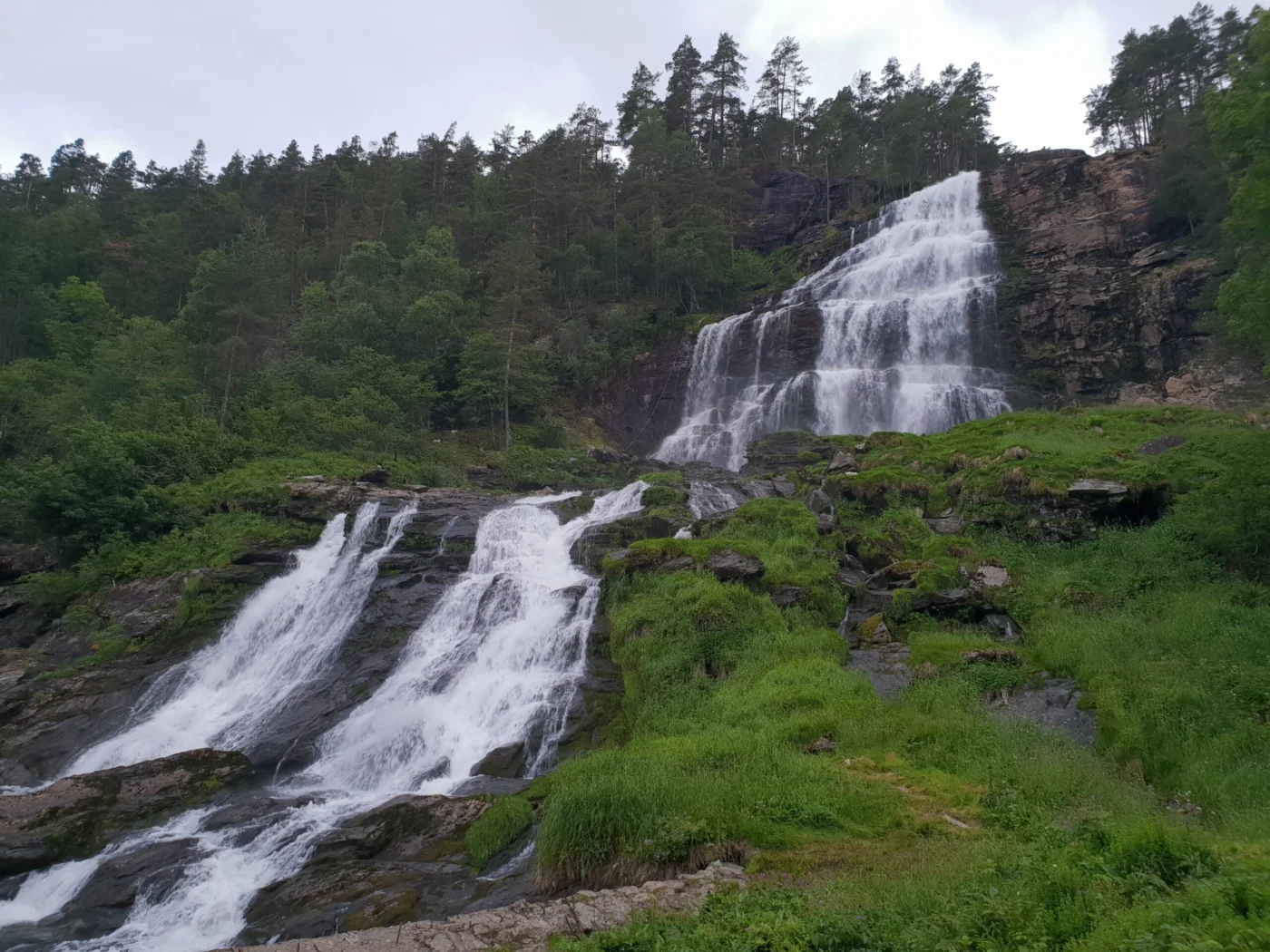
Svandalsfossen is near Sauda on the Ryfylke scenic route. Visitors can choose between a short stop and climbing the stairs beside the waterfall. This is a useful stop if your route already includes Sauda and you want a closer encounter than a view from the car.
Choose your own turnaround. Steel, concrete and stone steps make up the climb and spray can affect grip. Stop at a lower level if the stairs are wet, visibility worsens or a member of the party would have difficulty returning. In winter or heavy weather, verify that the access you intend is available before setting out.
Budget 30–75 minutes depending on how far you go. Visit Sauda lists free parking, but confirm current access and charges locally. Pair it with a stop in Sauda and verify road conditions on your exact onward route, particularly if the next leg uses a mountain road.
9. Månafossen for a short, steep Frafjord hike
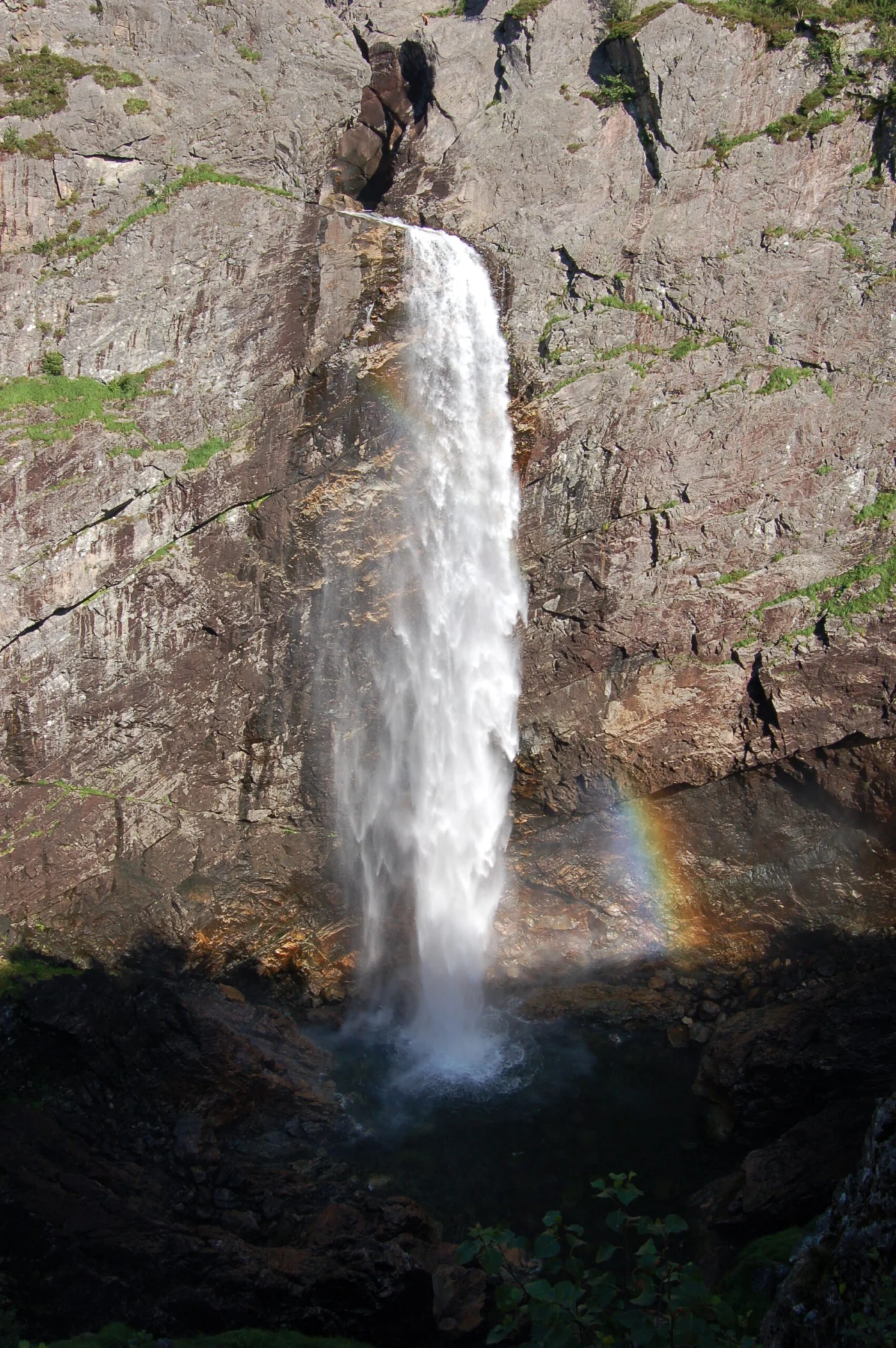
Månafossen is reached from Eikeskog in the Frafjord area. The short distance by itself understates the effort. The approach climbs sharply over uneven ground, and the viewpoint is a better match for hikers comfortable on a steep, potentially slippery path than for a party looking for a level stroll.
Use footwear that works on wet ground and leave enough energy for the descent. Decide at the viewpoint whether to return or continue towards Mån. Continuing adds a separate commitment, and anyone relying on a tight dinner or evening drive may be better off choosing the waterfall alone. Keep to the marked route.
Set aside 60–90 minutes for the waterfall return as a planning buffer, plus the drive. Check current parking charges and route conditions with the local operator. Use a shorter outing when rock is slick or daylight limited. Pair the hike with a Frafjord stop rather than another major Rogaland hike on the same day.
10. Mardalsfossen for a summer trip into Eikesdalen
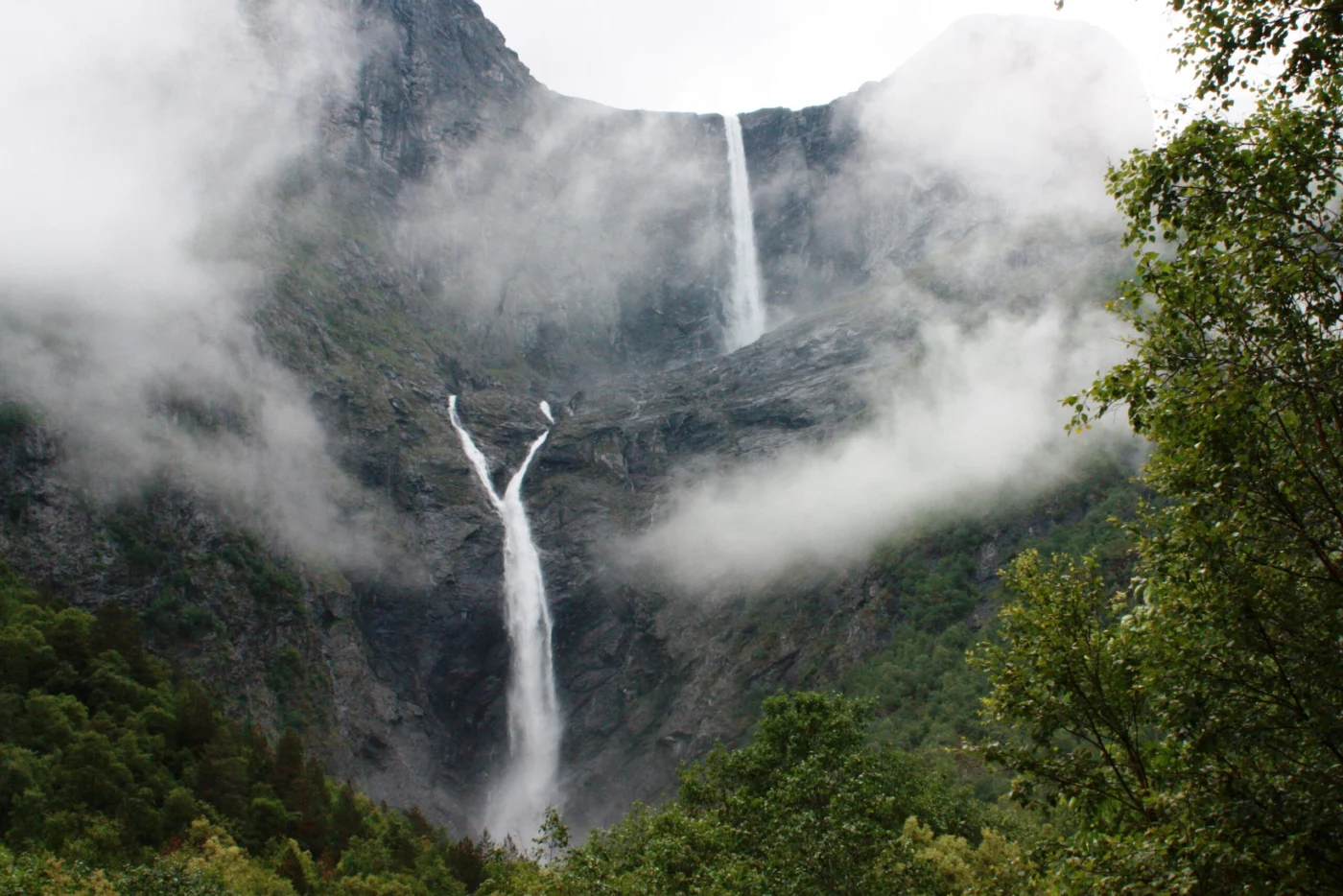
Mardalsfossen is in Eikesdalen above Eikesdalsvatnet. Its managed water release is the important booking detail. The destination listing gives 20 June through 20 August as the release season. Verify the current schedule if seeing the full summer flow is the reason for making the drive.
The walk from the car park is part of the visit. Use the waymarked approach and keep time for viewing and returning. Treat Eikesdalen as a place to spend part of the day, with a lake stop where appropriate, rather than a quick diversion between distant fjords. In rain, leave time for the return drive.
Allow around 1½–2 hours on site at an unhurried pace and plan the drive separately. Check the current parking charge, any toll, opening and release information. Pair with an overnight in the wider Molde or Romsdal area if the planned drive would otherwise leave little daylight at the falls.
One-, two- and three-day waterfall itineraries
One day from Voss. In the morning drive north to Tvindefossen and allow a short stop. Return through Voss for lunch and continue to Steinsdalsfossen in the afternoon only if you have enough daylight for the return. Spend the evening in Norheimsund or return to Voss according to your next route. In winter check the behind-the-falls path first and keep the outing shorter if access is limited.
Two days in Hardanger. On day one spend the morning near Norheimsund and Steinsdalsfossen, then use the afternoon for the drive to Eidfjord and check in before dinner. On day two, give Vøringsfossen the morning. Use the afternoon to continue towards Odda and see Låtefoss if road conditions and parking suit. Stay near Odda in the evening. Move the high viewpoint to the clearer daylight window if fog affects the plateau.
Three days from Hardanger to Åkrafjord. Use the two-day west-to-south route, then drive towards Langfoss the next morning. Give Langfoss the afternoon only if you want the climb and conditions allow enough time for descent. Otherwise take the road view and continue to your evening accommodation. Add Svandalsfossen only if your route naturally continues towards Sauda and the roads and timing work. In poor weather keep the stop short and protect the onward drive.
Booking, cost and weather tips
Reserve the Flåm Railway or Geirangerfjord sailing before locking in a tight itinerary. Check current fares, schedules, operating hours, road access and fees with the official providers. Use Statens vegvesen for road conditions and Entur for public transport. Carry a waterproof layer, choose footwear for the actual surface and stop only where parking is permitted. For a short winter day, put the longest outside section in daylight. Check regulated flow before choosing dates for Mardalsfossen.
Frequently asked questions
Which waterfall is easiest to see on a road trip?
Tvindefossen or the roadside view at Langfoss are practical when they already lie on your route. Use signed parking and verify conditions.
How much do waterfall visits cost?
Ask about parking and any toll at the individual stop. The Flåm train, fjord sailing and guided hikes have separate prices that depend on product and date.
When is Mardalsfossen at full flow?
The destination listing gives 20 June to 20 August for the managed release. Recheck the current schedule before making it the reason for the trip.
How many waterfalls should I plan in one day?
Two road stops can work together in Hardanger. Give a steep hike, railway journey or boat trip its own time block.
Can I visit without a car?
Kjosfossen is reached on the Flåm Railway and the Seven Sisters by a confirmed sailing. For other falls check exact stops, road walking and the return before relying on a bus.
What if it rains?
A short maintained viewpoint can still be worthwhile. Avoid slippery climbs when conditions are unsuitable and keep a covered sailing or open indoor attraction in reserve.
Visit Langfoss on a shore excursion
If you are starting in Haugesund, compare this Langfoss and Åkrafjorden excursion. Confirm the actual pickup point and ship-return timing; the booking page’s Stavanger category does not establish the departure location.
Check current dates, prices, meeting points and cancellation terms on Viator. Affiliate link: we may earn a commission if you book.
Continue planning your waterfall route
Things to do in Eidfjord · Things to do in Odda · Things to do in Voss · Things to do in Flåm · Things to do in Geirangerfjord
Choose the falls that fit the journey
Start with one waterfall that works with your base and transport. Add a second when it lies on the same road or has its own confirmed departure. Check flow, access and the return on the day, then leave enough time to see the waterfall without rushing.
The sources linked with each entry are official tourism authorities, scenic-route information or the relevant operator. Check up-to-date prices, opening, ferries and road conditions before booking.