10 Fun Facts About Being Norwegian
NorwayTop10 Editorial
What makes someone Norwegian? There is no single answer, but these fun facts about being Norwegian show what everyday life can look like. A school parade takes over the streets on 17 May, an ordinary packed lunch has its own vocabulary, and tacos have a day of the week. Here’s how ten traditions work and where a visitor can notice them.
A practical guide to Norwegian traditions, from the Constitution Day parade to a Friday taco dinner and a weekend at the cabin.
Fun facts about being Norwegian at a glance
Start with a matpakke, a waffle with brown cheese and a short outdoor walk. One day is enough to try all three, and two or three days leave time for a museum or a cabin stay. Visit on 17 May for Constitution Day or choose the brighter months for an outdoor itinerary. Costs range from a grocery lunch or free public parade to paid museum tickets and accommodation. In Oslo, public transport and walking cover most stops.
1. Children lead the Constitution Day celebrations
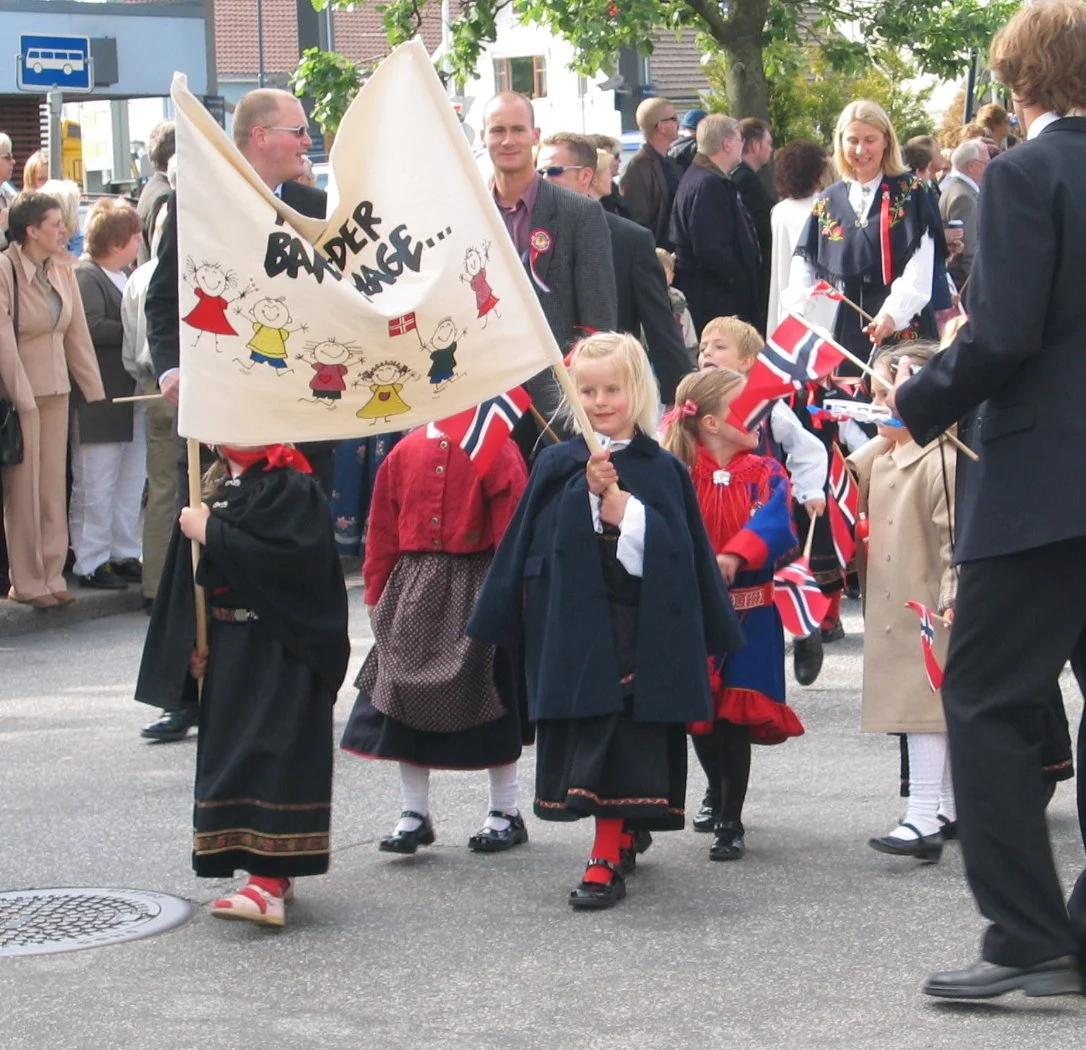
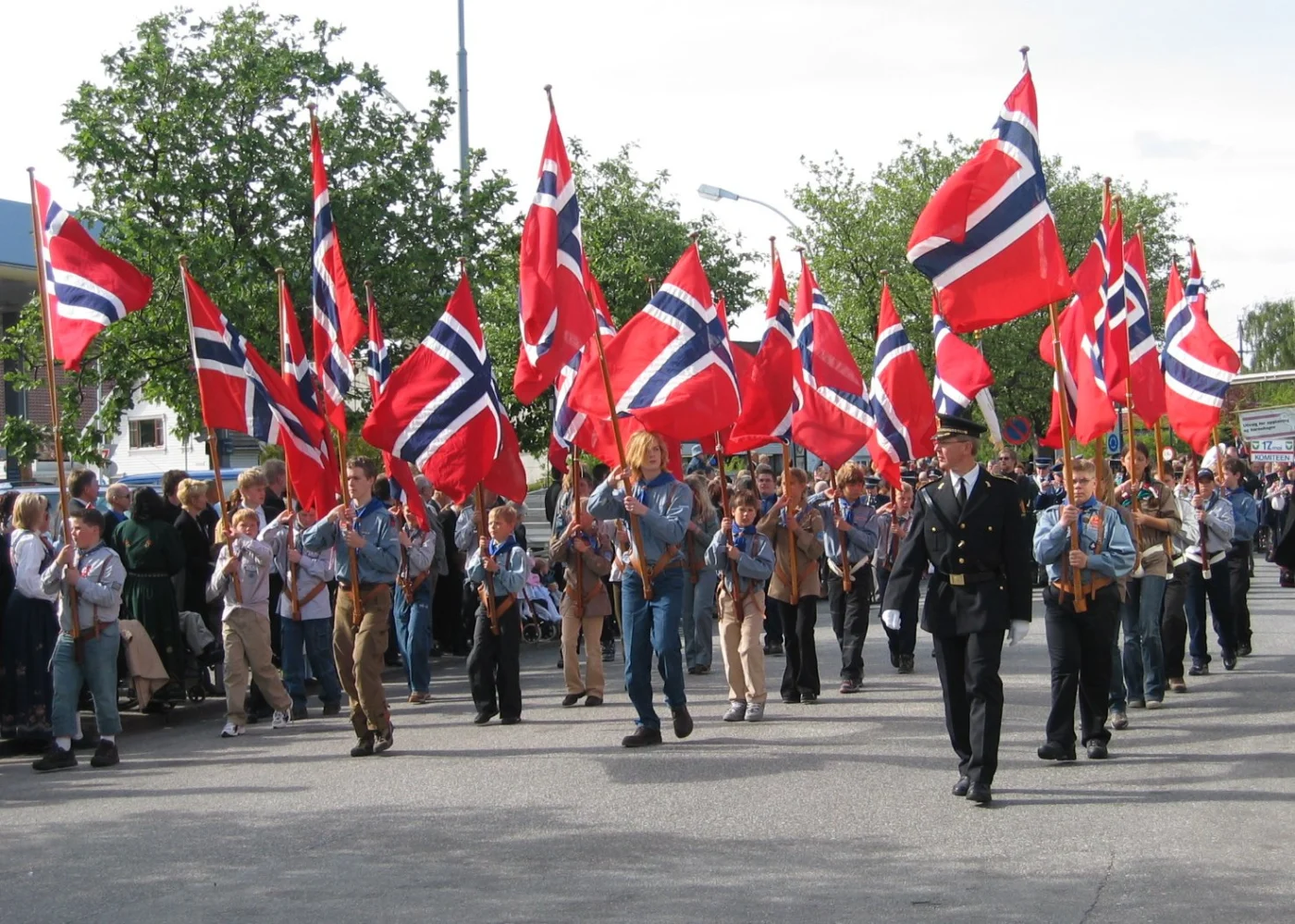
On 17 May, Norway marks its Constitution Day. Children’s parades are a central part of the celebration, with school groups, flags and marching bands. Local programmes vary. In a big city there may be several processions and gatherings, while in a smaller community the school parade can be the main event people plan their morning around.
One detail worth noticing is how a parade takes shape around schools and neighbourhoods. Families look for the group they know, and visitors can follow the route from the pavement. You may see formal clothing, familiar school banners and people greeting neighbours in the crowd. The day feels different depending on where you watch it.
Allow a couple of hours for a public parade and check the municipality’s programme for start times, route changes and any reserved viewing areas. Street viewing generally needs no ticket. If you are staying in a city, check public transport, walk from your accommodation where practical and book a restaurant if your plan depends on a sit-down meal.
2. A bunad can tell you something about where a person feels at home
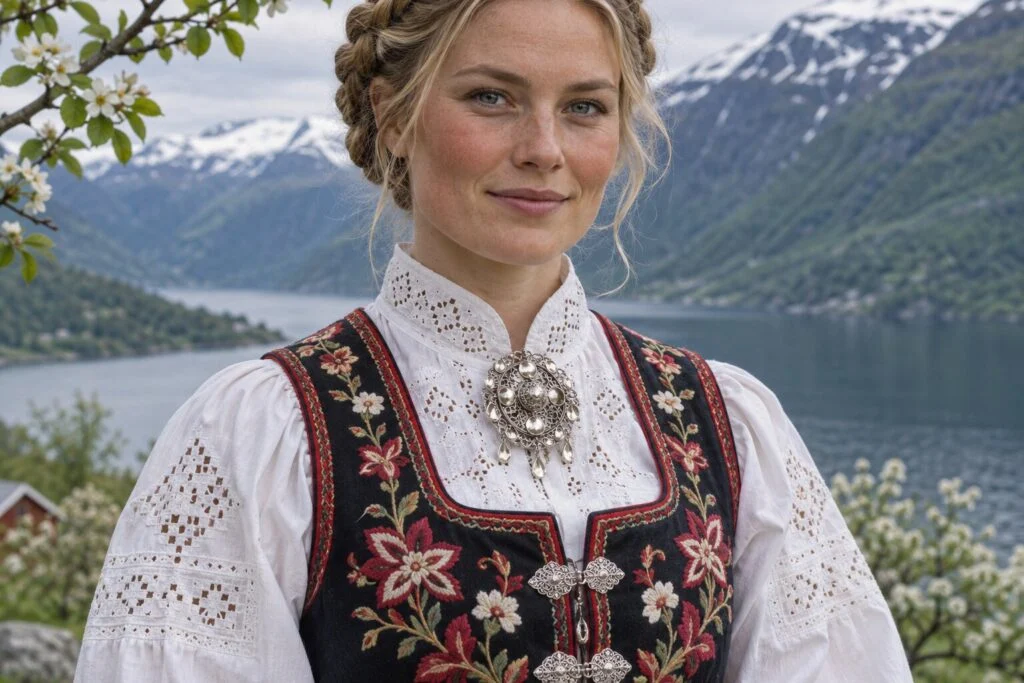
A bunad is traditional dress often associated with a particular area. The choice can reflect family ties or a personal connection to a place. In 2024 UNESCO added the craftsmanship and social practices surrounding Norway’s traditional costumes to its intangible cultural heritage list. Wearing the clothing is only one part of a tradition that also involves making it, maintaining it and passing down skills.
Look for differences in embroidery, colours, silver ornaments and fabrics. Two people standing side by side at a celebration may wear outfits with very different details. A bunad also turns up at events such as weddings and confirmations, where families may recognise pieces that have been cared for over many years.
Constitution Day is a good opportunity to see a range of traditional clothing in public. For a quieter look, check costume displays at a folk museum and budget an hour or two for the visit. Museum admission and opening hours vary. Ask before photographing a person closely, especially if the details of their outfit are the focus.
3. A dugnad turns a shared job into a social event
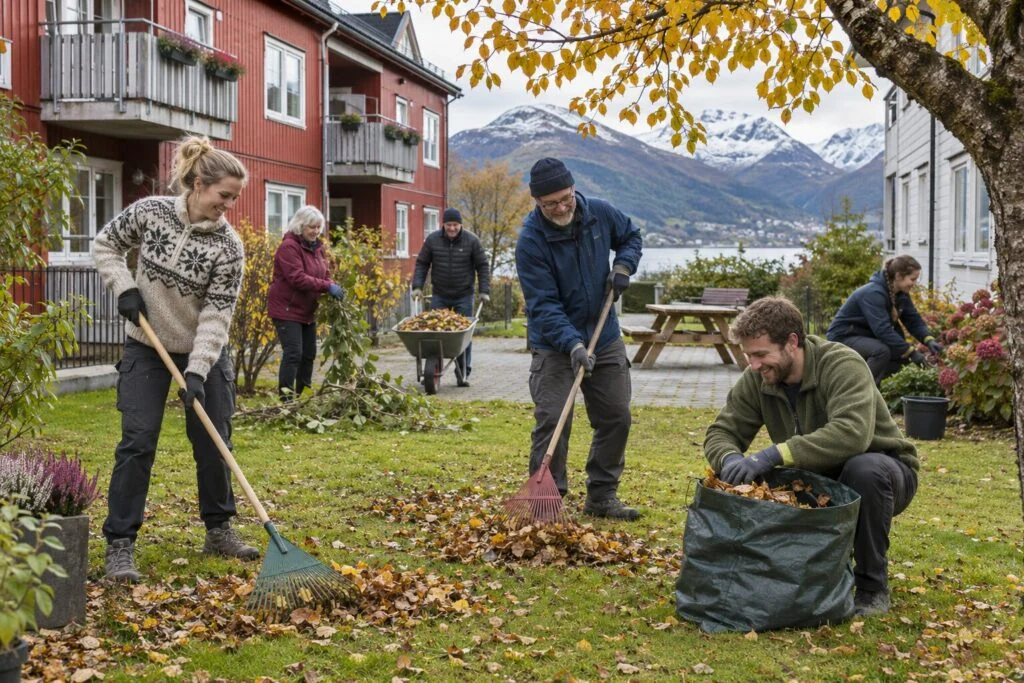
A dugnad is unpaid work people do together for a shared purpose. It can be as local as neighbours tidying a shared courtyard or as organised as volunteers maintaining trails and cabins. The word describes both the work and the gathering that makes it possible to finish a task collectively.
A courtyard tidy-up might involve rakes, gloves and a pile of branches. A sports club could organise work around its facilities instead. The jobs vary, but someone usually makes it clear what needs doing and how long the group has. Coffee or waffles sometimes give people an excuse to stay and talk after the work is finished.
If you are staying with someone who invites you to join, ask what to bring and which job suits a first-timer. An hour or two might be enough for a local event, while trail work may require a longer commitment and prior coordination. Trail users can also learn about this tradition by checking how the local trekking association cares for the route they use.
4. A classic packed lunch can be a few slices of bread
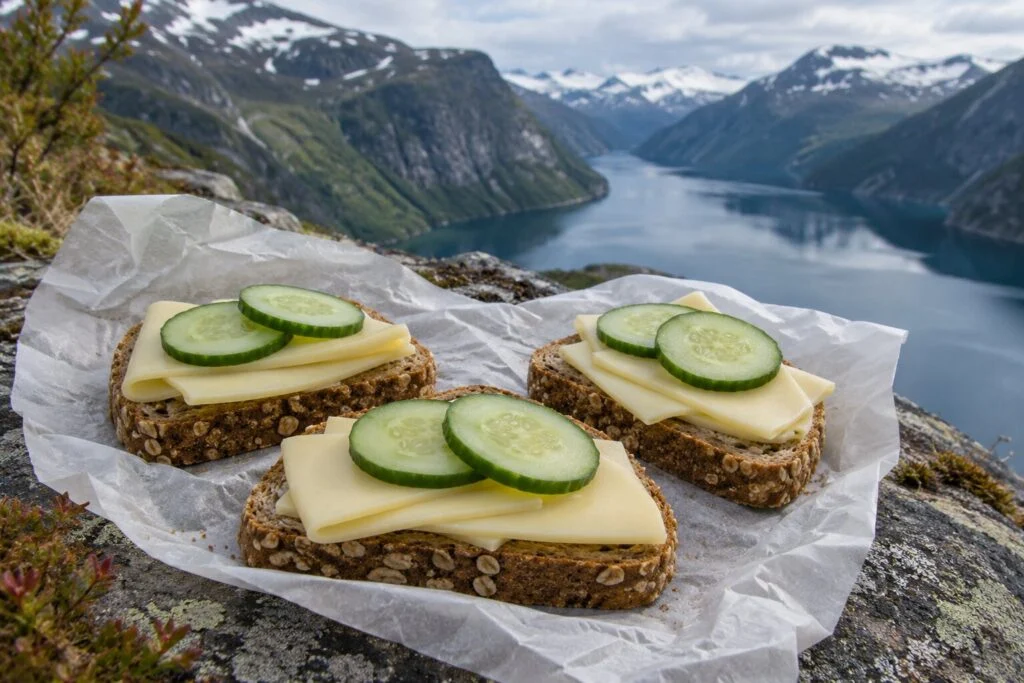
Matpakke means packed lunch. A familiar version is a few slices of bread with pålegg, the toppings that go on the bread. Cheese, sliced meat or liver pâté can make a complete lunch. Many people wrap it in paper or put it in a box before leaving for school, work or a day out.
An open-faced sandwich travels differently from a thick sandwich with two slices around every filling. Small sheets of paper can keep toppings apart when the slices are stacked. It is a lunch built to be prepared quickly, carried easily and eaten wherever there is a place to pause.
Try making one before a rail journey or a short walk. Allow ten minutes after breakfast, use simple toppings that suit the day’s transport and bring water. The cost depends on what you buy at the grocery store. This works particularly well on a Sunday or in a small place where you have checked that there may be few lunch options nearby.
5. Friday tacos have their own Norwegian word
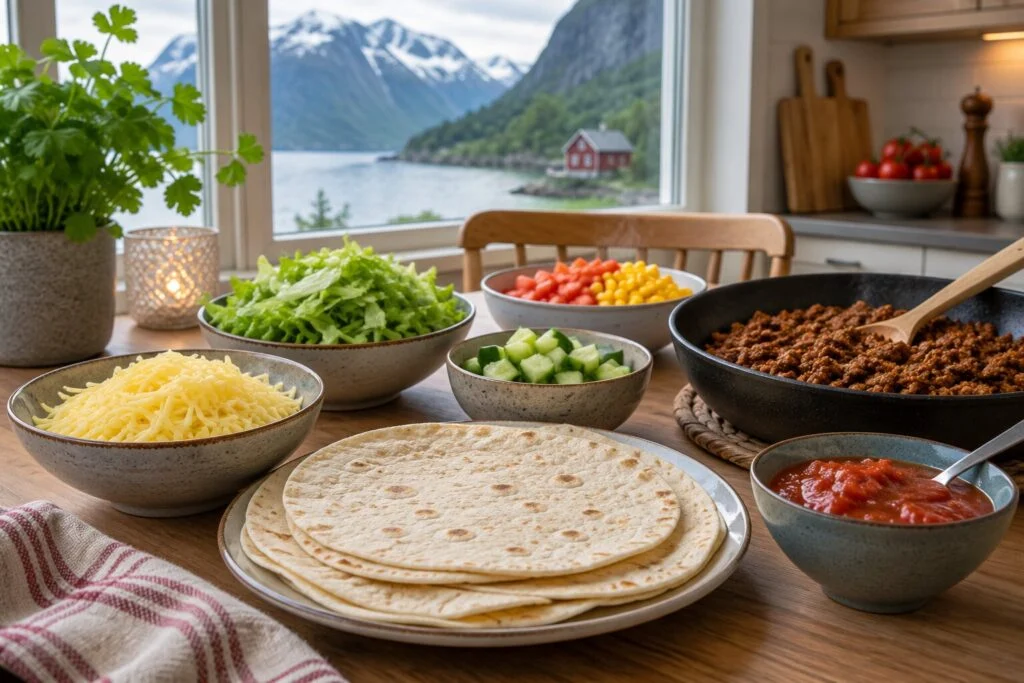
Fredagstaco means tacos eaten on Friday evening. The habit is familiar enough to have a dictionary entry. It is an example of how food from elsewhere can become part of the rhythm of an ordinary week in Norway. The timing is as much a part of the name as the food.
Picture a kitchen table with tortillas and separate bowls of chopped vegetables, grated cheese, salsa and a filling. Everyone can build their own meal, which helps explain the format’s appeal for a family evening. The ingredients and preferences vary from one household to another.
If you are staying in a rental with a kitchen, allow time to shop before checking in and make it a simple dinner. Prices depend on your ingredients and group size. Planning the meal yourself is an easy option when you arrive late or are staying somewhere with few restaurants. Check store hours for the town and date before relying on a late grocery stop.
6. Waffles can come topped with brown cheese
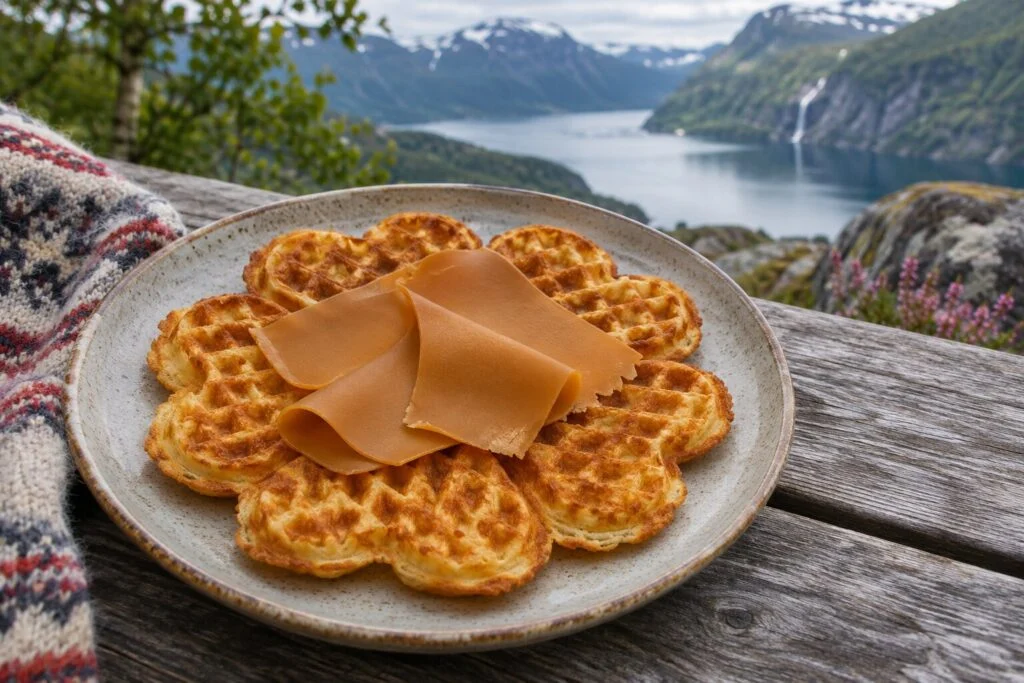
Norwegian waffles are often made in a heart-shaped iron. One familiar topping is brunost, brown cheese with a sweet, caramel-like flavour. Sour cream and jam are another traditional combination. A few thin slices of brown cheese can taste quite different on a warm waffle than they do on a piece of bread.
A waffle is an easy way to try brown cheese if you are unsure about buying a whole block. Ask whether the café serves several toppings and try a little of each if that is an option. The setting varies from a museum café to a simple stop during a day outdoors.
Build a short coffee break into a city walk or museum visit, especially in wet weather. Check café hours separately from the attraction, since the two can differ. A waffle is usually a snack rather than a full meal, so leave time for lunch if you plan to walk all afternoon. Match the stop to the route instead of crossing town for one menu item.
7. Norwegian has two official written standards
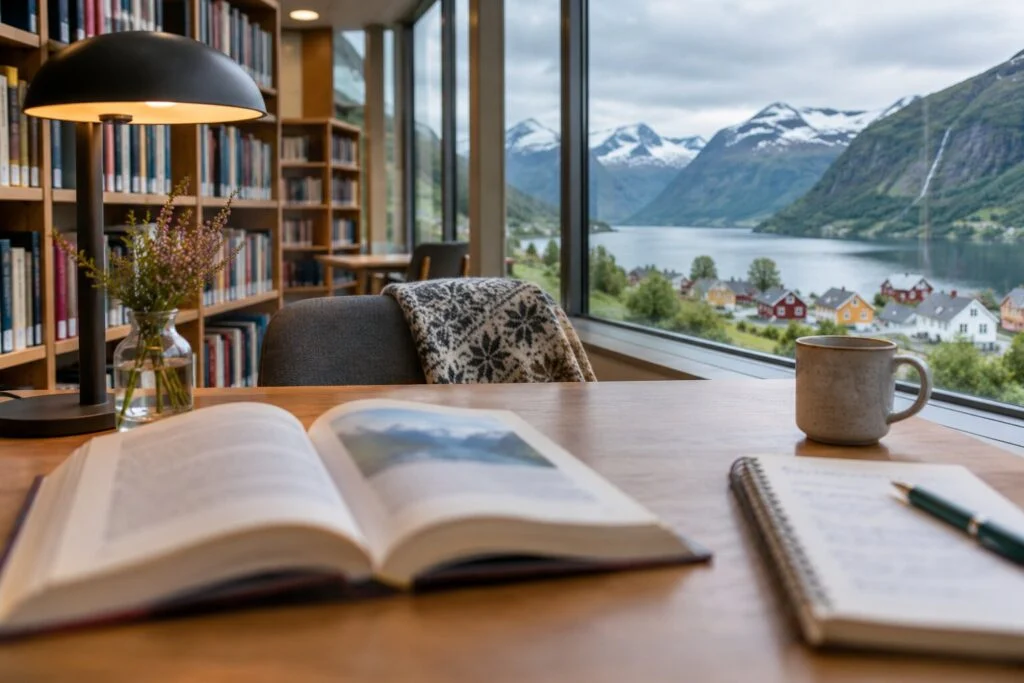
Bokmål and Nynorsk are both official written standards of Norwegian. One small example is the country’s name, Norge in Bokmål and Noreg in Nynorsk. Norway is also home to several Sámi languages. A conversation about the country’s languages therefore goes beyond the two forms you can see in written Norwegian.
Visitors can notice these differences without speaking the language. Look at signs, museum information and printed materials from different parts of the country. Place names can also reflect more than one language, especially in northern areas. Written standards and spoken dialects are separate things, so a printed label does not tell you how everyone nearby speaks.
Set aside a few minutes to compare how a place is named on a map and on a local sign. A library or museum can make a useful indoor stop on a rainy afternoon. Check opening hours and whether an exhibition has English text. Avoid assuming that one language or form of spelling represents everyone who lives in the area.
Read the source · Sámi language information
8. A cabin weekend is known as a trip to the hytte
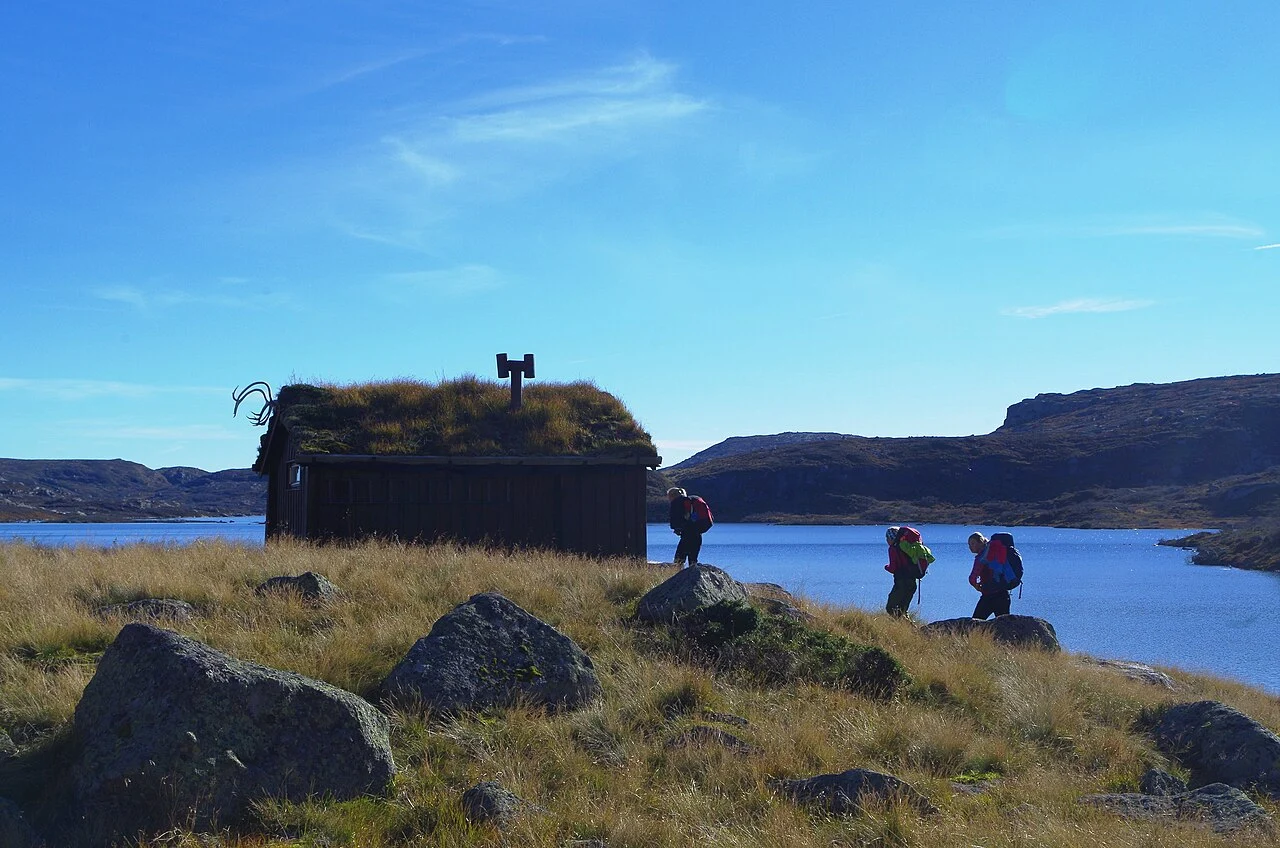
Hytte is the word for a cabin or holiday home. A cabin might be by a lake, in the mountains or on the coast. Access can come through relatives, friends or a rental. The weekend away can mean a modest place with simple facilities or a modern house designed for several generations to spend time together.
Ask someone about the cabin and practical details often take over the story. How do you get there in winter? Where do you buy food? Does the cabin have running water? The answers can shape the experience more than the view. An evening of cooking together can be as much the point as a day on skis.
For a first cabin stay, allow two nights so that arrival and departure do not take up the entire visit. Compare the room price with cleaning, bedding and the cost of getting there. Ask about winter access, transport to the door and the nearest shop before paying. Keep the first evening simple if you will be arriving with luggage after dark.
9. Friluftsliv gives everyday outdoor time a name
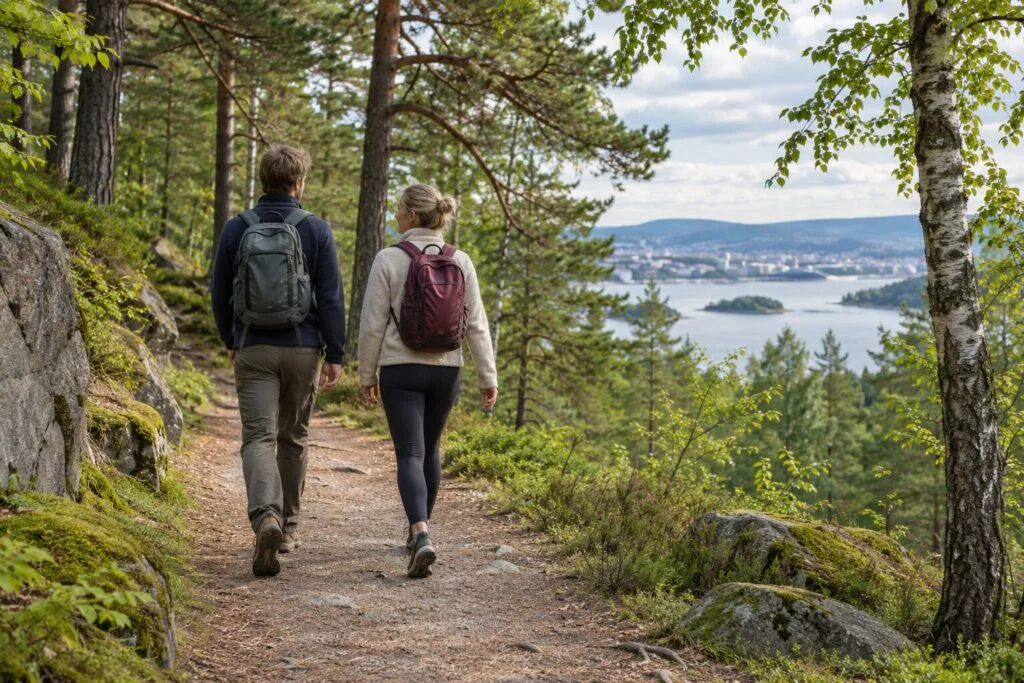
Friluftsliv literally means open-air life. It can describe ordinary time outdoors as easily as a long mountain trip. A walk after work, a rest beside a lake or a short outing with a packed lunch can all fit. The idea is easy to experience without filling a holiday with expensive equipment or ambitious routes.
In a city, it might mean taking public transport to a woodland path and returning in time for dinner. In a village, it might involve leaving straight from the door. The habit makes more sense if you choose a route that suits the weather, daylight and people who are actually going.
Give yourself one or two daylight hours for a short walk and carry an extra layer if the forecast is changeable. Costs may be limited to local transport and lunch on an unpriced route. Check the way back before setting out, and choose level, sheltered terrain when ice or wind makes a higher route a poor choice.
10. The right to roam comes with responsibilities
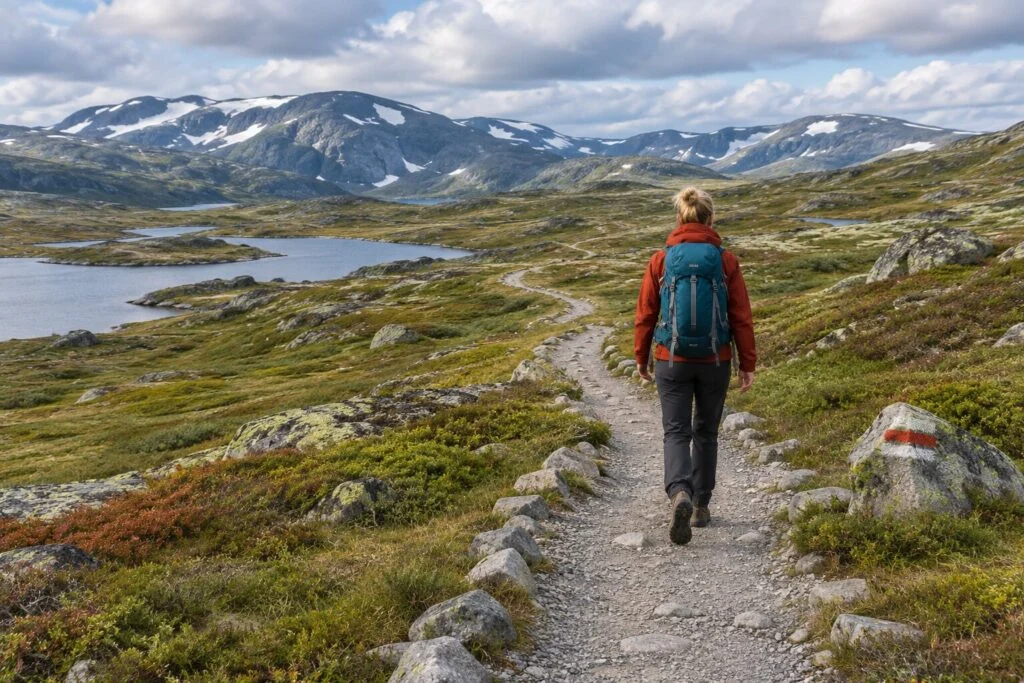
Allemannsretten is Norway’s right of access to nature. It allows people to enjoy uncultivated land, including privately owned land, subject to rules and responsibilities. The distinction between open country and a cultivated field or private garden matters. Visitors can also benefit from this access.
The everyday version is simple to picture. Follow a suitable route, give homes and other people space, and take your rubbish home. If your plan involves camping, lighting a fire or entering a protected area, check the specific conditions before you go. Rules for different uses and locations can vary.
Start with a signed public route if this is your first walk in Norway. Allow time to check the approach and to turn around before dark. The right to roam does not set the price of public transport, a designated campsite or a car park. Verify any charges and local restrictions, and leave an indoor alternative for difficult weather.
Read the source · Norwegian Environment Agency guidance
Three itineraries for experiencing Norwegian traditions
One day in Oslo
Start with a morning visit to the Norwegian Folk Museum on Bygdøy if it is open. Allow two hours for the visit, then eat your packed lunch or buy lunch nearby. Spend the afternoon in the centre and have dinner near your accommodation. Allow time for the bus both ways and for the walk from the stop. On a rainy day, spend more time in the museum and take a café break. If visiting on 17 May, check the local parade route and make that the main event instead.
Two days with a city and woodland stop
On day one, spend the morning in town and use the afternoon for a museum or a library. Try a waffle and brown cheese before dinner. On day two, buy lunch supplies in the morning, take local transport to a woodland trail and allow one to two daylight hours for the walk. Return in the afternoon and eat in town in the evening. Check the last service, shorten the walk in winter and keep a museum or café as a backup in poor weather.
Three days with a cabin stay
On day one, use the morning for travel and groceries and arrive at a cabin in the afternoon. Make dinner and check the route to the nearest shop while there is still daylight. On day two, pack lunch for a morning walk, keep the afternoon flexible and cook together in the evening. On day three, take a short local outing or leave after breakfast if the return journey is long. Choose sheltered ground if the forecast is poor. Confirm the last leg from the station or bus stop before booking a cabin without a car.
Practical travel tips
Check local programmes for 17 May rather than planning around a route from a previous year. Build in time to walk around road closures. Book a meal if a particular restaurant matters to the day’s plan.
For a cabin, ask about access, water, bedding and cleaning. Compare the full cost with local transport and food. Pack lunch and a warm layer for a short outing, and confirm when you can get back before choosing a longer route.
Treat outdoor plans as flexible. Check daylight and weather and use a marked route appropriate for your group. Ask for local guidance when access, fires, camping or a protected area is part of your plan.
Check current hours and admission directly with venues. Use Entur for public transport and the Norwegian Public Roads Administration for road updates. Confirm ferries and tickets with the operator.
Frequently asked questions
Does everyone in Norway follow these traditions?
No. Habits differ by region, family, background and preference. These are examples of practices you may encounter, and Norwegian identity has room for many different experiences.
Do I need a ticket to watch a Constitution Day parade?
Public street parades generally have free viewing. Check the local programme for details, since other events on the day can have their own arrangements.
What food is easiest to try first?
A waffle with brown cheese is a simple café order. If you are travelling between towns by train, a homemade matpakke is another easy option.
Can visitors use the right to roam?
Yes, subject to the same rules and duties. Start with the official guidance and check special rules for the place you intend to visit.
How long do I need to experience these traditions?
Allow a day for a museum, local food and a walk in one city. Two or three days give you enough time to add a cabin stay or spend a full day outdoors.
What should I book in advance?
Book accommodation, long-distance transport and any timed tickets you depend on. For 17 May, check local schedules and consider booking a restaurant if you want to sit down at a particular time.
Plan more of your Norway trip
Read more fun facts about Norway · Explore Norway’s land and territories · Find places to visit in Norway
Start with an everyday tradition
Pack a matpakke for a walk, order a waffle with brown cheese, or find out how the town you are visiting marks 17 May. Each gives you a different glimpse of life in Norway. The images on this page are AI-generated illustrations.